I migliori video
💎 Help us expand the coverage! Subscription starts from just $4.99! Get 50% OFF full access to the map + exclusive strategic updates: https://www.rfunews.com/pricing
Today, there are important updates from the Liman direction.
Here, the gap between Russian official maps and battlefield reality around Liman has become extraordinary, as Russian command maps place their furthest claimed positions roughly forty kilometers west of the actual frontline and attribute another one-thousand-three-hundred-and-sixty square kilometers to Russian control. Such claims are based on an apparently AI-generated video purporting to show a Russian soldier in Chervonyi Oskil, after which Russian sources claimed the settlement had been captured, causing reaction from Russian military analysts, who are increasingly criticizing this trend of exaggerated reporting.
That fictional picture has become increasingly difficult to preserve as Ukraine’s Operation Vivaldi advances. To counter this in the information space, Russia’s Western Grouping of Forces released footage supposedly demonstrating continued Russian presence in Nove, Ridkodub, and other recently liberated settlements by the Ukrainians. But analysts quickly identified indications that the footage was archival, with the videos filmed when Russian forces originally captured these locations in two-thousand-twenty-five, before Ukraine’s counterattack, showing vegetation inconsistent with current conditions. Another clip from Ridkodub showed a Russian soldier moving through the settlement while Ukrainian FPV drones pursued him, but visual comparisons placed the recording around August last year.
Russian military commentators have consequently begun attacking their own command’s response with the argument that the Ukrainian counterattack itself is less damaging than pretending it does not exist. Instead of acknowledging setbacks, determining why defenses failed and correcting them, Russian commanders publish old footage and maintain an increasingly fictional frontline, which creates consequences extending far beyond symbolic claims.
Russian soldiers witnessing Ukrainian advances while official channels insist nothing significant has happened have less reason to trust their commanders. Russian analysts have repeatedly warned that distorted reporting also damages battlefield decision-making: commanders can allocate reserves, artillery and drone coverage according to positions that exist on maps but not on the ground. The resulting disconnect can leave troops isolated and encourage demoralized soldiers to seek information elsewhere.
The real battlefield situation around Liman demonstrates why this matters, as Ukraine officially announced that its Third Army Corps has liberated settlement after settlement, releasing footage weeks after the events for operational security. The earlier penetration around Nove was particularly revealing, as the Ukrainian forces converted an old BTR into an unmanned explosive vehicle and managed to drive the relatively slow machine toward Russian defenses. Its ability to approach the target suggested Russian drone observation and fire control were not present there, because according to Russian maps, there was no threat to Ridkodub.
Now Ukrainian pressure is extending toward the Zherebets River. Russian sources themselves have acknowledged Ukrainian activity around crossings and positions near Terny, while Ukrainian strikes against crossing points and rear logistics are complicating Russian resupply. Every restricted crossing creates another bottleneck where vehicles, ammunition and reinforcements become vulnerable to drones.
Yet Russian information management continues trying to preserve a battlefield picture increasingly contradicted even by Russian analysts. After losing substantial territory and suffering significant casualties, commanders are still releasing archival or AI-generated footage and defending claims built upon earlier exaggerated advances.
Overall, Russia may claim that the Lyman front has stabilized, but fighting remains active around the Zherebets approaches, with Ukrainian infiltrators crossing the river for quick raids. Ukraine is simultaneously applying ground pressure, attacking the crossings methodically and disrupting Russian rear logistics. The widening distance between Russia’s declared frontline and the battlefield itself is therefore becoming more than an information problem: it risks actively undermining Russia’s ability to organize the defense it now urgently needs to stop Ukraine’s counteroffensive and to prevent the Russian defense line behind the river from collapsing completely.

💎 Special Offer: starting from just $4.99! Get 50% OFF full access to the map + exclusive strategic updates: https://www.rfunews.com/pricing
The Russians have now started to panic over the rapidly increasing threat to their enclave of Kaliningrad. This panic was caused by severely ramped up reconnaissance missions against Kaliningrad. Over the past year, Nato has intensified surveillance over Kaliningrad so much that it has trumped Nato satellite and aerial reconnaissance over Crimea, which is actively used to guide Ukrainian strikes. Nato Awacs aircraft fly along Kaliningrad practically every day, while satellite reconnaissance is conducted continuously. An entire US military satellite constellation now monitors Russian military facilities here on a daily basis, including the base in Baltisk, airfields, air defense positions, and other Russian Armed Forces facilities. Given how unprecedented the change of focus from Crimea to Kaliningrad is, these are preparations for the worst-case scenario to map out Russian military positions for targeting in the event of war.
This intensified reconnaissance has led Russian military analysts to believe Nato and Ukraine are preparing for a strike against Kaliningrad already in the near future. They quoted a German Air Force Commander Holger Neumann, who claimed that in the event of a Russian attack, Germany is ready to fight as early as tonight, and that Nato’s first targets would be strikes on Kaliningrad, the Kola Peninsula, Saint Petersburg, and the Black Sea. Kaliningrad is especially difficult for the Russians to defend as the semi-exclave is surrounded by Nato states that are actively reinforcing their borders with both troops and forward bases. This would make it convenient for Nato to blockade the region from the Baltic Sea, which is also completely surrounded by Nato countries, as since the addition of Sweden and Finland to the alliance it has effectively been nicknamed the Nato Sea.
What makes it even worse for Russia, Europe has already imposed an aerial blockade above Kaliningrad, and Russia can only resupply it by flying from Saint Petersburg through international waters. Because of how geographically exposed Kaliningrad is, in the event of a conflict, every land, sea and air corridor would be completely shut by Nato forces. This would force Russia to try to seize the Suwalki Corridor, which is the only land route connecting the region with Russian-allied Belarus. However, this corridor is located between two Nato countries, Poland and Lithuania, which is why such an operation would result in the outbreak of full-scale war.
Knowing the vulnerabilities of Kaliningrad, Putin resorted to threats and announced that attempts to cut off access to Kaliningrad from Russia’s mainland will lead to an unprecedented escalation, stating that any threat to the semi-exclave would be neutralized. To prove his point, he stressed the importance of the deployment of Oreshnik medium-range ballistic missiles in Belarus. The missile carries multiple warheads, including nuclear ones, and the flight to Lithuania and Poland would be covered in only two to four minutes, giving Nato a very short time window to intercept them. With this, Russia intends to dissuade Nato from blockading Kaliningrad.
However, Russia’s reaction to ramped-up Nato reconnaissance is ungrounded, suffering from logical fallacies and skewering of the truth. Russia has been building up its forces in Kaliningrad for years. Approximately ten thousand Russian troops are stationed there, along with nuclear-capable short-range Iskander ballistic missiles, able to hit multiple European capitals at a range of five hundred kilometers, including Berlin and Warsaw. Moreover, Russia has been using Kaliningrad for years to jam aerial and maritime GPS signals and force civilian aircraft to rely on on-board navigation systems, endangering them during their flight, as has even happened to the President of the European Commission, Ursula von der Leyen’s aircraft. Given these Russian hybrid escalations, Nato has only begun more active surveillance of the Russian threats that cause this, while repeatedly and openly refraining itself from more direct action. Despite the by all measures constrained reaction of Nato, Russians are choosing to play the victim, despite triggering mass surveillance through their own actions, panicking and complaining that they will soon be attacked by Nato, even before Nato can begin lifting an actual finger.

💎 Special Offer: starting from just $4.99! Get 50% OFF full access to the map + exclusive strategic updates: https://www.rfunews.com/pricing
After recent offensive action in the Dnipropetrovsk sector, Ukraine's Skala special assault Regiment achieved a massive breakthrough and cleared seventy-five square kilometers of the grey zone, while pushing Russia's area of control back significantly further. The regiment reports that this is one of the most significant offensive operations by Ukrainian forces this summer. They report that Russian defenders in the sector have suffered a critical number of casualties, as well as losing several key deployment points and access routes necessary for their continued operations in the area.
This massive operation began shortly after Ukrainians already advanced over four-hundred square kilometers in the area earlier this year. After Russian lines broke, their high command urgently redeployed a significant number of forces to halt the Ukrainian advances; one of which was the one-hundred-twentieth Marine Infantry Brigade, along with even the full ninetieth Russian tank division, numbering an estimated total of over thirty-thousand enemy soldiers. Because of these reinforcements, Ukraine's advance was forced to halt, as any attack against such an overwhelming force would have been disastrous; So, the Skala special assault regiment had to find a way to remove the Russian equipment and marines from the equation, and allow Ukrainians to continue retaking the initiative.
This is why Ukrainian drone operators started the three-day-long Ashan operation, which was a larger concentrated drone campaign aiming to destroy Russian heavy equipment, as you may remember from a previous report. Among the targets were artillery pieces, such as the North Korean Koksan self-propelled artillery system, which deprived the arriving Russian soldiers of fire support that could have been used against advancing Ukrainian soldiers. After that, Ukrainian drones started targeting armored personnel carriers, which reduced their mobility. Then, Ukraine struck Russian soldiers to reduce the Russians’ manpower before they could be sent to the frontline to stop the Ukrainian advance. To disrupt the logistics of the already present enemy soldiers along the front, Ukrainian operators struck multiple Russian military trucks as well, simultaneously denying supplies and reinforcements for the Russians. As a result of the Ashan operation in this sector, Ukrainian drones destroyed one hundred and seven pieces of equipment in just three days and removed a substantial part of Russia’s firepower, transport, and logistics supporting the marine reinforcements.
To defend their land-based logistical routes before advancing, Ukraine has installed forty-two kilometers of anti-drone protection along roads in the Dnipropetrovsk region. These anti-drone nets allowed ammunition, reinforcements, and assault groups to move through the rear without every convoy being exposed to Russian FPV drones, while Russian equipment and supply traffic had been devastated. After these preparations, dozens of assault groups launched a simultaneous offensive from the Velykomykhailivka area with round-the-clock drone support. The Skala regiment first pushed through Ternovate and, after clearing it, moved towards the south, supporting the southern vector. Along this route, Ukrainian assault troops pushed towards Zaporizke and secured the right flank of the attack towards Ternove. At the same time, Ukraine expanded the breach north of these villages and captured Sichneve. This allowed the Ukrainians to use it as a springboard and advance even further eastward and attack Maliivka.
During the operation, Ukrainian reconnaissance drones identified Russian positions and targeted them with artillery, suppressing known firing positions before Ukrainian assault groups entered the settlements. This attack was further supported by FPV drones, which struck Russian soldiers who tried to hide after the artillery barrage. Additionally, heavy bomber drones attacked the scattered Russian soldiers by dropping ordnance on them. Russia tried to send reinforcements, but their armored vehicles were destroyed on the move by drones, eliminating them before they could help the defending Russians.
As a result of the attacks, Ukraine erased the Russian line as they advanced up to ten kilometers into Russian-held territory, liberating seventy-five square kilometers. This enabled Ukrainian forces to extend the reach of their drone operations and establish fire control over key Russian logistics routes in this sector.
This is what happened to Russia’s one hundred and twentieth Marine Infantry Brigade, which served as a reinforcement and suffered critical losses, rendering it combat ineffective. This forced the surviving elements to withdraw from the Dnipropetrovsk region, which is exactly what Ukraine needs to continue offensive operations

💎 Help us expand the coverage! Subscription starts from just $4.99! Get 50% OFF full access to the map + exclusive strategic updates: https://www.rfunews.com/pricing
Today, the biggest news comes from the Kupiansk direction.
Recently, the Ukrainian Khartiia assault regiment shared footage of them destroying one Russian vehicle after the other. Ukrainians used both conventional FPV drones as well as newly received strike drones to strike Russian trucks bringing large numbers of reinforcements and supplies into the sector. The footage also shows Ukrainians striking Russian tanks, being used in the rear as artillery pieces to fire indirectly against advancing Ukrainian formations in the Dvorichna bridgehead. The unit reports that they have successfully struck and destroyed eighty-one Russian motorized vehicles, and eleven armored vehicles.
This is taking place as Ukrainian and Colombian fighters are pushing hard into the Russian Dvorichna bridgehead, which are now beginning assaults into Dvorichna itself after splitting the bridgehead in half earlier last week. As you might remember, Ukrainians had successfully targeted and suppressed Russian drone operators in the sector, allowing Ukrainian and Colombian formations to assault and cut off Russian positions without having to worry about intense Russian drone strikes. This means that Russian forces have lost their primary way of countering Ukrainian assaults, and therefore have to fall back on striking Ukrainian units with indirect artillery fire, as well as flooding the frontline with infantry to halt the Ukrainian advance.
The shared footage showcasing the massive destruction of Russian armored and motorized vehicles deployed to these efforts is evidence of the Ukrainian response. As Russians continued to move up more forces to counter Ukrainian advances, Ukrainians successfully denied Russians this opportunity by instituting a drone fire control lockdown of Russian logistics. Russians themselves have even shared footage of the approaches to Kupiansk and the Dvorichna bridgehead. The video shows Russian soldiers on motorbikes maneuvering around the wrecks and remains of earlier reinforcements destroyed en route to the front.
Separate footage shows how Russians continue to attempt to bring up more armor into the forest on the eastern bank to provide fire support and alleviate the pressure on their strained lines. The video shows the tank moving clumsily through the densely forested area, with the crew trying to find a position to fortify and fire from. Naturally, the hulking behemoth was quickly spotted and immediately came under Ukrainian FPV kamikaze drone strikes. With the improvised armor of the tank allowing it to sustain several more hits, Ukrainians finally disabled and destroyed the vehicle with carefully placed shots by the drone operators.
Due to the Ukrainian lockdown of Russian approaches to the bridgehead, very few Russian reinforcements are actually making it through and surviving long enough to cross the Oskil River. Nevertheless, the Ukrainian-Colombian attacks continue, and the pressure is forcing Russian soldiers to emerge from their hideouts, with orders from their commanders to counterattack despite the lack of artillery support or drone cover. As the lack of fire support means that Ukrainian drone operators are not suppressed in turn, a true hunt on Russian infantry has opened in the bridgehead. Ukrainians are sharing large amounts of footage that shows them striking Russian infantry with FPV drones. Heavy and light bomber drones are flying almost around the clock, dropping grenades and bombs on Russian soldiers that move out in the open or try to find cover with inadequate overhead protection. Many Russian soldiers are now simply dying in the shrubbery, as the carnage is quickly piling up.
Overall, the Ukrainian advance continues, as Russian efforts to counterattack are being undermined before they can even begin. With Ukrainian strike and FPV drones taking out Russian reinforcements and fire support in the rear, there is very little to stop Ukrainians from continuing their advance. Simultaneously, intense FPV and bomber drone support for the Ukrainian counterattacks themselves are dealing devastating losses to the Russian soldiers still under attack in the bridgehead, softening up the Russian defenses here. While Russians could use their superiority in aviation glide bomb strikes to halt Ukrainian advances, Russians do not have unlimited availability of these assets, and with the majority of Russian resources being focused on the fighting in Donetsk, Russian forces at Kupiansk may have to make do with what little is made available to them.

🔴 YOU ARE MISSING HALF OF OUR VIDEOS! Subscribe to unlock all out reports and support our work: https://www.youtube.com/channe....l/UCcNB1tZYpeDetqCad
Today, Russian military analysts officially confirmed that Russian forces have retreated from the last section of the Dnipropetrovsk region that they had managed to take under their control. The fact that even typically pro-war Russian sources are admitting this is particularly revealing. Rather than blaming overwhelming Ukrainian superiority alone, several Russian analysts angrily point to failures within Russia’s own command structure, which failed to provide the reserves that could have stabilized the sector, leaving the Russian group of forces East without enough manpower to hold its positions. The criticism extends beyond battlefield conditions to the General Staff itself, with open accusations about poor force allocation, systematic planning failures, and the inability to transition from offensive operations to an organized defense.
The withdrawal comes after weeks of relentless Ukrainian pressure in what became one of the most difficult sectors for Russian troops. The Seventy-Ninth Air Assault Brigade released footage showing enemy infiltration groups from the Russian Ninetieth Tank Division being detected almost immediately after moving forward and then systematically eliminated with FPV drones, bomber drones, artillery, and follow-up clearing operations by Ukrainian special forces operators. This is only one example of what has happened along the entire line, with full Russian battalions suffering devastating losses attempting to maintain positions under constant aerial surveillance until being completely eliminated. Instead of establishing stable defensive lines, many units were reduced to rotating small infantry groups into exposed positions where they were hunted continuously. The cumulative attrition eventually made holding the remaining foothold increasingly difficult, even before the shortage of reinforcements became critical.
The main reason reinforcements never arrived appears to be Russia's strategic prioritization of Donbas. Capturing the remaining Ukrainian-held territory in the Donetsk Region remains Vladimir Putin's primary military objective, and available reserves continue flowing toward that part of the front line instead of secondary sectors. This leaves commanders elsewhere, like in Dnipropetrovsk, forced to defend with increasingly exhausted formations. Logistics compounded the problem, as the village of Bahatyr, serving as Russia's main supply hub in the last area under Russian control here, has been heavily devastated after prolonged fighting. Its destruction severely complicates concealment of equipment, ammunition, and troop concentrations. Even if additional reserves had become available, moving and sustaining them through such an exposed logistical node would have been increasingly difficult under persistent Ukrainian reconnaissance and strikes. Faced with mounting losses, insufficient manpower, and deteriorating supply conditions, Russian commanders appear to have concluded that maintaining the remaining positions was no longer practical, so the remaining forces retreated under heavy Ukrainian fire.
This withdrawal also completes a broader Ukrainian effort across the area where the Dnipropetrovsk region borders both the Donetsk and the Zaporizhia regions. During recent weeks, Ukrainian counteroffensive operations steadily liberated settlements and pushed Russian troops back across multiple sectors. The remaining pocket represented the last fragment of Russian control inside the region, but Ukrainian advances gradually compressed this position from several directions until the Russians found themselves defending a salient with shrinking logistical support and no realistic prospect of reinforcement. Instead of launching another costly attempt to stabilize the front, Russian forces ultimately abandoned the area altogether.
Overall, the outcome in the Dnipropetrovsk Region shows how Ukrainian battlefield pressure and wrong Russian priorities can combine to produce operational collapse for the Russians. Ukrainian counteroffensives inflicted the initial setbacks, but the decisive factor was Russia's inability to reinforce the sector after concentrating all available reserves on the Donbas campaign. As Ukrainian attacks continued, Russian commanders found themselves without fresh units to plug the widening gaps. The result was not merely another tactical withdrawal under fire but the complete loss of Russia's remaining foothold in the Dnipropetrovsk Region, achieved through sustained Ukrainian counterattacks and a Russian command structure that effectively sacrificed this sector to sustain another.
🔴 YOU ARE MISSING HALF OF OUR VIDEOS! Subscribe to unlock all out reports and support our work: https://www.youtube.com/channe....l/UCcNB1tZYpeDetqCad
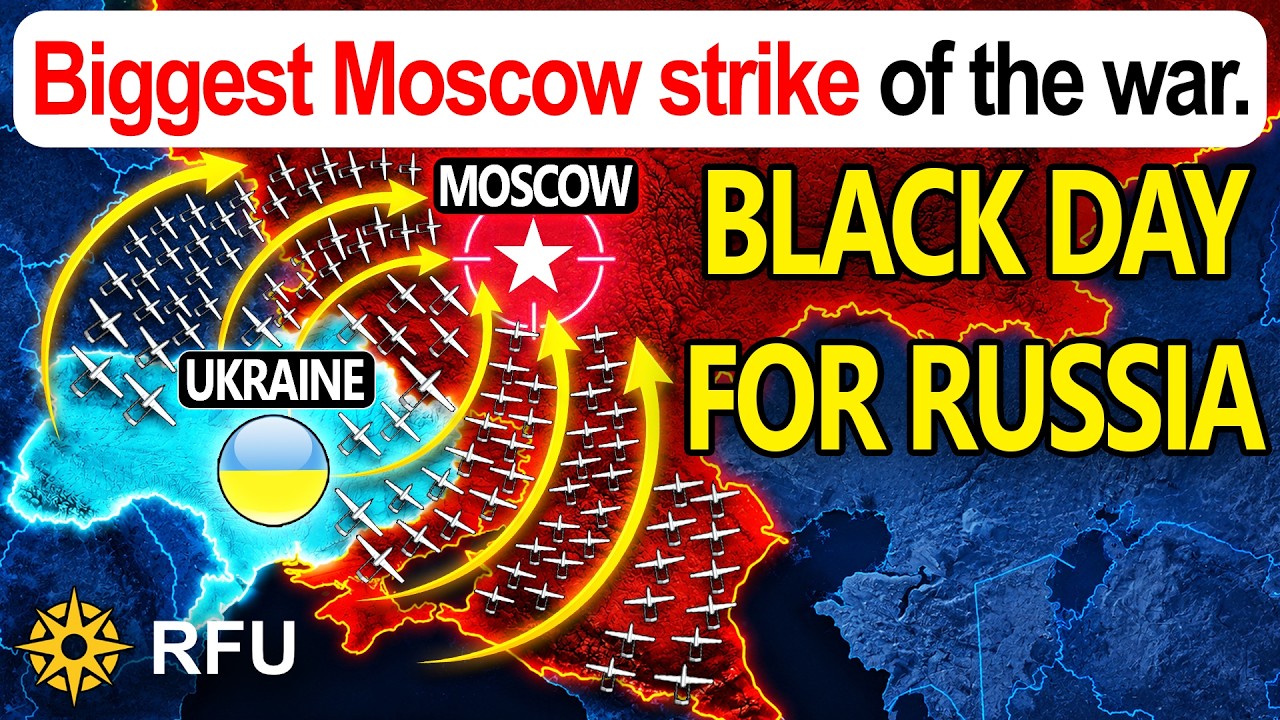
Today, Moscow experienced the largest Ukrainian drone attack of the war, with more than six-hundred-and-fifty drones targeting the Russian capital and the surrounding region overnight. According to Moscow Mayor Sergei Sobyanin, most of them were reportedly heading toward Moscow and were intercepted, while around one-hundred-and-eighty of them were brought down over the Moscow region. Even accepting those Russian claims, Ukrainian drones still penetrated the wider defensive network, making this the most extensive assault yet against Russia's political and economic center, affecting multiple targets simultaneously. A Wildberries warehouse caught fire after being struck, while witness footage showed visible damage despite company statements minimizing the incident. Power infrastructure was also hit, with damage to equipment cutting electricity to more than ten thousand consumers and nearly fifty important government facilities. Russian authorities acknowledged this was the first outage of such scale in the Moscow region, while local reports also described a fire near the Kapotnya refinery, damage to various buildings, vehicles, and a transformer substation, and all four Moscow airports imposed flight restrictions as the raid continued through the night and into the early morning.
This attack represents the latest stage of an escalating Ukrainian campaign against Moscow that has intensified throughout the past week. Only hours earlier, on the sixteenth of August, the Moscow region also faced an enormous drone raid, with Russian officials reporting approximately six-hundred incoming drones and more than two-hundred intercepted over the region. During that operation, Ukrainian drones successfully struck the Severnoye Domodedovo warehouse hub, setting one of Russia's largest production and logistics centers ablaze.
At the same time, Ukrainian drones ignited the massive Wildberries logistics complex in Koledino near Moscow. Covering roughly a quarter of a million square meters, the facility served as Wildberries' largest logistics hub after the destruction of its Elektrostal warehouse in July. Satellite imagery and footage from the scene indicated the complex was completely destroyed despite extensive firefighting efforts involving helicopters. Independent estimates suggested that goods worth nearly one billion US dollars were lost, as the warehouse had been central to maintaining one-to-two-day deliveries across Moscow and the surrounding region.
The Moscow campaign has extended well beyond commercial warehouses, as earlier attacks targeted the Central Research Institute of Machine Building, a major Russian aerospace and rocket engineering research center, causing significant damage to the building. Another strike near the Wildberries logistics center in Novoselki near Moscow damaged a nearby power substation and administrative building.
These operations reveal a consistent pattern, as Ukraine continues to systematically target logistics hubs, research facilities, warehouses, and supporting infrastructure around Moscow, gradually increasing pressure on both Russia's economy and its ability to sustain military production and distribution. Instead of concentrating on a single type of target, the campaign forces Russian authorities to defend dozens of important facilities simultaneously, stretching already limited air-defense resources across an ever-growing number of critical sites. At the same time, Russia's air-defense network faces mounting strain from depleted interceptor missile inventories, growing pressure on radar coverage, and an increasing shortage of experienced operators.
Perhaps the most significant trend is the sheer scale of Ukraine's expanding drone operations. Only several months ago, raids involving around three-hundred long-range drones against multiple targets represented an exceptional effort. That later increased to approximately six-hundred drones directed across several regions during the same night. Now Moscow alone is reportedly facing more than six-hundred-and-fifty Ukrainian drones night after night. This rapid growth reflects Ukraine's expanding production capacity and continuous development of new long-range unmanned systems capable of reaching deeper inside Russia in greater numbers.
Overall, as larger Ukrainian drone swarms arrive more frequently, the burden on the Russian defenders continues rising, increasing the risks of interception failures, infrastructure damage, and even friendly-fire incidents. If Ukraine maintains its current production trajectory while further refining its long-range drone capabilities, the scale and intensity of future attacks on Moscow and other strategic regions will continue growing, putting Russian officials under more pressure.
🔴 YOU ARE MISSING HALF OF OUR VIDEOS! Subscribe to unlock all out reports and support our work: https://www.youtube.com/channe....l/UCcNB1tZYpeDetqCad
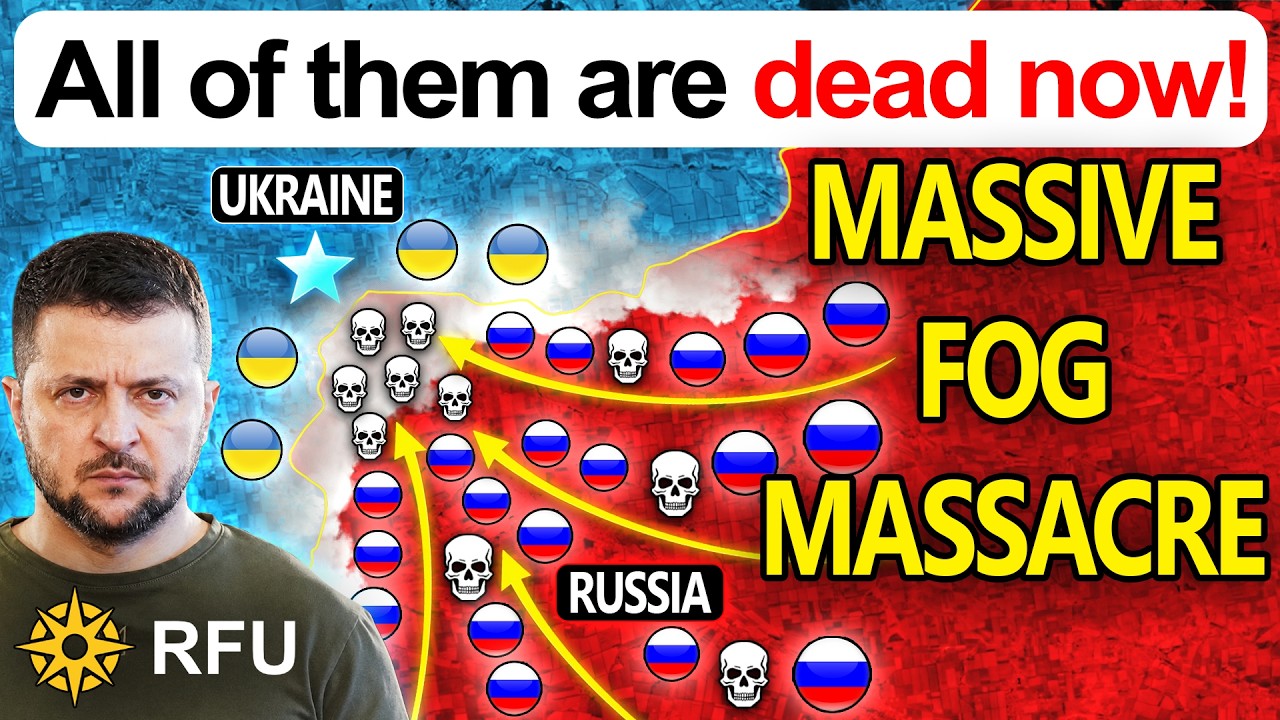
Today, a Ukrainian video was released from an intense fog battle near Vyshneve in the Dnipropetrovsk Region that unfolded under conditions that initially favored the attacking Russian force. Thick morning fog along the Yanchur River reduced visibility to only a few meters for both Ukrainian soldiers and drone operations. Hoping to exploit the weather, Russian troops launched a surprise assault against Ukrainian positions. Although the defenders could see almost nothing, they soon heard the sound of approaching engines. Ukrainian drone operators immediately began searching the surrounding area despite the poor visibility and eventually located two Russian Ural trucks and a buggy carrying roughly forty soldiers toward the southern edge of the village. The dense fog allowed the Russian infantry to dismount only about one-hundred-and-fifty meters from a Ukrainian observation post defended by just three soldiers. The Ukrainians immediately occupied firing positions inside the outermost house while Russian troops advanced toward them through the mist, triggering a close-range firefight.
Looking through the windows, the Ukrainians confirmed at least ten Russian soldiers nearby but suspected many more were concealed by the fog. Their battalion commander immediately improvised and redirected a ground drone toward the defenders to function as a mobile reconnaissance platform. Because visibility near ground level was slightly better than from the air, the robot transmitted a live video feed back to the commander, who began directing the defenders in real time. Guided by these images, the Ukrainian soldiers engaged approaching Russians with remarkable precision. The first two attackers advancing toward the house were shot almost immediately. Moments later, another pair attempted to approach from the right flank, but the live video feed warned the defenders exactly where they would appear. Two more Russians fell, followed shortly afterward by another pair, bringing the confirmed total eliminated by small-arms fire alone to six.
Moments later, a Ukrainian Vampire drone arrived carrying explosive munitions, but the fog remained too dense for its operator to see the battlefield directly, forcing the pilot to rely entirely on the live feed transmitted by the unmanned ground vehicle. Guided from the command post, the hexacopter released its munition directly into the center of another cluster of Russian troops, and when the smoke from the explosion settled, seven Russian soldiers were dead. As half an hour had passed, the weather began to improve, and the visibility increased, so Ukrainian FPV drones joined the fight. Russian infantry attempting to avoid accurate rifle fire from the defenders inside the house found themselves forced into the open streets, where drone operators engaged them one after another. The three defenders continued firing through windows while receiving continuous guidance, systematically clearing nearby garages, sheds, and concealed positions. The coordination between infantry, aerial drones, and the improvised reconnaissance ground vehicle transformed what had begun as a desperate defense into a devastating counterattack.
After roughly forty-five minutes of continuous fighting, around twenty Russian bodies lay immediately around the house where the three Ukrainian soldiers had held their ground. Approximately one hundred meters farther along the road, another twenty dead were counted. In total, around forty Russian soldiers were eliminated during the failed assault, despite the attackers enjoying an overwhelming numerical advantage of approximately thirteen to one. Remarkably, all three Ukrainian defenders survived the engagement, maintaining discipline throughout the battle and following every instruction transmitted by their commander over the radio.
The failed Russian assault also reflects the broader operational situation in this sector, as it was launched after Ukrainian forces had previously pushed the Russians back nearly ten kilometers. Such losses created considerable pressure on Russian headquarters to recover at least part of the lost territory quickly. Russian commanders rushed the available troops forward in an attempt to restore momentum and demonstrate progress to higher command by exploiting the dense fog, which proved a tactical gamble that backfired.
🔴 Our interactive news map: https://www.rfunews.com/map
🔴 Subscribe to unlock full access to the map + exclusive strategic insights: https://www.rfunews.com/pricing
Today, there are important updates from the Sumy direction.
Here, Russia desperately needed an innovative tactic to have a chance of breaking through the Ukrainian defenses. However, as the Russian assault units made the same mistake six times in a row, the consequences of their venture quickly became devastating.
Russia is becoming increasingly desperate because its conventional assaults in the area are failing, leaving its forces unable to break into the forest belt or suppress Ukrainian drone operators. The terrain has turned this sector into a deadly trap, as Ukrainians control the forest while Russian assault groups must cross open fields completely exposed to drone and artillery fire. Ukrainian forces maintain full fire control over the approaches, striking the enemy long before they reach the tree line. These repeated frontal assaults caused severe manpower losses and stalled advances entirely, forcing Russian commanders to abandon predictable attacks and search for a concealed infiltration route instead.
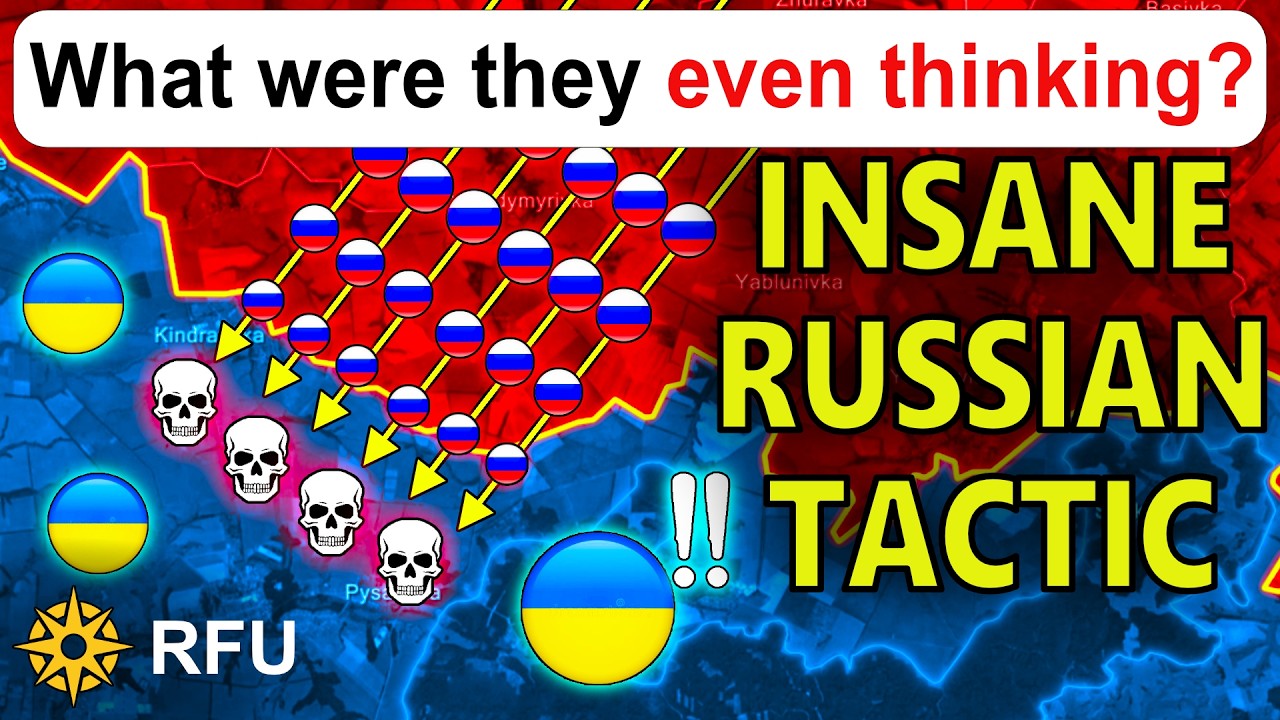
The plan was to replicate the success of the Russian infiltration into Sudzha during the Ukrainian incursion, when Russian soldiers used a pipeline as cover to bypass Ukrainian positions. Now, the Russian forces attempted to use the Urengoy–Pomary–Uzhgorod gas pipeline to surprise the Ukrainians again. Russian assault groups advanced seventeen kilometers through the pipeline system, entering via a collector shaft on Russian territory. Along the route, they established two rest points positioned approximately five kilometers apart, allowing troops to remain inside the pipeline for up to seven days. However, movement inside the pipeline is uncomfortable as it is only one hundred and forty centimeters in height, forcing Russians to crouch. Several openings were also prepared on the Ukrainian side. These serve as decoys to divert attention, while others were designated exit points for the assault teams.
The first assault began at dawn south of Yablunivka, where Russian infantry launched a coordinated attack, with some troops emerging from a gas pipeline while others advanced through nearby tree lines. Ukrainian drone operators quickly detected the movement and directed FPV drone strikes against the assault groups before they could disperse or take cover in forested areas. As a result of the Ukrainian crossfire with drones, the Russian forces were eliminated.
Despite the failure of the initial assault, Russian forces committed an even larger contingent to the operation. By monitoring all known and suspected exit points around the clock, Ukrainian soldiers could immediately direct FPV drones and artillery onto the new assault wave as soon as fifteen Russian soldiers emerged from the pipeline. The attack was quickly contained, while drone operators later eliminated the remaining infantry with grenade drops as they had nowhere to hide. During this engagement, forty-four Russian troops were killed in just thirty minutes, stopping the assault entirely.
In another attempt north of Nova Sich, six Russian soldiers advanced through the gas pipeline. Despite reducing the size of the infiltration unit to avoid detection, Ukrainian drones with thermal cameras spotted them even before they fully approached the defensive line. As additional Russian assault troops attempted to spread out after exiting the pipeline, Ukrainian artillery targeted them directly in the field, while the remaining soldiers were later neutralized by strikes from Vampire heavy drones.
Geolocated footage from a separate assault showed Russian troops emerging from the same pipeline southwest of the village of Yablunivka. This time, Russian forces also launched a diversionary attack using motorcycles and all-terrain vehicles from Russian-held territory. The diversion failed to distract Ukrainian defenders because drone surveillance was already expecting pipeline exits and refused to redirect resources, killing at least thirty-five Russian soldiers, wounding seventeen others, and destroying three motorcycles and four ATV.
During their next assault, twenty-nine Russian troops irrationally attempted the same tactic again. This time, the Ukrainian soldiers dispatched their quadcopter drones to eliminate the entire group before it could even reach the frontline. In total, Russian forces attempted variations of the same pipeline infiltration tactic five times over the course of a single month, with each assault launched less than a week after the previous one. By that stage, the element of surprise had completely disappeared as Ukrainians no longer needed to patrol large areas because they only had to monitor known pipeline exits.

🔴 YOU ARE MISSING HALF OF OUR VIDEOS! Subscribe to unlock all out reports and support our work: https://www.youtube.com/channe....l/UCcNB1tZYpeDetqCad
Today, the biggest news comes from the Russian Federation.
The first signs of serious agricultural disruption are already visible in Crimea, where farmers are warning that the current harvest period could fail because fuel shortages are preventing them from using farm machinery. Tractors, combines, and farm trucks all depend on a steady supply of diesel, so when fuel runs out, farmers can no longer continue harvesting even when crops are ready to be collected. This is already happening as parts of the Crimean peninsula face severe fuel shortages, with gas stations running dry, major retailers restricting sales, and some agricultural operations stopping because they cannot refuel their machinery. Russian authorities have acknowledged that strikes on infrastructure are creating fuel shortages, while Ukrainian attacks have repeatedly targeted fuel storage and distribution facilities across Crimea. That disruption is especially damaging during harvest, because even a short interruption can cause permanent losses once ripe crops remain in the fields long enough to be damaged by weather, moisture, or over-ripening.
The same fuel crisis is also hitting the much larger agricultural regions of Rostov, Krasnodar, and Stavropol, which together produce around twenty percent of Russia’s grain. Disruption there could therefore affect grain supplies and food prices across the country rather than remaining a local problem in Crimea. Farmers in Rostov describe workers spending half a day waiting for fuel, while diesel prices have risen sharply and supplies have become harder to secure for the tractors and combines working the fields. Similar shortages have also been reported in Voronezh, Lipetsk, Tambov, Sverdlovsk, Bashkortostan, and Yakutia, extending the fuel shortage across several major farming areas at once. By the beginning of July, Russia had harvested only around one point three to one point five million hectares, compared with more than four million hectares at the same point last year, although weather also contributed to the slower start. In Rostov alone, agricultural representatives estimate that missed harvesting windows could cause crop losses of up to fifteen percent.
Failed harvests across several regions would not leave Russia without food overnight, but they would make everyday life more expensive by reducing available supply and pushing up the price of basic necessities. Russia is already dealing with persistent inflation, with consumer prices going up four point six seven percent since the start of the year by the end of August, while official data suggests continued price increases for basic food products. If farmers bring in less grain, sunflower seeds, and other crops, food producers have less raw material to work with, while transport and processing also becomes more expensive when fuel is scarce. Food producers and retailers then have to cover those higher costs, which pushes up the price of basic products such as bread, meat, and dairy.
This also connects directly to Ukraine’s wider strategy of making Crimea harder and more expensive to hold while also increasing the cost of continuing the war for Russia. Ukrainian strikes on fuel infrastructure are already creating shortages that affect transport, agriculture, and daily life across the peninsula, forcing Moscow to spend more resources keeping Crimea supplied while also supporting its armed forces on the peninsula. As food and fuel become more expensive, ordinary Russians are forced to spend more of their income on basic needs, making the war harder to separate from daily life. At the same time, Moscow has to decide how to use limited fuel supplies, whether to prioritize the military or redirect more fuel toward farmers, transport, and civilian demand. Sending more fuel to the army leaves less available for the economy, while shifting supplies back to civilians makes it harder to support Russian forces and keep Crimea functioning. That choice helps Ukraine pressure both sides at once, making Crimea harder to hold while giving more Russians reasons to resent the war and the state that keeps it going.
Overall, the fuel crisis exposes how dependent Russia’s war effort is on the same infrastructure that keeps the civilian economy functioning. Every major disruption forces Moscow to choose whether the scarce fuel capacity should support the war or keep the economy and Crimea running. That gives Ukrainian strikes a wider impact, because damage to one part of Russia’s fuel system can quickly spread into other parts of the economy at the same time. The deeper this pressure goes, the harder it becomes for Moscow to keep the war going without weakening either its military operations or stability at home.

Rep. Ilhan Omar's home was raided by DHS in fraud probe. HSI Agents are outside Rep. Omar's home at this time.
Subscribe to LiveNOW from FOX! https://www.youtube.com/liveno....wfox?sub_confirmatio
Where to watch LiveNOW from FOX: https://www.livenowfox.com
Follow us @LiveNOWFOX on TikTok: https://www.tiktok.com/@livenowfox
Raw and unfiltered. Watch a non-stop stream of breaking news, live events and stories across the nation. Limited commentary. No opinion. Experience LiveNOW from FOX. Live news streaming channel when and where you need it.

The U.S. military says all American troops have now left Iraq, officially ending a 12-year mission focused on fighting ISIS. The final U.S. forces departed the last air base in northern Iraq under an agreement between Washington and Baghdad. The withdrawal comes as the U.S.-Iran war continues, with fighting and tensions at times spilling over into Iraq.
A cockpit incident onboard an Israeli plane lead to a hijacking scare causing the plane to be diverted. Israeli Prime Minister Netanyahu's office says "The incident is under control, and all measures are currently being deployed in order to return the Israeli passengers safely to Israel."
Subscribe to LiveNOW from FOX! https://www.youtube.com/liveno....wfox?sub_confirmatio
Where to watch LiveNOW from FOX: https://www.livenowfox.com
Follow us @LiveNOWFOX on TikTok: https://www.tiktok.com/@livenowfox
Raw and unfiltered. Watch a non-stop stream of breaking news, live events and stories across the nation. Limited commentary. No opinion. Experience LiveNOW from FOX. Live news streaming channel when and where you need it.

On Tuesday, federal authorities announced the arrest of a Saudi national and former OpenAI engineer who is accused of installing a concealed audio-recording device in an executive conference room at the artificial intelligence company, according to the U.S. Department of Justice.
LiveNOW’s Mike Pache speaks with FOX News’ Jonathan Hunt to discuss the latest developments.
Subscribe to LiveNOW from FOX! https://www.youtube.com/liveno....wfox?sub_confirmatio
Where to watch LiveNOW from FOX: https://www.livenowfox.com
Follow us @LiveNOWFOX on TikTok: https://www.tiktok.com/@livenowfox
Raw and unfiltered. Watch a non-stop stream of breaking news, live events and stories across the nation. Limited commentary. No opinion. Experience LiveNOW from FOX. Live news streaming channel when and where you need it.

Selma Blair arrested on flight, according to TMZ. Blair is accused of trying to open a plane door mid-air.

Sean "Diddy" Combs was transported out of federal prison to a hospital over the weekend to receive treatment for a head injury.
Subscribe to LiveNOW from FOX! https://www.youtube.com/liveno....wfox?sub_confirmatio
Where to watch LiveNOW from FOX: https://www.livenowfox.com
Follow us @LiveNOWFOX on TikTok: https://www.tiktok.com/@livenowfox
Raw and unfiltered. Watch a non-stop stream of breaking news, live events and stories across the nation. Limited commentary. No opinion. Experience LiveNOW from FOX. Live news streaming channel when and where you need it.

President Trump announced on Truth Social that Katie Zacharia will begin her term as the new White House Press Secretary on Tuesday. She is expected to hold her first press briefing at 9:30 am eastern time Tuesday.
"I am pleased to announce that Katie Zacharia will be beginning her term as Press Secretary tomorrow, Columbus Day, and will be doing an introductory News Conference on Tuesday at 9:30 A.M. from the Press Briefing Room in the White House. Katie has been with me, in spirit, from the very beginning, and will do a fantastic job!" said Trump.
Subscribe to LiveNOW from FOX! https://www.youtube.com/liveno....wfox?sub_confirmatio
Where to watch LiveNOW from FOX: https://www.livenowfox.com
Follow us @LiveNOWFOX on TikTok: https://www.tiktok.com/@livenowfox
Raw and unfiltered. Watch a non-stop stream of breaking news, live events and stories across the nation. Limited commentary. No opinion. Experience LiveNOW from FOX. Live news streaming channel when and where you need it.

We are now hearing reports that emergency crews rushed to Six Flags Over Georgia on Monday afternoon after an incident on the Goliath roller coaster left one person dead and several others injured. Officers assigned to Six Flags Over Georgia responded to an emergency call at approximately 3:58 p.m. on Monday. According to our partners at FOX 5 Atlanta, Cobb County police said that several people reported injuries and one person died during the incident involving a roller coaster.
Subscribe to LiveNOW from FOX! https://www.youtube.com/liveno....wfox?sub_confirmatio
Where to watch LiveNOW from FOX: https://www.livenowfox.com
Follow us @LiveNOWFOX on TikTok: https://www.tiktok.com/@livenowfox
Raw and unfiltered. Watch a non-stop stream of breaking news, live events and stories across the nation. Limited commentary. No opinion. Experience LiveNOW from FOX. Live news streaming channel when and where you need it.

The Lindsay Clancy murder trial has entered the verdict watch phase. Jurors have not reached a verdict in the Clancy trial. If Clancy is convicted she could face life in prison. If she is found not guilty, she may be released or remain in a mental health facility.
Subscribe to LiveNOW from FOX! https://www.youtube.com/liveno....wfox?sub_confirmatio
Where to watch LiveNOW from FOX: https://www.livenowfox.com
Follow us @LiveNOWFOX on TikTok: https://www.tiktok.com/@livenowfox
Raw and unfiltered. Watch a non-stop stream of breaking news, live events and stories across the nation. Limited commentary. No opinion. Experience LiveNOW from FOX. Live news streaming channel when and where you need it.

Yemen's Houthi militants struck the executive headquarters of Saudi Aramco in the eastern city Dhahran during an overnight missile and drone barrage. LiveNOW from FOX's Stephanie Coueignoux discusses the latest developments in the Middle East with Michael Makovsky, CEO of the Jewish Institute for National Security of America.
Subscribe to LiveNOW from FOX! https://www.youtube.com/liveno....wfox?sub_confirmatio
Where to watch LiveNOW from FOX: https://www.livenowfox.com
Follow us @LiveNOWFOX on TikTok: https://www.tiktok.com/@livenowfox
Raw and unfiltered. Watch a non-stop stream of breaking news, live events and stories across the nation. Limited commentary. No opinion. Experience LiveNOW from FOX. Live news streaming channel when and where you need it.

President Donald Trump said Monday that he is "looking at" firing U.S. Ambassador to Greece Kimberly Guilfoyle after various reports alleging she engaged in improper and potentially illegal conduct before and during her tenure in Athens. "We're not happy," Trump added.
Earlier this month, The Wall Street Journal reported — referencing text messages — that Guilfoyle asked a Trump donor and supporter to pay a $100,000 credit card bill just before her confirmation hearing, promising him access to administration officials if he did.
Guilfoyle has not addressed the reports directly, but in a statement released late Sunday obtained by The Associated Press, her attorneys denied any wrongdoing by Guilfoyle and alleged that the money she was requesting from the Trump donor was payment for services like public appearances and speaking engagements that predate her ambassadorial nomination that had not been paid.
Fox News Correspondent Caroline Elliott and LiveNOW's Shawna Khalafi have more.
Subscribe to LiveNOW from FOX! https://www.youtube.com/liveno....wfox?sub_confirmatio
Where to watch LiveNOW from FOX: https://www.livenowfox.com
Follow us @LiveNOWFOX on TikTok: https://www.tiktok.com/@livenowfox
Raw and unfiltered. Watch a non-stop stream of breaking news, live events and stories across the nation. Limited commentary. No opinion. Experience LiveNOW from FOX. Live news streaming channel when and where you need it.

Actor Selma Blair pleaded not guilty to two assault charges Tuesday stemming from a disturbance aboard a Delta flight bound for New York.
Subscribe to LiveNOW from FOX! https://www.youtube.com/liveno....wfox?sub_confirmatio
Where to watch LiveNOW from FOX: https://www.livenowfox.com
Follow us @LiveNOWFOX on TikTok: https://www.tiktok.com/@livenowfox
Raw and unfiltered. Watch a non-stop stream of breaking news, live events and stories across the nation. Limited commentary. No opinion. Experience LiveNOW from FOX. Live news streaming channel when and where you need it.