Top videos

Watch the J-TV+ documentary on What Really Happened In 1948? - https://j-tv.plus/what-really-....happened-in-1948-the
Donate to J-TV - https://j-tv.plus/donate/
Source: https://www.youtube.com/watch?v=H_Wi6FzVWLI

🔴 Become a member of Tousi TV+ at https://tousi.tv
🛒 Want to work for Tousi TV? Look at our careers page: https://tousi.tv/careers
📲 Download Tousi TV app — available on iPhone and Android.
X: @TousiTVOfficial
Instagram: @TousiTV
TikTok: @TousiTVOfficial

🔴 Become a member of Tousi TV+ at https://tousi.tv
📲 Download Tousi TV app — available on iPhone and Android.
🌎 Get access to The Situation Room: https://members.thesituationro....om.global/?ref=mahya
X: @TousiTVOfficial
Instagram: @TousiTV
TikTok: @TousiTVOfficial

🔴 Join Tousi TV+ today and get access to premium shows, documentaries, and our chat forum: https://tousi.tv
Breaking news 24/7
🇬🇧 Get your own 'Unite The Kingdom' merchandise: https://mahyartousi.creator-spring.com/
💙 Support Mahyar via donation link: https://tousi.tv/support-us/
X: @MahyarTousi
Instagram: @TousiTV
TikTok: @TousiTV_

🔴 Use promo code TOUSIBABY to get 75% off Tousi TV+ Annual Memberships: https://tousi.tv
📲 Download Tousi TV app — available on iPhone and Android.
🌎 Get access to The Situation Room: https://members.thesituationro....om.global/?ref=mahya
X: @TousiTVOfficial
Instagram: @TousiTV
TikTok: @TousiTVOfficial

Original here: https://www.youtube.com/live/p....pq9toSNWDQ?si=F0eBCK
Tousi TV livestream recording about Henry Nowak
🔴 Use promo code YT20 to get 20% Tousi TV+ Annual Memberships at https://offers.tousi.tv
🛒 Get your Iran merch from our Tousi Store: https://www.tousistore.tv
📲 Download Tousi TV app — available on iPhone and Android.
X: @TousiTVOfficial
Instagram: @TousiTV
TikTok: @TousiTVOfficial

Dan Wooton has said that Mahyar Tousi is moving to America. This is the truth of the story.
You can help us fight for ordinary people by donating to the Patriot Fund:
https://www.paypal.com/donate/....?hosted_button_id=V5

🔴 Become a member of Tousi TV+ at https://tousi.tv
🛒 Get your Iran merch from our Tousi Store: https://www.tousistore.tv
📲 Download Tousi TV app — available on iPhone and Android.
X: @TousiTVOfficial
Instagram: @TousiTV
TikTok: @TousiTVOfficial

🔴 Use promo code TOUSIBABY to get 75% off Tousi TV+ Annual Memberships: https://tousi.tv
📲 Download Tousi TV app — available on iPhone and Android.
🌎 Get access to The Situation Room: https://members.thesituationro....om.global/?ref=mahya
X: @TousiTVOfficial
Instagram: @TousiTV
TikTok: @TousiTVOfficial

🔴 Use promo code SA50 to get 50% off Tousi TV+ Annual Memberships: https://offers.tousi.tv/
📲 Download Tousi TV app — available on iPhone and Android.
🌎 Get access to The Situation Room: https://members.thesituationro....om.global/?ref=mahya
X: @TousiTVOfficial
Instagram: @TousiTV
TikTok: @TousiTVOfficial

🔴 Use promo code SA50 to get 50% off Tousi TV+ Annual Memberships: https://offers.tousi.tv/
🛒 Want to work for Tousi TV? Look at our careers page: https://tousi.tv/careers
📲 Download Tousi TV app — available on iPhone and Android.
X: @TousiTVOfficial
Instagram: @TousiTV
TikTok: @TousiTVOfficial
💎 Help us expand the coverage! Subscription starts from just $4.99! Get 50% OFF full access to the map + exclusive strategic updates: https://www.rfunews.com/pricing
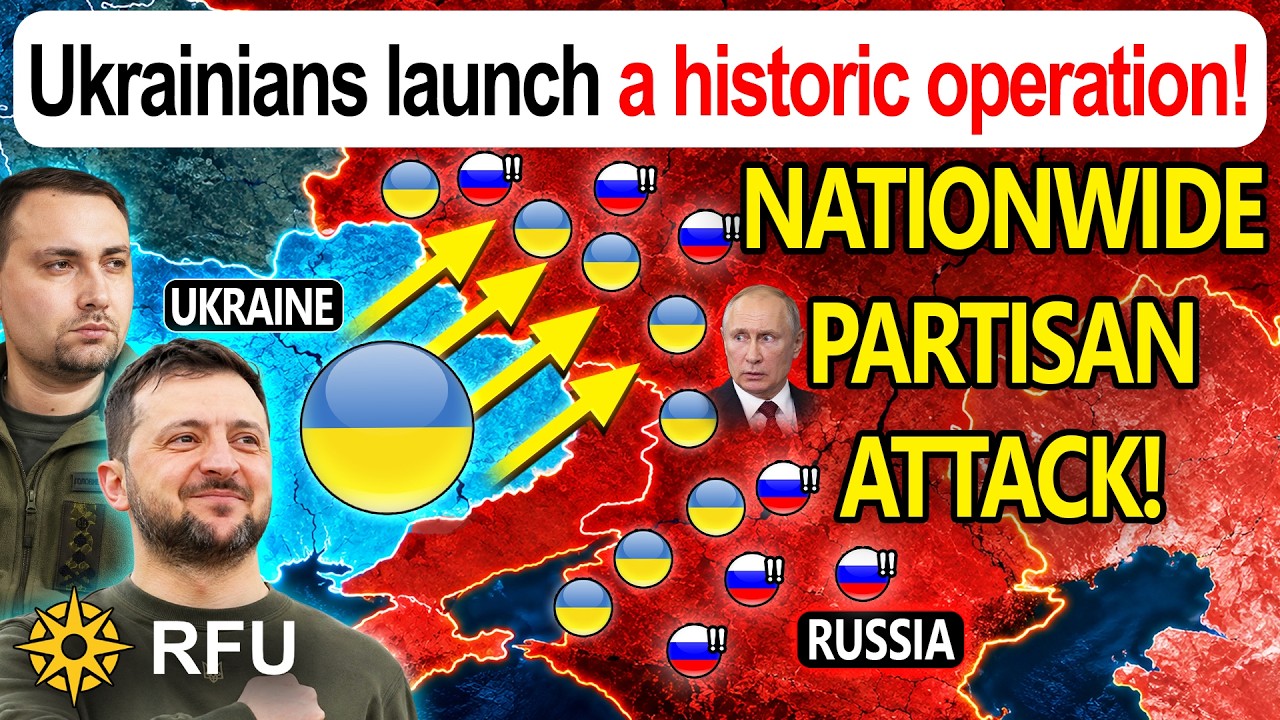
Today, the biggest development is coming from inside Russia itself.
Here, Russian partisans fighting on the side of Ukraine conducted a large-scale operation deep into enemy-held territory that paralyzed the Russian railway logistics.
The main Ukrainian intelligence Directorate or GUR, recently released footage of this truly historic covert operation. Russian citizens fighting for Ukraine in the Freedom of Russia Legion were sent to infiltrate all across Russian-controlled Ukraine in one unified operation. Speaking Russian and pretending to be citizens of the Russian proxy states in Donbas, they remained undetected as they moved toward their target, the most critical component of the Russian army’s entire logistics network: their railway lines.
Simultaneously setting explosive charges onto the fuel carts in the middle of the night, all the major Russian railway hubs were targeted. Ukrainians blew up trains in the major cities of Donbas and Luhansk, which form the capitals of Russia’s LPR and DPR puppet states. They set fire to locomotives and rail relay stations in Mariupol and Melitopol, where all of Russia’s logistics in the Zaporizhia and Kherson regions flow through. The undercover operatives even penetrated as deep as Rostov-on-Don, where the main headquarters of Russian high command overseeing the war in Ukraine is operating from. Nowhere was safe, as the footage shows scores of trains and crucial railway infrastructure exploding and going up in flames.
Russians themselves responded with outrage. They complain that too many Russians inside of the country are increasingly showing support and favoritism toward Ukraine. They say that these people are responsible for regular partisan attacks inside of Russia and the Russian-controlled territories in Ukraine. This is not surprising however, as the Ukrainian intelligence directorate is actively advertising to people in these territories and opponents of Putin’s regime to get in contact with them to become a part of the resistance movement, including training, intelligence gathering, and even direct sabotage attacks.
Because of this, recent partisan attacks have spread to railway logistics in cities as far as Kemerovo, Tyumen, and Yekaterinburg. Here, three locomotives in dual-use by the Russian armed forces were burned down, paralyzing Russian transport capacity across the most important transport lines connecting Siberia with Russia-proper across the Ural mountains. Most often however, sabotage occurs much closer to the frontlines in Ukraine, where all disruptions are felt immediately on the front. Partizans set fire to railway cabinets in Luhansk, which ground transport to a temporary halt long enough for follow-up strike drones to take full advantage of the stationary trains. Vehicles used by Russian soldiers in the rear are also common targets for lower-level sabotage by resistance members, preventing transport of supplies, ammunition, and reinforcements to the front. While the impact of a single vehicle may seem small, this results in one less vehicle that Ukrainians have to deal with on the front, one Russian sector that starts running low on supplies, and fewer potential infiltrators causing a headache for Ukrainian forces in the rear.
Overall, if every minor action adds up to a consequential effect, Ukrainians just unleashed a tidal wave of frontline impact. The coordinated operation executed by volunteers of the Freedom of Russia Legion not only destroyed over ten thousand tons of fuel supplies, but the carriers and locomotives that cart supplies around as well. As the railway continues to form the backbone of the Russian army’s logistics, the disruptions and delays that this destruction has caused are significant. With Russian officials seemingly unable to stem the wave of resistance fighters operating not only within the Ukrainian territories they control, but throughout mainland Russia as well, the pressure is building up, and continued resistance becomes a more accessible option with every operation that passes.
💎 Help us expand the coverage! Subscription starts from just $4.99! Get 50% OFF full access to the map + exclusive strategic updates: https://www.rfunews.com/pricing
Today, there is important news from the Russian Federation.
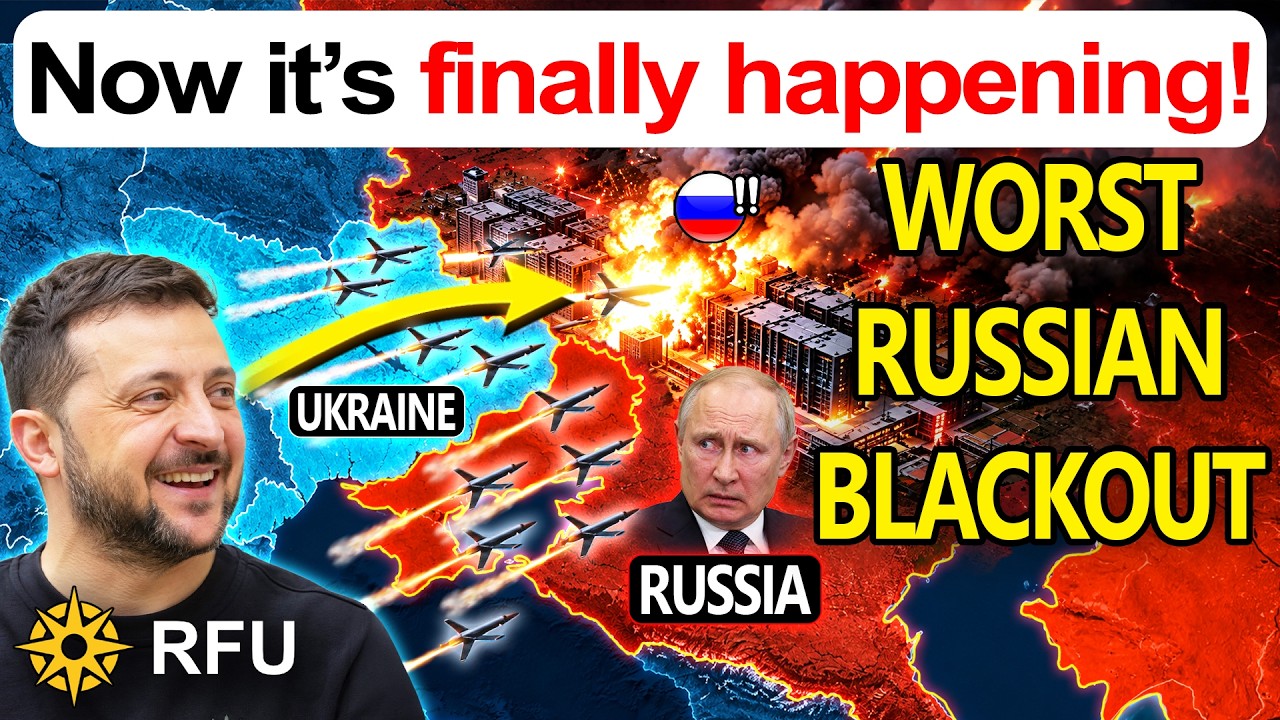
Here, Russia’s technology sector has suffered a major blow after drones struck Yandex’s biggest data center in Sasovo, in the Ryazan Region, triggering a fire and forcing the facility to shut down completely. Located on the former premises of the Sasta machine-tool plant, which supplies Russia’s engineering industry and was also targeted in the attack, the complex hosts tens of thousands of servers and represents Yandex’s most important computing facilities.
The Ukrainian attack immediately disrupted cloud infrastructure, as Yandex acknowledged electricity problems affecting one availability zone and advised customers to switch to alternatives. Although the company maintained that its principal consumer services remained operational, the complete shutdown demonstrated how quickly a physical strike can interrupt digital infrastructure supporting thousands of businesses, as problems were reported throughout various internet services in Russia within minutes after the attack.
Financial markets reacted immediately in panic as well, with Yandex shares falling approximately four percent during early Moscow trading, as investors were suddenly confronting a new risk: Russia’s most important technology companies could become increasingly vulnerable to the same type of disruption already affecting its energy and logistics sectors.
The timing is particularly significant because Russian strikes have recently targeted Ukrainian data centers, and now Russia is experiencing the consequences of attacks against its own digital infrastructure, while the economic implications could extend far beyond Yandex. Earlier attacks on Wildberries and Ozon facilities demonstrated how physical destruction can disrupt online commerce. Data centers represent an even more complicated challenge because they support the software systems that allow businesses to function.
What makes it even more dangerous, warehouses can often be replaced through smaller storage facilities, alternative distribution routes, and dispersed inventories. Large data centers are harder to replicate quickly, as they require enormous electrical capacity, cooling equipment, specialized servers, high-speed connections, and carefully coordinated software environments. Although workloads can be transferred between facilities, relocating massive datasets and computing capacity requires substantial investment and technical preparation. Consequently, repeated disruptions could create mounting costs even when companies successfully restore their services.
Russia’s digital economy depends upon these systems for cloud storage, financial transactions, corporate databases, telecommunications and government administration. Yandex itself operates search, navigation, transportation, storage and artificial-intelligence services, including YandexGPT. Disruption across several independent providers could therefore produce cascading problems: slower applications, interrupted online payments, unavailable business records, delayed administrative services and increasingly unreliable commercial platforms.
The next potential biggest target could be the Udomlya data center in Tver Oblast, processing nuclear-reactor simulations and storing state video archives from across Russia, the destruction of which could disrupt the work of the Russian government. The second major target could become Moscow’s M-Nine data center, which is a hub that, if taken offline, could cause a large part of the Russian internet to suffer immediate disruption, potentially affecting banking transactions, mobile connectivity, and government portals. Despite Russia possessing a geographically distributed data-center industry, most of the operational facilities are located inside or near Moscow.
After such a campaign, Russian companies will have to restore data access, redirect workloads, investigate interrupted transactions, and reassure customers. Some may need additional backup capacity, while others could reconsider relying exclusively on domestic infrastructure. For the Russian government, repeated incidents would create another expensive challenge alongside protecting refineries, transportation networks and industrial facilities.
Overall, the scale of the risk for Russia makes the Sasovo attack fundamentally different from previous attacks on warehouses. The immediate damage concerns physical equipment, but the secondary consequences can spread through businesses that never experienced the attack directly, demonstrating a vulnerability that Moscow can no longer ignore but can’t fix quickly enough as well. After years of Russian attacks against Ukraine’s civilian infrastructure, the consequences are increasingly reaching Russia’s own digital economy.

💎 Help us expand the coverage! Subscription starts from just $4.99! Get 50% OFF full access to the map + exclusive strategic updates: https://www.rfunews.com/pricing
Today, there is important news from the Russian Federation.
Here, Ukraine’s campaign against Russia’s oil industry intensified, with explosions and fires reported at Lukoil’s massive Volgograd refinery. Processing roughly fifteen million tons annually, the facility produces gasoline, diesel and aviation kerosene essential to Russia’s economy and military. During the same attack wave, Ukraine also struck the Samara oil-distribution station, an important node involved in producing Russia’s oil export blend. These attacks followed an extraordinary week in which Ukraine reported strikes against six Russian refineries, demonstrating that individual raids can easily be turned into a systematic campaign with dangerous results for Russia.
As a result, the scale is becoming economically significant, as Ukraine’s Defense Ministry stated that more than fifty-one percent of Russia’s refining capacity has now been put out of operation, describing the objective as bleeding Russia’s military-economic system. Despite Putin acknowledging that attacks on energy infrastructure are affecting economic performance, his tactic is to translate this into a percentage change in gross domestic product only to hide the real economic effect and mislead the Russian public. Putin openly admitted a decrease of only about one percent of a roughly two-point-seven-trillion US dollar economy, which is approximately twenty-seven billion dollars. The broader cumulative consequences of the Ukrainian strikes, however, extend far beyond direct refinery damage through disrupted production, transportation, exports, repairs, and military fuel supplies, making опенUkrainian strikes deal even more harm due to their repetitive nature.
At Ilsky, Ukrainian drones damaged all three primary processing units, destroying almost the whole refining capacity. With the tank farm also damaged, production reportedly stopped at the key refinery supplying southern Russia and military logistics.
Novoshakhtinsk, capable of processing approximately five-point-six million tons annually, was also attacked by Ukrainian drones. Its connections to major rail and oil terminals make disruption there particularly damaging to fuel transportation across southern Russia.
Then Ukraine reached Perm, approximately one-thousand-and-five-hundred kilometers away. Fires were reported around several sections of the thirteen-million-ton Lukoil refinery, including the Avt-Five unit, responsible for roughly one-third of primary processing.
The next Ukrainian strike in Ufa also demonstrated that even distance no longer guarantees protection. Ukrainian drones attacked Bashneft’s enormous refining cluster more than one-thousand-three-hundred kilometers from Ukraine on consecutive days, damaging facilities producing diesel, gasoline, and aviation fuel.
At Kuibyshev in Samara, large fires were reported around the primary distillation infrastructure after incoming drone strikes. The refinery can process approximately seven million tons annually and produces substantial quantities of diesel, gasoline, and fuel oil, with the process now halted.
The Saratov refinery was hit again as well after previous strikes earlier this year. The Rosneft refinery processes up to seven million tons annually and produces fuels used by both civilian consumers and Russia’s military-industrial system.
The Ryazan refinery represents an even larger target, as it can process approximately seventeen million tons annually, and Ukrainian strikes ignited its primary-processing units, threatening an important source of motor fuel around Moscow.
Repeated strikes matter because repaired units can be damaged again, forcing Russia into an expensive cycle of restoration while simultaneously protecting an enormous network of refineries, pipelines and pumping stations. The consequences therefore extend far beyond destroyed equipment, as Russia requires petroleum products to move tanks, trucks and aircraft, while energy exports and taxation remain crucial sources of state revenue. Refinery disruption creates repair expenses, logistical bottlenecks, and pressure on domestic fuel availability while forcing additional resources into air defense.
Overall, Ukraine’s strategy is methodical, repeatedly attacking the infrastructure that converts Russian crude oil into economically and militarily valuable products. If Ukrainian estimates of more than half of refining capacity being disabled even temporarily are sustained, the pressure will increasingly reach Russia’s war machine itself. Putin must simultaneously finance the war, replace military losses, repair energy infrastructure, and protect facilities scattered across an enormous territory, while Ukrainian drones are demonstrating that increasingly little of that territory remains safely beyond their reach.
💎 Help us expand the coverage! Subscription starts from just $4.99! Get 50% OFF full access to the map + exclusive strategic updates: https://www.rfunews.com/pricing
Today, there is interesting news from the Pokrovsk direction.
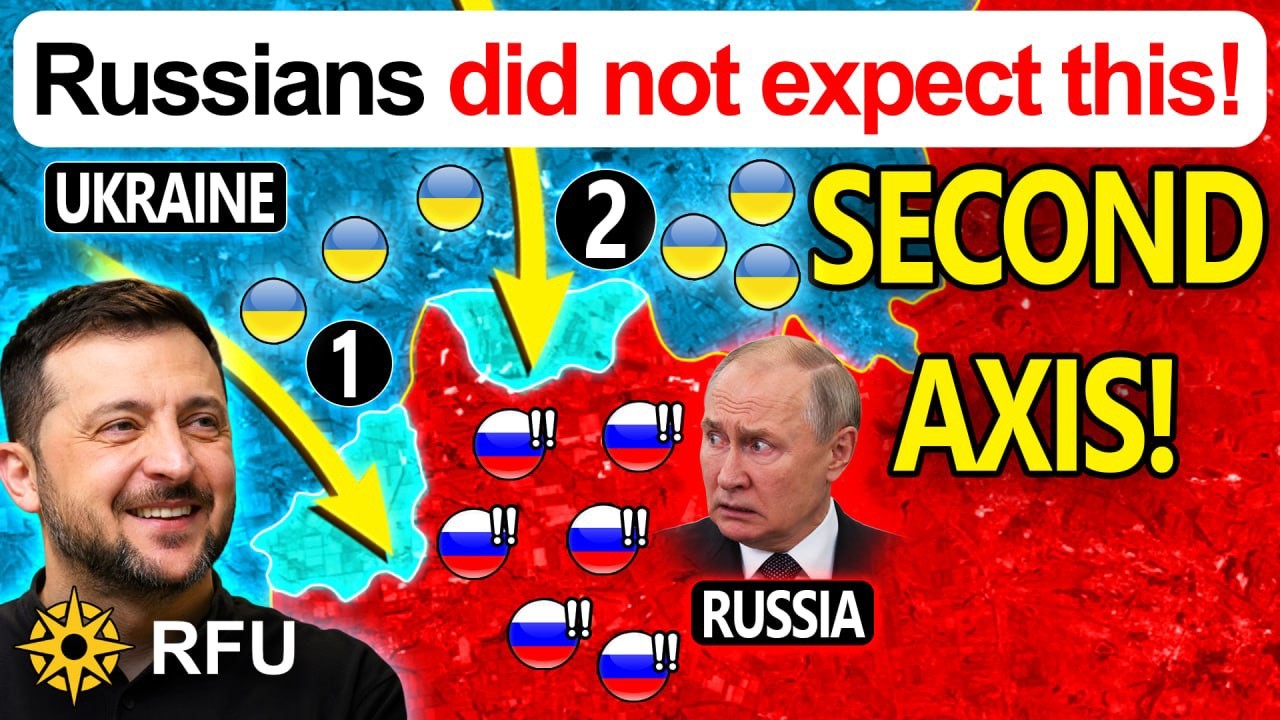
Here, the Ukrainian counteroffensive is expanding, with Ukrainian forces opening a second axis between Dobropillia and Druzhkivka to clear the remnants of the Russian troops trying to entrench themselves in the area. The Skala Assault Regiment, operating alongside the Twelfth Azov Brigade, launched clearing operations around Hruzke and Novomykolaivka, establishing a blocking line designed to stop Russian infiltration toward Druzhkivka.
The operation relied heavily on infantry because Russian troops had dispersed through interconnected forest belts. Ukrainian commanders divided the assault force across three routes, carefully bypassing mines before moving toward the predetermined Russian positions. Every Ukrainian group received specific objectives, including where to attack and approximately how many Russian soldiers were expected there.
Crossing open ground was particularly dangerous because Russian FPV drones were constantly searching for Ukrainian troops in an attempt to help Russians on the ground dig in the forest. However, due to their own drone reconnaissance, Ukrainian soldiers were informed that everyone ahead of them could be treated as hostile, while a commander monitored their movement through a drone’s live feed, warning assault groups whenever threats appeared.
After reaching their designated positions, Ukrainian soldiers concentrated inside the forest belts before beginning successive assaults. Close-range fighting followed, with some Ukrainian soldiers wounded, but the advance continued while other troops remained behind on the flanks. This became crucial when some Russian forces attempted to move behind the advancing Ukrainians and cut them off, but the Ukrainian soldiers waiting in ambush intercepted them instead.
The Ukrainians then captured Russian radios, creating an immediate advantage because they could hear Russian movements and learned that enemy soldiers intended to deploy anti-personnel mines ahead of the Ukrainian advance. Instead, the Russian groups were located and eliminated before completing their task.
Russian drone operators eventually identified the previous Ukrainian ambush position and attacked it with six drones, but the Ukrainians had already relocated and advanced another one hundred meters, discovering another Russian position and eliminating it through coordinated action. After each position was cleared, Ukrainian soldiers consolidated while fresh groups moved through them to continue the attack.
Where Russian resistance became stronger, Skala requested support from Azov drone operators, who struck Russian positions before infantry advanced. This created a repeating cycle: locate, strike, assault, consolidate, and introduce another group to build on the success so far. Eventually, Skala cleared the new Russian attempt to resurrect the pincer, allowing the Azov Brigade to introduce consolidation forces.
The broader context makes this operation particularly important, as Ukrainian forces were already attacking from the Dobropillia direction after clearing Russian infiltrators south of Hruzke, so Russia subsequently attempted to shift infiltration farther east toward Novomykolaivka. Capturing positions there could have reopened a vector toward Druzhkivka and ultimately increased pressure against the wider Kramatorsk defensive area. Instead, the First Azov Corps, reinforced by Skala, continued systematically searching the forests and eliminating Russian infiltration groups, which effectively creates a second Ukrainian counteroffensive axis alongside the continuing operations around Dobropillia. Rather than merely reacting to individual Russian infiltrations, Ukrainian forces are attempting to construct a continuous protective belt south of Druzhkivka, denying Russia the ability to transform scattered infiltration groups into a sustainable breakthrough.
Overall, the Ukrainian Pokrovsk counteroffensive is therefore becoming more than simply eliminating the original Russian penetration. Ukraine is expanding sideways, securing the approaches toward Druzhkivka and constructing another defensive barrier. If this continues, Russia’s attempt to exploit the area toward Druzhkivka and threaten Kramatorsk risks being dismantled before it can develop into something significant.

💎 Special Offer: starting from just $4.99! Get 50% OFF full access to the map + exclusive strategic updates: https://www.rfunews.com/pricing
Russians have now officially started to dismantle their own air defense, leaving even more gaps for Ukraine to exploit. All of this was done solely to increase the number of strikes on Ukraine, as Russia has begun converting its existing air defense missiles into ground-attack ballistic missiles. According to Ukrainian intelligence, Russia converted around two-hundred missiles in two-thousand-and-twenty-five and plans to convert an additional four-hundred-and-eighty by the end of this year. However, as these missiles were never designed for such ground-attack purposes, their accuracy is horribly ineffective. Additionally, using air defense interceptors as strike weapons creates a serious long-term vulnerability for Russian air defense as a whole, as production capabilities is refocused and repurposed, while Russians already suffer from a serious air defense problem.
Russian air defenses are already placed under significant strain, with Russian military analysts stating that Russia is experiencing a true air defense shortage. Ukrainian saturation tactics using waves of drones and missiles force Russian systems to already expend valuable interceptors, with some units already reporting a shortage. Instead of addressing this shortage, the Russian leadership has decided to prioritize offensive strikes against Ukraine. This decision may exploit Ukraine’s own shortage of ballistic missile interceptors, but it leaves Russia with a thinner and less capable defensive shield of its own, while Ukraine works to strengthen theirs instead. Despite this obvious misalignment of priorities, Russia is now focusing massively on launching as many of them as possible to strike targets across Kyiv.
The latest Russian strike involved twenty-four ballistic missiles, four Zircon missiles, and more than one hundred drones. Russians deployed ballistic missiles with cluster warheads to target warehouses within the city. As a result of the attacks, seventeen people were killed, more than forty were injured, and fire raging for hours.
Simultaneously, Russia is importing additional offensive capacity while prioritizing missiles that weaken or fail to replenish its homeland defense. A North Korean missile unit has recently been deployed to the Voronezh region to support missile strikes against Ukraine. The contingent includes approximately six individual ballistic missile launchers and more than one-hundred-and-twenty ballistic missiles. These North Korean missiles and launchers will soon enable Russia to conduct even larger salvos and more frequent attacks on Ukraine, putting Ukraine’s air defense network under increasing strain.
However, destroying the launchers before firing may be more realistic than attempting to intercept every missile after launch. Ukrainian Foreign Minister Andrii Sybiha has declared that North Korean missile installations or systems deployed to attack Ukraine are legitimate military targets. President Volodymyr Zelensky has additionally made a decree to prioritize the destruction of Russian ballistic missile launchers to reduce the number of strikes against Ukraine. Zelensky stressed that Ukrainian forces already know how to track the locations of the launchers with the help of Western intelligence support. At the same time, Ukraine is working together with European partners to produce an anti-ballistic missile air-defense system as a long-term solution. The interceptor missiles of the Freya system will be manufactured domestically by Fire Point, while its radar and sensors would be supplied by Europe. This would help to reduce Ukraine’s dependence on the US-made Patriot system with a domestic alternative. If this new air defense system is successfully developed and mass-produced, while Ukraine strikes Russia’s launchers, Ukraine could significantly reduce the number of successful ballistic missile strikes. Moscow is now exploiting Ukraine’s temporary shortage, but it is encouraging Ukraine to destroy Russian launchers and accelerate a European replacement for Patriot.
Overall, diverting air defense interceptors into ground-attack missiles is Russia’s biggest mistake, because they are trading long-term homeland protection for short-term strike capacity against Ukraine. Every gap in Russian protection, which they voluntarily make, creates additional opportunities for Ukraine, which they can exploit. Additionally, importing North Korean missiles increases short-term attack volume but does nothing to repair the growing defensive vulnerability inside Russia. Russia is trying to exploit Ukraine’s temporary shortage by creating a potentially longer-term shortage in its own defensive system.
💎 Help us expand the coverage! Subscription starts from just $4.99! Get 50% OFF full access to the map + exclusive strategic updates: https://www.rfunews.com/pricing
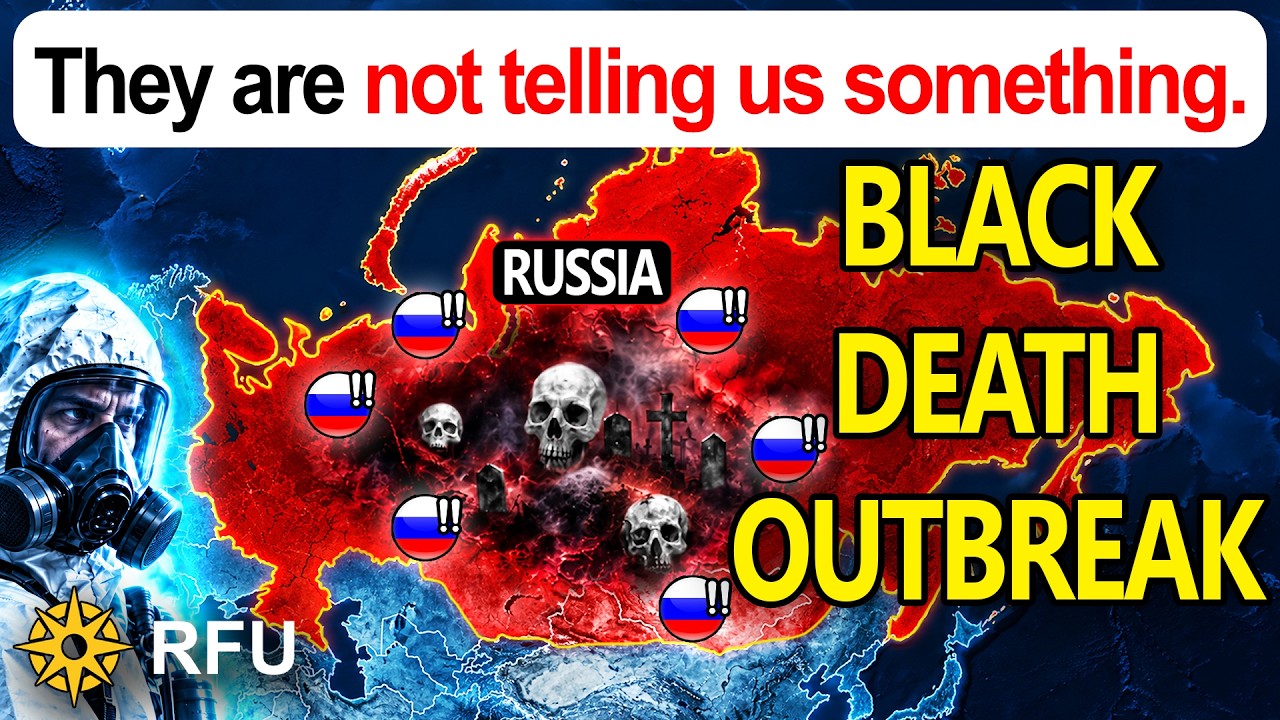
Today, there are dangerous updates from the Russian Federation.
Here, Russia is facing an extraordinary plague outbreak in Siberia after a young laboratory worker died from a mysterious, severe pneumonia, and nearly two hundred potential contacts were placed under medical observation. Daria Shipilova, twenty-eight years old, worked at the Irkutsk Anti-Plague Research Institute and deteriorated rapidly after falling ill. The whole hospital was quarantined, public events were canceled, and Russia’s top public-health official Anna Popova traveled thousands of kilometers from Moscow to coordinate the response. Yet Russian authorities insist the regional situation remains stable, and that is where Russia’s story becomes increasingly strange.
According to the officially reported version, the lab official accidentally broke a test tube containing live plague bacteria while working. But Russian epidemiologist Mikhail Favorov publicly questioned that explanation, arguing that specialists handling dangerous pathogens work in protective equipment and describing infection through such an accident as unlikely. He also argued that the immediate arrival of the highest-ranking health officials in Russia indicates authorities were treating the situation extremely seriously, despite trying to project calmness to the public.
Russian authorities subsequently contradicted themselves and their own official laboratory-accident story, as they changed their version and stated that the woman died from pneumonia of unknown etiology, that testing found no microorganisms connected to her work, and that an investigation discovered no laboratory emergency involving dangerous pathogens.
Yet the precautions have been extensive, as nearly two hundred contacts were identified, several medical facilities introduced quarantine measures, preventive restrictions appeared elsewhere, and authorities launched an investigation. Meanwhile, officials initially avoided publicly identifying the suspected disease. One of the local leaders, Alexei Tsydenov, initially wrote that the woman had died from plague before subsequently modifying the statement to say she possibly had.
That combination has inevitably produced accusations of a cover-up, with the discrepancy obvious, as Moscow publicly minimizes the danger while simultaneously implementing measures appropriate for a potentially serious infectious incident.
The Kremlin has powerful reasons to prevent panic, as a genuine outbreak spreading beyond isolated contacts could force quarantines of whole towns, disrupt transportation and industrial production, consume medical resources, and create serious public anxiety at a time when Russian society is already on high alert as it feels the economic consequences of Putin’s campaign in Ukraine.
These consequences can become even more dangerous, as the Russian war machine depends upon enormous logistical networks moving soldiers, equipment, and ammunition across the country. A major infectious outbreak affecting transportation hubs, military facilities, or mobilization centers could interfere with troop rotations and training. Quarantines could remove personnel from duty, while outbreaks among tightly concentrated soldiers could temporarily disable entire formations, ending Putin’s war earlier than expected, as large-scale health restrictions would create another demand on government finances and manpower precisely when Moscow needs both elsewhere.
Overall, for the Russian government, controlling information may therefore become almost as important as controlling the medical situation. Russia has a long history of secrecy surrounding major disasters, from the nuclear power plant disaster in Chornobyl during the Soviet Union to the Kursk submarine sinking catastrophe, which Putin tried to hide at the beginning of his reign twenty-six years ago. Whether the event in Irkutsk ultimately proves to be a plague outbreak, another more common infection, or an isolated laboratory incident without major consequences, the conflicting explanations have already created precisely what the Kremlin would want to avoid: suspicion that the official story is concealing something considerably more serious. Something that could be the final nail in the coffin not only for Putin’s war against Ukraine but also for his regime.

💎 Special Offer: starting from just $4.99! Get 50% OFF full access to the map + exclusive strategic updates: https://www.rfunews.com/pricing
In this video, we will analyze Ukraine’s operation targeting the Kerch Bridge.
Here, Ukraine just unveiled its new underwater drone, built to destroy the Kerch bridge. This caused absolute panic among the Russians, knowing that now their bridge is becoming increasingly vulnerable to a Ukrainian strike.
Recently, a Ukrainian company revealed its latest heavy underwater drone, the Sea Trident. It seems that it was specifically designed to destroy strategic targets, like the Kerch bridge. The drone has a one-thousand-kilogram payload, which could damage the support elements below the waterline that hold the bridge. Russia’s defenses are built mainly to stop air and surface threats, while this drone attacks from under the water, which Russia is less capable of defending. With a three thousand and two hundred kilometer range, Ukraine can launch it from anywhere on its coast, and a maximum operating depth of sixty meters complicates detection. This makes the Sea Trident the underwater element for a combined strike against the Kerch bridge.
Standard Ukrainian drones would be used mainly to overwhelm Russia's air defenses, while missiles can strike the bridge from above in coordination with new underwater drones striking the pillars from below. Additionally, drones with enhanced warheads or thermobaric charges, such as the Behemoth, can be deployed, as they have already proved their effectiveness in disabling the bridges in northern Crimea. However, to maximize the chance of structural damage to the much bigger Kerch Bridge, Ukraine would combine these drones with long-range Neptune and Flamingo missiles with much heavier warheads of up to one ton of explosives, as they can provide a more impactful aerial strike layer. These missiles threaten support infrastructure, and the bridge spans from above, while naval drones suppress the defenses and underwater drones strike the bridge supports. All operations can be protected by naval drones equipped with FPV-launch and air defense capabilities, which can attack patrol aircraft and boats, forming a Kerch Bridge kill chain where each layer is designed to overwhelm a different Russian element of defense.
The recent Ukrainian strikes around the bridge are part of a systematic campaign to make the Kerch bridge less protected. So far, Ukraine has avoided a premature direct strike on the bridge itself and focused on targeting its surrounding defense infrastructure as preparation for the final blow that Russia knows is coming.
In the past few weeks, Ukraine has targeted the exact systems Russia needs to detect drones, missiles, and maritime threats before they reach the bridge. Notably, Ukraine’s drones hit a radar system in Feodosia, responsible for the tracking of targets at low altitudes, which leaves Russia with less warning time against Ukrainian drones. The most recent Ukrainian strike disabled four S-four-hundred radars, which weakens Russian early-warning capabilities against Ukrainian cruise and ballistic missiles, while the two destroyed Pantsir systems around the bridge weaken its short-range protection, exposing it even more.
An electronic warfare system interfering with Starlink was also destroyed in Kerch, as it was interrupting the communication of Ukrainian drone operators with their drones. These operations are opening corridors for drones, forcing Russian systems to relocate, and making the bridge harder to defend during a combined strike. Simultaneously, Ukraine cleared the way for its maritime drones by striking two long-range anti-submarine aircraft on the ground, which were designed to hunt underwater vessels like the Sea Trident. With this strike, Ukraine is blinding the systems that could stop the underwater strike, increasing the chances of the Sea Trident reaching the Kerch bridge.
As a result of this series of strikes, the Russians sound the alarm that a massive, combined strike on the bridge is inevitable. Because of the success of recent Ukrainian strikes, many Russians have nearly already accepted that the Kerch bridge will be struck eventually, as proved by the anxiety of their military analysts. Combined with the repeated bridge closures due to nearby attacks, Russia isn’t guessing anymore, but tries to prepare for a nightmare that is now only a matter of time.
Overall, the newly developed Ukrainian underwater drone changes Russia’s defense posture by forcing it to expect simultaneous threats from the air, the surface, and underwater, creating a real defensive nightmare. Now, each destroyed Russian defensive asset reduces Russia’s ability to defend against the final strike, which the Russians know is coming. Losing the Kerch bridge would be devastating for Russia as it is a logistical artery, a geopolitical trophy, which the Ukrainian bridge-killer drones now...

🔴 YOU ARE MISSING HALF OF OUR VIDEOS! Subscribe to unlock all out reports and support our work: https://www.youtube.com/channe....l/UCcNB1tZYpeDetqCad
Today, a video released by a Russian truck driver shows how Ukraine's campaign to isolate Crimea entered a significantly more aggressive phase. Russian military columns can no longer move to or from the peninsula without facing constant danger, and the images from the R-Two-hundred-eighty highway show multiple Russian military vehicles burning within only a hundred meters of each other. Thick columns of smoke rise from destroyed trucks scattered along the road, illustrating not an isolated strike but a sustained effort against the peninsula's main supply artery. Stretching from Rostov-on-Don through Russian-controlled southern Ukraine, the highway was supposed to carry fuel, ammunition, equipment, and personnel into Crimea. Without physically controlling the route, Ukrainian forces are imposing persistent fire control over key sections using drones, as every destroyed fuel tanker removes critical supplies, blocks traffic, and delays following convoys.
Another video released by Ukraine's Fifty-Ninth Unmanned Systems Brigade further illustrates this approach, showing drones hunting military logistics targets at distances of up to two hundred kilometers while deliberately bypassing civilian traffic. After Russia began disguising military cargo as ordinary freight vehicles, Ukrainian commanders responded by declaring every truck traveling these supply routes a legitimate military target, significantly expanding the pressure on Russian logistics.
The growing scale of these operations indicates that Ukraine has entered the second stage of its broader effort to isolate Crimea completely, as Ukrainian drones maintain constant surveillance, detecting convoys before directing precision strikes against them. As a result, the main Russian routes through Chonhar, Henichesk, Armyansk, and the Kerch bridge have become increasingly hazardous for Russian military movement. Temporary engineering solutions such as pontoon crossings have likewise become frequent targets, while maritime supply routes remain under simultaneous pressure. This means Russia is finding it progressively harder to rotate troops, transport ammunition, move fuel, or reinforce Crimea on predictable schedules. As a result, Ukraine is making reliable logistics so dangerous that the practical effect is a total blockade.
Events from previous days reinforce the steadily tightening logistical isolation of Crimea, with newly released footage from Ukraine's drone regiments demonstrating how carefully these operations are planned. Before striking transport vehicles, operators first identify and eliminate Russian electronic warfare systems positioned on other vehicles to shield convoys from drone attacks. Once they are destroyed, strike drones like Hornet methodically move through the remaining columns, hitting trucks one after another until burning wreckages block the highways entirely. Russian mobile fire groups escorting the convoys are targeted as well, ensuring surviving trucks remain exposed to subsequent attacks.
Russian footage also confirms the effectiveness of these tactics, as a Russian truck driver recorded several cargo vehicles already engulfed in flames along the Mariupol-Berdiansk highway, their burning hulks preventing traffic from moving in either direction. Another Russian video captures an even more dramatic sequence as a driver passes multiple destroyed trucks before spotting a Ukrainian FPV drone rapidly approaching his own vehicle. Seconds later, the drone strikes, forcing him to abandon the crippled truck while complaining that his mission to deliver supplies to Russian bases can no longer continue. These Russian eyewitness recordings demonstrate how Ukrainian operators are not merely destroying individual vehicles but systematically transforming entire logistics routes into continuous kill zones.
Overall, the cumulative effect extends far beyond the immediate destruction visible in each video, as every successful strike removes transport capacity and forces Russian commanders to devote additional vehicles and personnel simply to protect future convoys. Roads blocked for hours by burning trucks generate long traffic jams, creating even larger concentrations of targets for follow-up drone attacks. By steadily severing reliable road, rail, fuel, and reinforcement flow from mainland Russia, Ukrainian forces are gradually transforming the peninsula into an isolated military pocket, choking Russian bases through relentless logistical attrition, and making every journey to or from them more dangerous, more expensive, and ultimately increasingly unsustainable.