How-To & Style

🔴 YOU ARE MISSING HALF OF OUR VIDEOS! Subscribe to unlock all our reports and support our work: https://www.youtube.com/channe....l/UCcNB1tZYpeDetqCad
Today, the biggest news is coming from the Kremlin itself
Here, Putin’s political rivals from both sides of the spectrum are turning against him, and turning against his war in Ukraine. Costing the oligarchs their fortune, and costing the left their social security, Putin’s empire is being brought down on top of him from all sides.
Recently, the leader of Russia’s communist party openly came out against the war in Ukraine, stating that Russia will ultimately face defeat if its current political course remains unchanged, and the full-scale invasion of Ukraine continues. Speaking at a press conference, he said that if the course does not change and this exhausting war continues, everyone will lose. His reasoning is clear: since the war began, the number of Russian billionaires has increased by fifty percent, accumulating a collective seven hundred billion dollars while domestic food prices have suffered. Even the official Kremlin statistics show that prices for basic vegetables have risen up to forty percent. He even publicly criticized corruption in the recent Duma elections, stating that voting saw widespread irregularities, along with the straight-up removal of monitoring officials in several regions. Returning to the war, he spoke out against the fact that half of the Russian state budget is lost in the invasion, and that Putin’s aggression is burning every second ruble while the Russian people themselves suffer the cost and neglect. While Putin’s war is costing Russia an average of six-hundred-eighty million dollars per day, the state is cutting back heavily on healthcare, education, and welfare. While these three pillars of social security have been deteriorating for years before the war began, the diverting of funds away from them has accelerated their collapse. To name an example, Russia has lost half of its schools since the year two-thousand. The communist leader concluded his statements by saying that as the war continues, the rich get richer and the poor get poorer.
However on the other side of the spectrum, Russian oligarchs and business owners do not seem in favor of continuing the war either, as they are increasingly seeing the repercussions of the failing war in Ukraine. While Russian oligarchs are being forced to take care of their own air defense to protect against Ukrainian strikes, the Kremlin is seizing a massive amount of their assets to fund Putin’s war effort. Since the start of the war, Russian authorities have seized up to ninety billion dollars worth of oligarchs’ assets on grounds of corruption and national security. These are then directly sold or repurposed to feed the war machine that is quickly running out of gas. Many of these oligarchs now openly admit that they’re funneling their money away into accounts and development funds outside of Russia’s borders, to keep the money out of the Kremlin’s reach. In addition to the sanctions and Ukrainian strikes, the lack of new investments into the Russian economy itself is causing the Russian economy to stagnate, growing only at a fraction of the pace compared to the rest of the world. Official state statistics say that the Russian economy is growing at a rate of only one percent, compared to the three to four percent worldwide average. It is important to note how the majority of this growth is due to the state’s investments into the war effort, through weapon manufacturing and high signing bonuses; however this growth remains within the economic sectors of the military industry or small businesses on a local level alone.
Overall, Putin’s political rivals on both side of the spectrum are turning against him and turning against his war. He has made an enemy out of both, cutting social security and state programs, while seizing economic assets from his richest elite. Putin is desperately trying to balance between the two, working hard to prevent either from fully rising up against him. Through repression of both he is currently able to stay in power for now, but as the oligarchs and Russian society’s criticism of him and the war increase, he is nearing a tipping point. It’s important to understand that a collapse of Putin’s regime will be sudden, and after a long series of looming warning signs that we are seeing now, with the Kremlin holding it off and pretending everything is fine, until very quickly it isn’t.

🔴 YOU ARE MISSING HALF OF OUR VIDEOS! Subscribe to unlock all our reports and support our work: https://www.youtube.com/channe....l/UCcNB1tZYpeDetqCad
Today, the biggest news comes from the Sumy sector.
Here, phones recovered from eliminated Russian soldiers are exposing how badly conditions have deteriorated inside Russia’s forces as autumn temperatures fall and battlefield conditions worsen. The recordings show soldiers from the Sever Group of Forces documenting a supply system that has stopped reaching even positions in the rear, where troops complain that food is already running short. At the frontline, the supply failure has become so severe that some Russian soldiers are resorting to filtering swamp water filled with insect larvae because clean drinking water is no longer reaching their positions. With food, clean water, and basic supplies failing to reach frontline positions, more Russian soldiers are now trying to escape these conditions altogether. Some are attempting to go absent without leave before being sent into further assaults, while others abandon their positions, surrender to Ukrainian forces, or simply stop responding to their commanders. By the time soldiers are abandoning their posts rather than waiting for resupply, the shortages are already undermining Russia’s ability to keep frontline units functioning.
The reason Russian resupplies are failing is that autumn has stripped away much of the concealment protecting the routes used to reach frontline positions. Those deliveries rely heavily on motorcycles, small all-terrain vehicles, and soldiers moving supplies on foot through tree lines, all of which are now far easier for Ukrainian drones to detect from above. During the warmer months, dense foliage gave these movements at least some concealment from reconnaissance drones overhead. Now, autumn has stripped that protection away, leaving supply routes, vehicles, and infantry far easier to detect from the air. That loss of concealment is even more damaging because over the past year, Ukrainian units have pushed their FPV kill zone roughly twenty to thirty kilometers behind the frontline, allowing them to strike Russian vehicles while they are still traveling along rear supply roads long before they reach forward positions. As a result, food, water, ammunition, and other necessities can be lost far from the front, leaving isolated soldiers with fewer supplies and making desertion seem like the most logical choice for some of those already trying to escape their positions.
The footage from the sector shows how this logistical pressure is being applied in practice. Ukrainian sleeper drones are being positioned along Russian supply routes, where they remain inactive until a vehicle approaches, preserving their battery life before striking suddenly at short range. This allows Ukrainian operators to keep drones waiting along exposed routes for longer periods and ambush the small transport vehicles Russia relies on to move food, ammunition, and other supplies toward the front. Russian troops cannot simply avoid the danger by abandoning vehicles and moving on foot, because the same loss of foliage has also exposed infantry moving through tree lines and wooded areas. The latest footage also shows Ukrainian drones detecting and striking Russian foot soldiers in these areas, meaning both the vehicles carrying supplies and the troops trying to move without them are now far easier to find and destroy.
Overall, winter will put even more strain on Russian commanders, as forward positions need more fuel, food, warm clothing, batteries, and medical supplies at the same time that deliveries become less reliable. Units left without regular resupply become harder to rotate and control, while soldiers already trying to avoid assaults have even less reason to remain in isolated positions for extended periods. The same supply routes are also needed to bring fresh troops and ammunition forward, so disruption behind the line directly limits how often Russian forces can assemble new attacks. As temperatures fall, some Russian positions may simply become impossible to keep fully manned because every replacement soldier and every load of supplies has to cross the same Ukrainian kill zone.

🔴 YOU ARE MISSING HALF OF OUR VIDEOS! Subscribe to unlock all our reports and support our work: https://www.youtube.com/channe....l/UCcNB1tZYpeDetqCad
Today, the biggest news comes from the Russian Federation.
In central Moscow, security forces carried out a massive coordinated crackdown and detained up to two hundred people. Security forces were detaining anyone they came across on the street, reportedly including minors. According to eyewitnesses, those detained were beaten and taken to police stations.
Detainees reported being held for hours without water or access to toilets, while their phones were smashed. Minors were later released to parents, though parents initially faced barriers to entry at the stations, leading to confrontations. Officially, Moscow’s Interior Ministry described the operation as a preventive measure aimed at controlling public drinking, drug use, and related issues in the city center.
However, adults of military age at the police stations were being handed summonses to the military registration and enlistment office en masse, and officers persistently urged those over eighteen to sign contracts with the Defense Ministry to replenish Russian manpower reserves as the frontline situation deteriorates rapidly.
Russia is forced to take these measures because its monthly losses climbed to fifty-four thousand and four hundred in October and its daily losses reached a new record of two thousand nine hundred and eighty, according to the Ukrainian General Staff. Just this year alone, Russia lost more than four hundred thousand soldiers, including dead and wounded. Ukrainian hacker groups also hacked the Russian Federal State Statistics Service database and found information about Russia’s losses. According to this data, Russia has lost at least four hundred and fifty thousand of its soldiers killed in action. These statistics do not include those missing in action, as well as soldiers recruited from the Russian-controlled parts of Ukraine or foreign mercenaries. The actual number is likely a lot higher, as this is only the number of soldiers killed that are actually communicated to the Russian high command, as local commanders try to hide their own real losses in fear of harsh punishment.
Russia has been avoiding announcing a new wave of mobilization since two thousand and twenty-two, and has relied mostly on high signing bonuses and salaries in the army. However, as fewer impoverished Russians are willing to sign contracts with the Russian Ministry of Defense and the army’s losses continue to rise, Russia is forced to take desperate measures to solve its manpower shortages. Russia is using debt relief as an explicit incentive, as a decree allows writing off debts of up to ten million rubles for those signing a military contract, while enforcement actions, such as seizures and account freezes, are suspended for contract soldiers. Recruiters buy data on debtors, people under investigation, those with criminal records, alcohol and drug issues, and mental health problems because these groups have fewer legal and social defenses. Police, private recruiters, and even informal networks receive bonuses for delivering recruits. Russia is also recruiting tens of thousands of ethnic minorities and people abroad, mostly from Africa and Asia, targeting poorer countries with weak governance to protect their own citizens, to lure new potential soldiers to Russia with high-paying jobs, before forcing them to join the Russian army.
However, all these methods couldn’t bring in enough recruits because of the rising losses, which is why Russia opted for covert mobilization. Russia has been contemplating how to conduct it leading up to the State Duma and regional elections in September. Now it is clear that they are going for the option of a non-official mobilization, trying not to stir up tensions and cause societal anger, and only picking up the pace of mobilization gradually. The advantage is that there isn’t a visible and violent start to it, which would cause protests as it did in two-thousand-twenty-two. However, the downside is that this way they cannot bring in the manpower that the army needs immediately. As a result, recruits will arrive more slowly, and the Russian offensive efforts in Ukraine will suffer because of it.
Overall, Russia’s growing manpower crisis exposes a fundamental weakness in its war strategy, as Moscow can still send soldiers into battle, but replacing them is becoming increasingly difficult. Covert mobilization may help the Kremlin avoid the political consequences of another public mobilization, but it comes at the cost of speed. This creates a dangerous dilemma as the longer Russia delays mass recruitment, the harder it becomes to sustain its offensive operations. Ultimately, Putin is sacrificing military momentum to protect domestic political stability.
🔴 YOU ARE MISSING HALF OF OUR VIDEOS! Subscribe to unlock all our reports and support our work: https://www.youtube.com/channe....l/UCcNB1tZYpeDetqCad
Today, there are important updates from the Russian Federation.
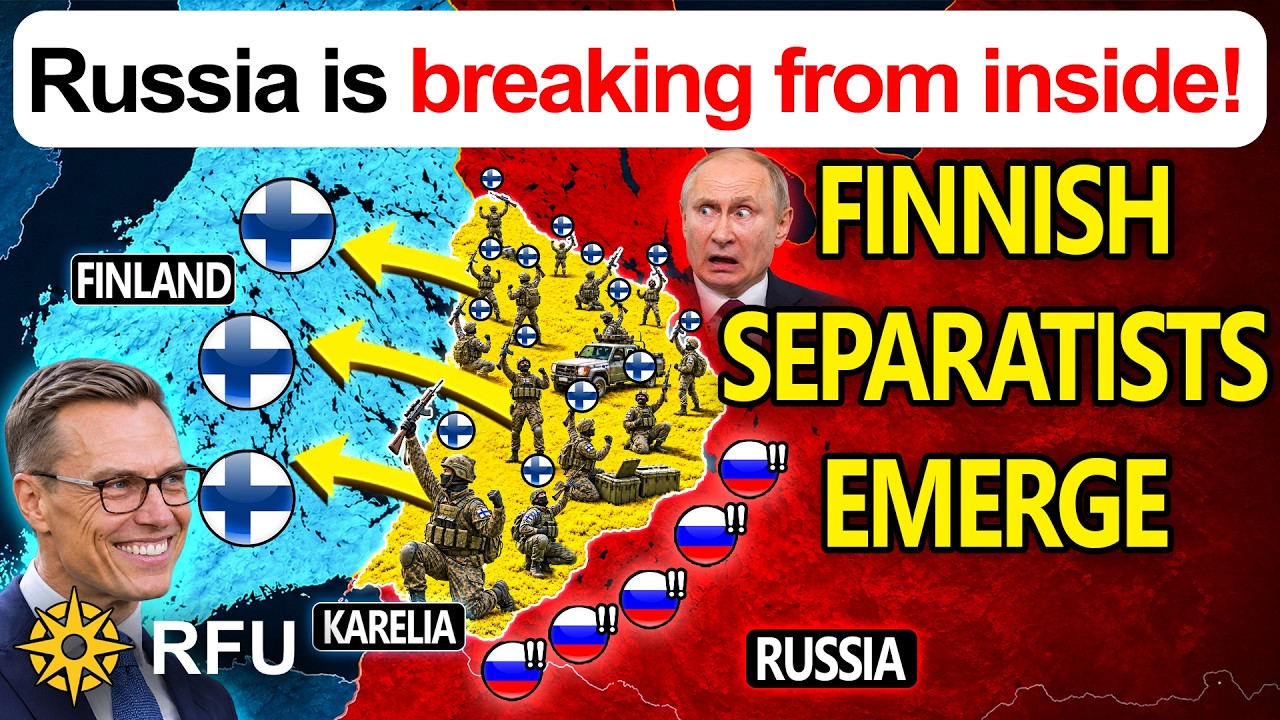
Here, Russia is facing a new separatist challenge from within, as armed Karelian activists have declared their intention to fight Moscow and pursue independence for Karelia, the northern region bordering Finland. Calling themselves the Northern Brotherhood, masked men carrying weapons have appeared in videos announcing preparations for partisan resistance against Russian authorities. The organization claims to defend people of Finnic origin and is recruiting supporters for information campaigns, underground activities, and armed operations. Although its membership and capabilities inside Russia remain unverified, its emergence highlights a vulnerability for the Russian government, as ethnic minorities increasingly question Moscow’s authority during the war against Ukraine.
One major motivation is Russia’s military recruitment policies, because for smaller ethnic communities, conscription threatens more than individual lives. Every young man killed in Ukraine represents another demographic loss for populations already struggling with assimilation and declining numbers. Separatist activists maintain resentment toward Moscow’s military demands, demanding independence as protection against being sacrificed in Russia’s war.
Karelia’s historical relationship with Finland makes this movement particularly significant because it is a historically divided region containing territories belonging to both Finland and Russia. During the Soviet invasion of Finland in the previous century, Moscow attempted to seize Finnish territory, triggering the Winter War. Finland surrendered substantial parts of western Karelia under the peace agreement the following year, and even though Finnish forces temporarily recovered these territories in during World War two, they were finally relinquished again at the end. Approximately four-hundred-thousand Finnish residents were forcibly relocated into Siberia from the ceded territories, permanently transforming the region’s demographic composition.
The region’s indigenous Karelians are closely related linguistically and culturally to Finns, constituting a Finnic ethnic group, and according to Russia’s two-thousands-twenty-one census, approximately twenty-six-thousand ethnic Karelians and three-thousand-four-hundred ethnic Finns remained in the republic. Some activists advocate independence or closer relations with Finland, while Finland itself maintains no territorial claims against Russia. Separatist organizations have periodically emerged, particularly following the Soviet Union’s collapse, with the Karelian National Movement being one example, advocating for greater self-determination before Russian authorities banned it in two-thousand-twenty-four. Some activists have subsequently connected their struggle directly to Ukraine’s resistance, with Karelian volunteers establishing a battalion named after Vasily Levonen, a leader of a past uprising against Soviet Russia. The Nord combat group, associated with Ukrainian military intelligence, has likewise attracted Finnic volunteers opposing Moscow’s rule.
Notably, Ukraine’s First Azov Corps commander Denys Prokopenko has Karelian ancestry and has connected his family’s history of resistance to Soviet expansion with his own fight against Russia. For these activists, Ukraine’s war represents an opportunity to weaken the Russian state, and their calculation is that sustained battlefield casualties, economic pressure, and political instability will eventually undermine Moscow’s control over its peripheral republics.
Overall, the Northern Brotherhood’s actual strength remains unknown, but even small underground movements can force authorities to devote intelligence, police, and security resources to internal threats. Potential sabotage campaigns could create additional pressure, and for Putin, the broader danger is cumulative. Russia’s prolonged war risks deepening resentment among ethnic minorities who believe Moscow disproportionately demands their sacrifices while restricting cultural and political autonomy. If similar movements expand across multiple regions, Moscow will confront growing internal security challenges precisely when its military resources remain committed to Ukraine. The Northern Brotherhood’s declaration therefore represents another warning that Russia’s war abroad may be generating new political vulnerabilities at home.

🔴 YOU ARE MISSING HALF OF OUR VIDEOS! Subscribe to unlock all our reports and support our work: https://www.youtube.com/channe....l/UCcNB1tZYpeDetqCad
Today, the biggest news comes from the Dobropillia direction.
Russia’s goal here is to infiltrate Dobropillia before the autumn and winter rains make any real advance impossible. Notably, heavy rains create such thick mud in Ukraine that movement through fields becomes difficult, which slows the Russian soldiers and exposes them more to Ukrainian drones. Additionally, when the foliage disappears during autumn, Russian infiltrators won’t be able to use it as cover to conceal their movement, making their movement even more difficult.
This is why Russia is sending hundreds of soldiers every day to advance as close as possible to Dobropillia and get into the town to entrench themselves. If they can get enough forces into the town, they will be able to use the roads and firm ground when the fields turn to mud and accumulate forces underground. This is crucial because basements and cellars would let them keep advancing despite worsening weather, which typically limits significant advances in winter. From these positions, Russians can cut off certain Ukrainian positions, raid them, or set up ambushes, which complicates the work of the defenders. Ukrainians then are forced to withdraw from certain positions because the large number of Russian infiltrators that have accumulated around or behind them makes resupply or a safe retreat impossible.
Ukraine cannot counter the Russians in a head-on fight because Russia has a seven-to-one manpower advantage in this sector. As a result, Ukraine is disrupting Russia’s movement with drones and occasionally with tanks before they can reach Dobropillia. This is important because after the Russian infiltrators get into the town, it is significantly more difficult to clear them out, compared to eliminating them during their advance. Dorozhne is a key chokepoint along the route, which is a small settlement located on the railway line. It is an ideal infiltration route because it has forest strips on both sides and tunnels under it, which serve as resting points for the Russian soldiers. The settlement itself also serves as an accumulation point for infiltrators because the Russians can wait here to make their advance in parts, instead of in one go that would expose them to Ukrainian drones. Supplies can also be brought in and stored closer to the frontline, which improves Russian logistics.
However, because of the relatively small payload of drones, they cannot seriously damage the hardened tunnels and rail embankment, which is why Ukraine needs to use dozens of them to have an impact. In order to break open the cover, the Ukrainians decided to dispatch a Leopard one tank. Footage from Dorozhne shows how the tank, equipped with anti-drone cages and electronic warfare, moved right up to the enemy positions and opened fire at point-blank range. As a result, the Russian soldiers hiding inside were killed immediately. More importantly, the tank removed cover for the Russians along their infiltration route, which they intended to use for further attacks. By blowing up their hardened hideout, Ukraine opened it up for further strikes with drones that can drop directly into the Russian position and do more serious damage. Destroying this resting point disrupts the infiltration route before Russian troops can reach Dobropillia and use the town to continue operating through the winter.
Overall, the absurdity of Russia’s objectives in this sector is becoming increasingly clear. After months of fighting and sending hundreds of soldiers forward every day, Moscow’s ambition is essentially to get its troops into a single town before the autumn mud makes further movement impossible. This demonstrates how limited Russia’s ability to achieve meaningful breakthroughs has become and that the Ukrainian defenses are forcing the Russians to spend enormous manpower just to gain a foothold. Even when they manage to infiltrate, they remain vulnerable to Ukrainian drones and counterattacks, which is evidence that Ukraine’s defensive strategy is working, while Russia is paying an enormous price for increasingly modest gains.

🔴 YOU ARE MISSING HALF OF OUR VIDEOS! Subscribe to unlock all our reports and support our work: https://www.youtube.com/channe....l/UCcNB1tZYpeDetqCad
Today, there are interesting updates from the Zaporizhia direction.
Here, Russia has suffered its deadliest single day of the war, with Ukraine’s General Staff recording an extraordinary two-thousand-nine-hundred-and-eighty Russian personnel losses within just twenty-four hours. This represents an unprecedented daily record, bringing Russia’s reported personnel losses during two-thousand-twenty-six to four-hundred-thousand-four-hundred-and-ten. These figures reflect Ukraine’s increasingly effective strategy of systematically exhausting Russian manpower rather than merely defending territory, with Ukraine’s expanding reconnaissance and strike capabilities making Russian offensives not only more expensive, but almost impossible.
The implications are particularly visible around Orikhiv, where Russia’s offensive relied on repeatedly committing reserves to sustain infiltration attempts against Ukrainian defenses for months. As long as fresh assault groups continued arriving, Russian commanders could maintain pressure, exploit defensive gaps, and reinforce soldiers who had penetrated Ukrainian positions, gradually taking territory in the process. However, sustained Ukrainian strikes depleted those reserves, and the Russian infiltrators that managed to slip through became isolated and their supply routes were disrupted. As a result, at the approaches to Orikhiv, Ukrainian forces stabilized the threatened sectors, were able to permanently clear contested positions, and began pushing back along Russian infiltration corridors.
This illustrates the fundamental weakness of Russia’s manpower-intensive assault tactics, as Russian commanders frequently send small infantry groups one after another across exposed terrain, accepting enormous casualties in exchange for limited penetrations. Well-prepared Ukrainian defenses eliminate ninety percent of an advancing Russian force, but even then, the surviving ten percent of Russians might slip through and establish concealed positions that remain dangerous. They can ambush Ukrainian movements, identify defensive vulnerabilities, disrupt logistics, and prepare positions for arriving reinforcements. However, their long-term survival depends on subsequent assault waves successfully reaching them to build up their forces, while every additional Russian wave must cross the same dangerous terrain under Ukrainian surveillance and fire. Without reinforcements, isolated infiltrators cannot accumulate sufficient strength to consolidate territorial gains, and eventually, Ukrainian reconnaissance identifies their positions, allowing clearing teams and precision strikes to eliminate them, which explains why Russia’s growing manpower problem threatens the entire infiltration strategy.
Crucially, Ukrainian defenses are also becoming more effective, as reconnaissance drones, thermal cameras, and electronic intelligence increasingly operate within integrated targeting networks connected to artillery, mortars, and strike drone operators. Instead of attacking only advancing infantry, Ukrainian forces systematically target Russian drone operators, command posts, ammunition deliveries, transport vehicles and reinforcement routes. This disrupts the entire assault process, preventing infiltrators from receiving the support necessary to survive. Ukrainian special forces teams subsequently clear isolated Russian positions using reconnaissance information gathered from above.
Additionally, seasonal changes are reinforcing these advantages, as autumn foliage disappears and Russian soldiers lose much of the vegetation previously concealing their movements. Persistent Ukrainian aerial surveillance becomes more effective, particularly when combined with thermal imaging, while winter introduces additional problems for the Russians. Freezing temperatures increase exposure risks, complicate shelter construction, and snow can reveal movement tracks, while Russian infiltrators, lacking reliable food, ammunition, and medical evacuation, become increasingly vulnerable.
The decisive factor remains Ukraine’s ability to detect and eliminate assault formations faster than Russia can replace them. Ukrainian strikes eliminate not only regular Russian soldiers, but Russian commanders also lose the reconnaissance personnel needed to identify exploitable defensive gaps, which creates a destructive cycle: higher casualties reduce Russian offensive effectiveness, while weaker assault formations suffer further losses.
Overall, Ukrainian commanders established an ambitious objective of inflicting fifty thousand Russian casualties monthly earlier this year, but October surpassed that threshold with fifty-four-thousand-and-four-hundred Russian personnel losses.
🔴 YOU ARE MISSING HALF OF OUR VIDEOS! Subscribe to unlock all our reports and support our work: https://www.youtube.com/channe....l/UCcNB1tZYpeDetqCad
Today, the biggest news comes from Ukraine.
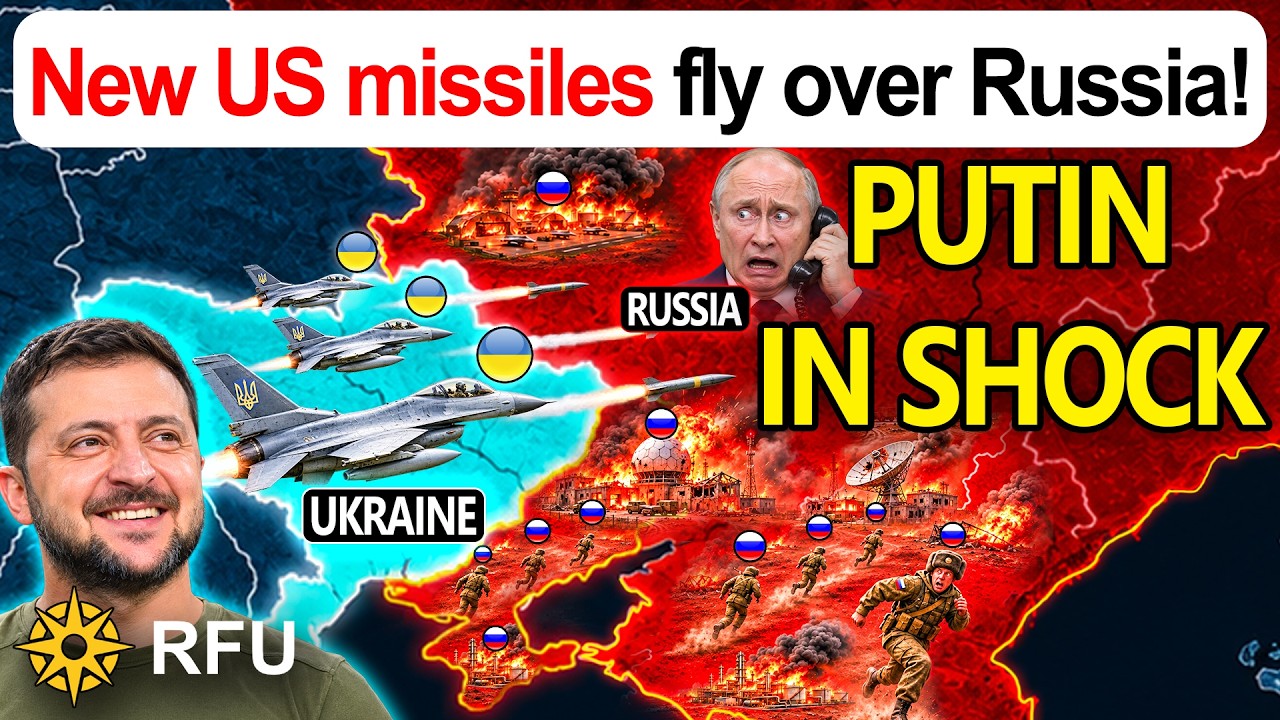
Russia's Defense Ministry claims it intercepted four Rusty Dagger cruise missiles, a US-developed weapon under the Exteneded range attack munitions program. The ministry provided no evidence or locations, and later removed the statement from its official channels. The reported use of the missiles comes as Putin contacts Trump, suggesting that Moscow is taking Ukraine’s new long-range capabilities seriously. However, it is plausible that Ukraine is already using these missiles, as eight hundred and forty were scheduled to be delivered by October two thousand and twenty-six.
The missile was built specifically to be sent to Ukraine to give it affordable long-range missile capabilities. Eram was originally developed as an air-launched precision-strike weapon that could be produced in large numbers at a relatively low cost of around two hundred and fifty thousand dollars per missile. According to Boeing, it can carry different types of warheads, including blast-fragmentation, anti-ship, and air-to-air variants. Its warhead can weigh between forty-five and one hundred and twelve kilograms. The missile can also be adapted for ground or sea launches by fitting a solid-fuel booster to its tail. The air-launched version has an estimated range of nine hundred and twenty-six kilometres from medium altitude. The range of the ground-launched variant, however, has not been disclosed. The missile can reach speeds of approximately seven hundred kilometres per hour, making it a challenging target for Russian air defence systems. It can be launched from F-sixteen fighters and Su-twenty-four tactical bombers, while Mirage two thousand fighters could also carry the missile following the necessary modifications. The USA approved a potential sale of up to three thousand three hundred and fifty missiles in two thousand and twenty-five, which will be financed by Europe. This quantity would fill a crucial gap in Ukraine’s long-range strike capabilities because Western countries have been so far unable to scale up their production. Additionally, Ukraine is only able to produce a small quantity of cruise missiles domestically, which is why the new Dagger missile will be an important addition.
This creates a serious problem for Russia because its air defence was never designed to deal with so many relatively cheap, precision-guided weapons arriving alongside drones and domestically produced cruise and ballistic missiles. Every incoming target forces Russian commanders to make a difficult decision to spend expensive interceptors protecting a particular facility or risk allowing the missile through. If Ukraine can launch these weapons in large and repeated waves, Russia will face a growing shortage of interceptors and be forced to spread its air-defence systems across an enormous territory. This could leave critical facilities increasingly exposed, particularly hardened military installations that require much more destructive warheads than drones can deliver. As Russia moves air-defence systems between military bases, factories and oil facilities, it will inevitably leave other areas less protected. Ukraine could then exploit these gaps with missiles carrying larger warheads than its long-range drones, causing damage that is more difficult and expensive to repair.
Overall, the real significance of this development is that Russia may soon face a completely different kind of air war. Until now, Moscow could anticipate the relatively high cost and limited availability of Western missiles to keep its most valuable facilities beyond Ukraine’s reach. But cheap, mass-produced weapons change that calculation, as Russia will no longer know which incoming threat deserves its limited interceptor missiles most. More importantly, Ukraine is not just gaining another missile, it is making Russia’s entire defensive strategy increasingly expensive and difficult to sustain. As Ukraine’s drone and missile production is increasing, the new Western missiles in huge quantities will allow it to devastate Russian military and oil infrastructure even more.
🔴 YOU ARE MISSING HALF OF OUR VIDEOS! Subscribe to unlock all our reports and support our work: https://www.youtube.com/channe....l/UCcNB1tZYpeDetqCad
Today, the biggest news comes from the USA.
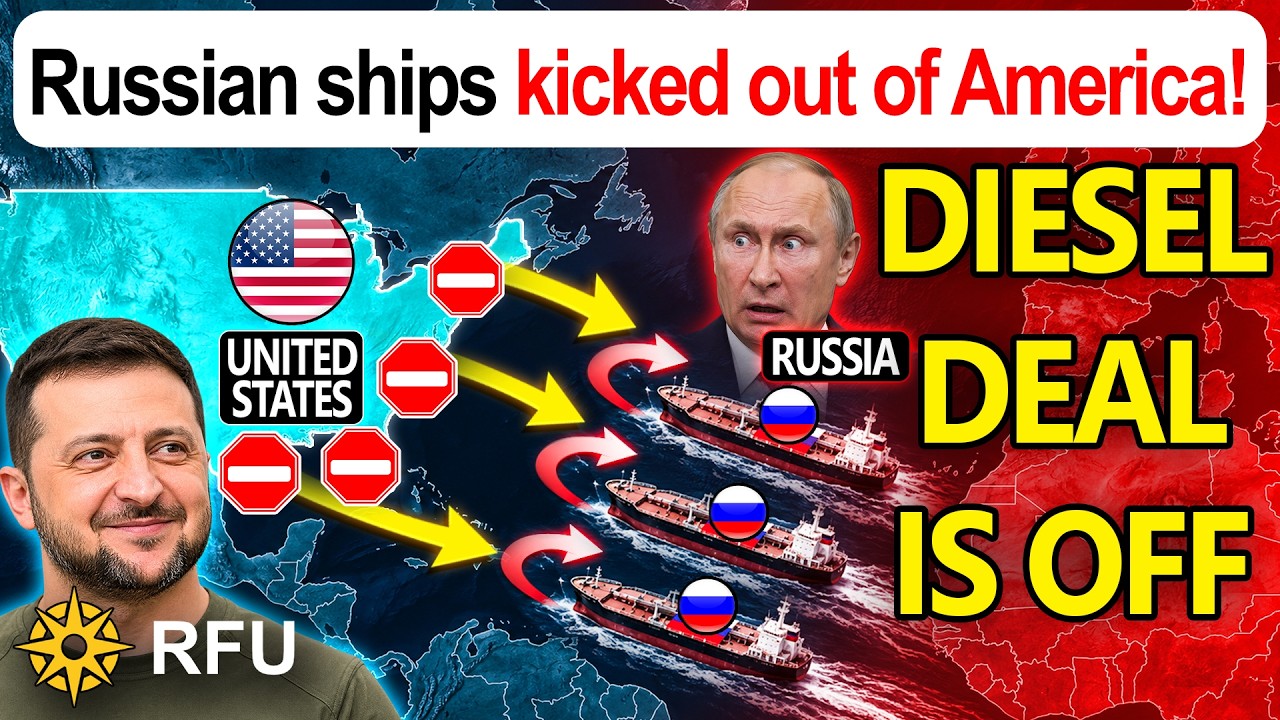
Recently, a Russian tanker carrying nearly three hundred thousand barrels of Russian diesel heading toward New York suddenly turned back only seven hundred kilometers from the port. This is not the first tanker to do so, with a total of three fuel tankers part of Trump’s diesel deal with Russia having already turned back and started moving away from the USA. Moscow said last month that it had loaded four tankers with diesel bound for the US, while Russian Deputy Prime Minister Alexander Novak later lowered this number to three being en route, and now all of them have changed course.
The reason for this is that several US companies and state governors refused to accept Russian ships in their ports. New Jersey Governor Mikie Sherrill publicly called Trump’s diesel deal with Russia corrupt and illegal, warned port and terminal operators against unloading Russian diesel, and said she was evaluating options, including potential state legal measures to block it at New Jersey facilities, which handle major East Coast petroleum imports. The USA cannot legally import Russian oil products anymore, as a law passed after Russia’s invasion prohibits such imports without congressional review. Potential consequences cited include civil and criminal penalties, possibly equal to the value of the goods, amounting to millions plus future liability. Additionally, some Russian shadow fleet tankers are sanctioned, banning them from entering US ports. Because of this, US companies fear aiding illegal transactions, reputational harm, and exposure even if the current administration claimed the license made the activity lawful. Political opposition also framed the imports as providing revenue that helps finance Russia’s war against Ukraine, while doing little to meaningfully lower US prices or address root supply issues, which puts political pressure on US companies.
As a result, the entry of the Russian tankers was essentially refused by local authorities and entities themselves, as not a single US company or port facility decided to let them unload the cargo. As tensions rose following the democratic party’s victory in the midterm elections, and state entities became more comfortable with the idea of standing up against Russian imports, the Russian tankers decided not to continue their journey, changed course, and sailed towards Brazil instead. Because of this increased opposition from US lawmakers and companies, Trump’s diesel deal with Putin is quickly falling apart. The last Russian tanker is expected to follow suit and change course as well, rather than risk waiting on the US east coast waiting for an approval that will likely never come.
This is terrible news for Russia, as they desperately needed to sell diesel again, which would have brought up to eight billion dollars in revenue under the deal. As Russia’s oil revenues have been shrinking despite rising oil prices, Russia needed this economic lifeline to invest in the war. Notably, Russia significantly banked on the prospect, restarting production and using the temporary halt in Ukrainian strikes to repair its destroyed refineries. Russia thought that it would be able to export again with fewer restrictions, but if ports and companies refuse to buy Russian diesel, Russia will lose out on this opportunity to make billions of dollars, while Ukraine has newly repaired targets to destroy once more.
Overall, this situation exposes a major weakness in Russia’s economic strategy because having oil and diesel to sell means very little if international buyers are unwilling to buy them. Moscow believed that improved relations with Washington would reopen a lucrative market, but political resistance and legal risks proved stronger than Trump’s promises. More importantly, this demonstrates that Russia cannot rely on political agreements alone to escape its economic isolation. Every rejected shipment means additional pressure on its export revenues, storage capacity, and ability to finance the war. Russia may restore its refineries, but finding customers willing to buy its output is becoming a different challenge.

🔴 DIR ENTGEHT DIE HÄLFTE UNSERER VIDEOS! Werde Mitglied, um alle unsere Reportagen freizuschalten und unsere Arbeit zu unterstützen:https://www.youtube.com/channe....l/UCT0Na5WfOReXDKUPw
Heute gibt es interessante Neuigkeiten aus der Russischen Föderation. Die Ukraine hat eine weitere verheerende Angriffswelle gegen Russlands Ölindustrie entfesselt und dabei unter anderem kürzlich alle fünf der größten Raffinerien des Landes getroffen: Omsk, Kirishi, Rjasan, Nischni Nowgorod und Jaroslawl. Das Ausmaß dieser Angriffe entwickelt sich zu einem Albtraum für Moskau und offenbart ernsthafte Schwächen in der russischen Luftverteidigung, da ukrainische Drohnen wiederholt vermeintlich geschützte wichtige Industrieanlagen durchdringen. Der jüngste Angriff ereignete sich in Wolgograd, wo riesige Brände in der Lukoil-Raffinerie ausbrachen, als ukrainische Drohnen zwei entscheidende Verarbeitungseinheiten trafen, die für etwa siebzig Prozent der primären Rohölverarbeitungskapazität der Raffinerie verantwortlich sind. Auch Lagertanks wurden beschädigt, aber da beide Verarbeitungseinheiten erheblichen Schaden erlitten haben, sind die Folgen beträchtlich, da Wolgograd jährlich etwa fünfzehn Millionen Tonnen verarbeitet, was etwa fünf Prozent der russischen Raffineriekapazität entspricht. Nach dem mit US-Präsident Trump verbundenen Waffenstillstand im Energiesektor erhielt Russland die Gelegenheit, beschädigte Raffinerien zu reparieren und die Produktion wiederherzustellen, wobei die russische Rohölverarbeitung um etwa fünfundzwanzig Prozent anstieg, da Moskau bestrebt ist, eine Industrie wiederaufzubauen, die enorme Einnahmen für seine Kriegsanstrengungen generiert.
Die Ukraine macht diese Erholung nun wieder zunichte, da die Raffinerien und die andere damit verbundene Infrastruktur rund um Wolgograd, Omsk, Kirishi, Saratow, Afipsky, Rjasan, Nischni Nowgorod, Jaroslawl, Ufa und Samara zusammen eine jährliche Verarbeitungskapazität von etwa einhundertfünfzig Millionen Tonnen repräsentieren. Wenn zwanzig bis dreißig Prozent dieser Kapazität exportfähige Produkte im Wert von siebenhundert US-Dollar pro Tonne erzeugen würden, lägen die potenziellen jährlichen Bruttoexportumsätze bei etwa einundzwanzig bis einunddreißig Milliarden US-Dollar, was die wirtschaftliche Bedeutung für Russland verdeutlicht. In Omsk, Russlands größter Raffinerie, die jährlich etwa zweiundzwanzig Millionen Tonnen verarbeiten kann, berichteten Anwohner von anhaltenden Explosionen, Bränden und Aktivitäten der Luftabwehr während eines weiteren ukrainischen Drohnenangriffs. Die Raffinerie Kirishi erlitt ebenfalls ähnlich schwere Schäden, da die Anlage, die jährlich etwa zwanzig Millionen Tonnen verarbeiten kann, ebenfalls von ukrainischen Drohnen getroffen wurde. Nachfolgende Analysen identifizierten Schäden an drei primären Verarbeitungseinheiten, Heizölanlagen, der Kühlwasserinfrastruktur und verbindenden Rohrleitungen. Solch umfangreiche Schäden an Raffinerien sind besonders folgenschwer, da die Reparatur miteinander verbundener Raffinerieanlagen noch mehr Zeit, spezialisierte Komponenten und umfangreiche Tests erfordern kann.
In Saratow erlitt eine weitere Rosneft-Anlage, die jährlich etwa sieben Millionen Tonnen verarbeitet, mehrere durch ukrainische Drohnen ausgelöste Brände. Die Raffinerie Afipsky in Krasnodar, die etwa sechs Millionen Tonnen verarbeiten kann, erlebte während eines massiven Drohnenangriffs ebenfalls Explosionen und Brände. Rjasan, mit einer Kapazität von über siebzehn Millionen Tonnen jährlich, erlitt nach einem weiteren ukrainischen Angriff mehrere massive Brände. Die Raffinerie produziert Benzin, Diesel und Flugkraftstoff, was Störungen sowohl für den zivilen Verbrauch als auch für die militärische Logistik relevant macht. Weitere Angriffe wurden aus Jaroslawl gemeldet, wo im Raffineriegebiet Feuer ausbrach, sowie aus Kstowo, wo die riesige Norsi-Raffinerie in Brand gesetzt wurde. In Baschkortostan trafen Drohnen die Bashneft-Novoil-Raffinerie in Ufa, wobei eine katalytische Reformierungsanlage mehrere Tage lang brannte und Ausrüstung beschädigte, die für die Herstellung von Benzinbestandteilen wichtig ist. Schließlich griff die Ukraine Nowokuibyschewsk in Samara an, eine Raffinerie, die jährlich etwa neun Millionen Tonnen verarbeitet und neben anderen Erdölprodukten auch Flugkraftstoff herstellt. Zusammen beeinträchtigen diese ukrainischen Angriffe den russischen Raffineriedurchsatz, die inländische Kraftstoffverfügbarkeit, die Exporterlöse und die militärischen Lieferketten. Wiederholte Angriffe verringern zudem Russlands Fähigkeit, Luftabwehrsysteme auf Industrieanlagen in einem riesigen Gebiet zu verteilen.

🔴 YOU ARE MISSING HALF OF OUR VIDEOS! Subscribe to unlock all our reports and support our work: https://www.youtube.com/channe....l/UCcNB1tZYpeDetqCad
Today, the biggest news comes from the Russian Federation.
A Russian colonel was targeted in a car bombing in Saint Petersburg. The vehicle, reportedly carrying the chief navigator of the sixth Air Army of the Russian Air Force and Air Defense Forces, was fitted with an explosive device beneath its chassis during the night. The bomb detonated this morning as the car was pulling onto a highway. According to Russian reports, the suspected perpetrator is a thirty-one-year-old resident of Saint Petersburg who followed the Russian colonel for months and planted the device before fleeing the country. Just two hours after the explosion, the perpetrator was already at Pulkovo Airport, where he boarded a flight to Turkey. Russian security services contacted their Turkish counterparts in an attempt to locate him, only to discover that he had already left Turkey and traveled to Moldova, out of Russian services’ reach. Russian media have also claimed that the explosive device itself was brought into the Leningrad region by a balloon launched from the Baltic region, although no evidence of this was provided.
However, this wasn’t a standalone incident, as Ukraine has been conducting a campaign since Russia’s full-scale invasion to eliminate Russia's high-ranking officers. Notably, Ukraine has been tracking down and liquidating Russian officers in the Russian-controlled parts of Ukraine and in Russia itself. After finding them, Ukraine uses Himars and drone strikes inside Ukraine, or improvised explosive devices and undercover agents to kill Russian officers inside Russia.
The chief navigator of Russia’s sixth air army is responsible for the navigation, flight routing, and weapons-targeting precision of an entire regional aviation and air defense formation. He acts as the head of the navigation service across multiple aviation regiments and air defense units. His task is to design complex flight paths, strike corridors, and interception routes for bomber, fighter, and transport units. This includes calculating fuel consumption, safe minimum altitudes, and precise timing so multiple aircraft reach targets simultaneously. With his elimination, Russia lost a highly skilled expert, which could undermine its strike campaign and the effectiveness of its air defense, which already proved inefficient during yesterday's massive Ukrainian drone strike on the region. Additionally, losing generals cumulatively costs the command effectiveness, experience, and operational coordination, rather than causing a sudden collapse. Senior officer deaths undermine coordination between subordinate units and create disruptions until deputies can fill in. However, successors need time to understand the operational picture, build relationships with subordinates, and restore staff processes.
Independent tallies put confirmed Russian high-ranking officer deaths at approximately nineteen, while at least five thousand mid-ranking officers have been killed since the full-scale invasion. Notably, Ukraine targeted Lieutenant General Vladimir Alekseyev, who was the first Deputy Head of the Main Directorate of the General Staff. He was shot multiple times at the entrance of his Moscow apartment building. After that, Ukrainian agents blew up Colonel General Alexander Chayko, the recently appointed head of Russia’s Aerospace Forces. An explosion occurred at a restaurant in Moscow during what was reported as his appointment celebration.
Overall, Ukraine’s campaign against Russia’s senior officers is about weakening the military machinery behind the invasion, not simply eliminating individual commanders. Every experienced officer killed represents years of knowledge, established relationships, and an understanding of how different units operate together. Russia can appoint replacements, but it cannot instantly replace that experience, while over time, these losses create friction throughout the command structure, making planning, coordination, and execution increasingly difficult.

🔴 Vous manquez la moitié de nos vidéos ! Abonnez-vous pour débloquer tous nos reportages et soutenir notre travail :
https://www.youtube.com/channe....l/UCtdbL4c2tm3v2mK_3
Aujourd'hui, les informations les plus significatives proviennent de la ville de Saint-Pétersbourg.
Dans ce contexte, la précision nouvellement acquise des frappes ukrainiennes va contraindre Poutine à délaisser la seconde capitale septentrionale du pays, ses défenses antiaériennes étant soumises à une intensité de frappes équivalente à celle subie par les systèmes russes déployés directement sur la ligne de front.
Lors de la dernière attaque ukrainienne visant Saint-Pétersbourg et les infrastructures côtières d'exportation pétrolière d'Oust-Louga, un nombre significatif d'autres objectifs stratégiques a également été atteint. Outre les terminaux pétroliers et les réservoirs de stockage, un navire lance-missiles russe a été endommagé par un impact direct, tandis que deux hélicoptères russes et un avion de chasse MiG-31 ont été abattus par des tirs amis. Fait sans doute encore plus déterminant, les forces ukrainiennes ont détruit trois des plus grands complexes radar implantés autour de l'agglomération.
Très rapidement, les analystes militaires ont relevé que les destructions infligées à ces stations radar présentaient un degré de précision tel qu'il n'avait pu être obtenu qu'au moyen d'un drone piloté en temps réel. Les frappes ukrainiennes à longue portée par vecteurs sans pilote s'effectuent quasi systématiquement selon des trajectoires préprogrammées, avec la possibilité d'ajuster globalement le plan de vol depuis des postes de contrôle situés en Ukraine. Le guidage en temps réel implique en revanche que les opérateurs ukrainiens visualisent un flux vidéo en direct et dirigent manuellement le drone sur sa cible, garantissant une précision nettement supérieure. Or, l'Ukraine ne dispose pas d'un accès à ce type de liaison ininterrompue à des distances excédant mille kilomètres de son territoire.
L'une des explications majeures permettant de comprendre comment cette frappe a néanmoins pu être conduite tient au fait que la couverture du réseau Starlink n'est pas strictement circonscrite au tracé administratif de la frontière russe, s'étendant fréquemment jusqu'à trente kilomètres ou plus à l'intérieur des terres. La Finlande, l'Estonie et la mer Baltique elle-même bénéficiant d'une connectivité Starlink intégrale, il apparaît hautement probable que les opérateurs ukrainiens aient exploité ce débordement de couverture pour conserver le contrôle total de leurs drones et les guider vers leurs objectifs avec une précision inégalée. Cela signifie que l'Ukraine vient d'identifier une faille technique lui permettant de conférer à ses frappes dans la profondeur stratégique la même précision que celle de ses engagements sur le front et à moyenne portée.
4

🔴 YOU ARE MISSING HALF OF OUR VIDEOS! Subscribe to unlock all our reports and support our work: https://www.youtube.com/channe....l/UCcNB1tZYpeDetqCad
Today, there are dangerous updates from Ukraine.
Here, Ukraine is moving to break its dependence on Elon Musk’s Starlink network after satellite communication restrictions were imposed once again without warning or explanation, threatening Ukrainian air defenses and long-range drone operations. This comes as President Volodymyr Zelensky revealed that Starshield connections are again subject to a movement-speed limit of approximately one-hundred-and-sixty-one kilometers per hour across frontline and Russian-controlled territories.
This limitation creates serious problems for Ukrainian interceptor drones, as Russian jet-powered drones travel considerably faster than this threshold, meaning Ukrainian interceptors relying on affected satellite connections risk losing communication before reaching their targets. Mid-range strike drones face similar difficulties, potentially losing the ability to receive guidance updates during missions.
Although Ukraine is discussing the restrictions with Washington, Kyiv has already begun exploring alternatives, and according to Russian military sources, Ukrainian forces have started installing Israeli Hi-Sky satellite terminals aboard drones. The technology reportedly appeared in Ukrainian drone operations during October, with Russian analysts identifying equipment in recovered wreckage. Unlike Starlink, Hi-Sky does not operate its own satellite constellation, but connects its terminals through already existing commercial satellite networks, providing communication services without depending on SpaceX satellites exclusively, which is an enormously important distinction.
Notably, Starlink offers exceptional bandwidth, typically supporting data-intensive applications, including live video transmission and remote drone operation. However, its geographic restrictions have prevented Ukrainian operators from maintaining connections over Russia. Despite Hi-Sky terminals still not being able to provide the same high-quality bandwidth, they offer a different advantage: connectivity across Russian territory without limitations. Its speed can transmit navigation updates, telemetry, and commands, allowing Ukrainian drones to adjust their routes during flight, providing the operators with greater flexibility when targeting Russian military installations, refineries, and logistical infrastructure.
Military analysts have stated that Hi-Sky can maintain connections through alternative commercial satellites when signal conditions deteriorate, making the system harder to jam, although satellite communications remain vulnerable to interference, service restrictions and decisions by network operators.
However, the crucial advantage is diversification, because even if one provider restricts access, Ukraine could retain operational communications through another network. Its reported battlefield deployment remains limited for now, as Ukrainian army officials refuse to comment and widespread adoption would require additional terminals, integration and testing, with Ukraine needing thousands of compatible devices to replace Starlink across comparable applications. This will represent a sustainable alternative, and the only factor right now is importing enough terminals to allow for widespread adoption.
Meanwhile, Russian drone attacks have involved smaller nightly formations in recent days, despite Russia retaining the ability to launch a substantially larger number of drones, allowing them to now increase the pressure on Ukrainian defenses with their built-up reserves while the speed restrictions remain unresolved. There is no verified evidence that Moscow deliberately reduced launches in anticipation of another communications disruption, but the possibility of intensified attacks underscores the danger of relying on communications that can suddenly become unavailable.
Overall, for Ukraine, the implications extend beyond offensive operations, as satellite connectivity helps interceptor drones receive guidance and targeting updates. Losing those links can reduce operational flexibility precisely when Russian attacks intensify, so Hi-Sky represents more than another communications product. It offers Ukraine a potential safeguard against sudden restrictions imposed by a single foreign provider, and Ukraine’s search for alternatives began before the latest reported disruption, demonstrating that its commanders recognized this vulnerability. Successful integration of the new system will preserve Ukrainian strike operations and strengthen the resilience of its drone defenses, as Ukraine is seeking the freedom to defend its cities and attack Russian military infrastructure without having those capabilities repeatedly disrupted by unexpected decisions beyond its control.

🔴 YOU ARE MISSING HALF OF OUR VIDEOS! Subscribe to unlock all our reports and support our work: https://www.youtube.com/channe....l/UCcNB1tZYpeDetqCad
Today, there are interesting updates from the Russian Federation.
Here, Ukraine has unleashed another devastating wave of attacks against Russia’s oil industry, striking, among others, all five of the country’s largest refineries recently: Omsk, Kirishi, Ryazan, Nizhny Novgorod, and Yaroslavl. The scale of these attacks is becoming a nightmare for Moscow, exposing serious weaknesses in Russian air defenses as Ukrainian drones repeatedly penetrate supposedly protected key industrial facilities.
The latest strike occurred in Volgograd, where enormous fires erupted at the Lukoil refinery when Ukrainian drones struck two crucial processing units, responsible for approximately seventy percent of the refinery’s primary crude-processing capacity. Storage tanks have also been damaged, but with both processing units suffering extensive damage, the consequences are substantial, as Volgograd processes approximately fifteen million tons annually, representing around five percent of Russia’s refining capacity.
Following the energy ceasefire associated with US President Trump, Russia received an opportunity to repair damaged refineries and restore production, with Russian crude processing rebounding approximately twenty-five percent, with Moscow keen on rebuilding an industry generating enormous revenues for its war effort. Ukraine is now reversing that recovery, as the refineries and the other connected infrastructure around Volgograd, Omsk, Kirishi, Saratov, Afipsky, Ryazan, Nizhny Novgorod, Yaroslavl, Ufa and Samara collectively represent approximately one-hundred-and-fifty million tons of annual processing capacity. If twenty to thirty percent of that capacity generated exportable products valued at seven hundred US dollars per ton, potential gross annual export sales would reach approximately between twenty-one and thirty-one billion US dollars, illustrating the economic stakes for Russia.
At Omsk, Russia’s largest refinery, capable of processing approximately twenty-two million tons annually, residents reported prolonged explosions, fires, and air-defense activity during another Ukrainian drone attack. The Kirishi refinery also suffered similar serious damage, as the facility, capable of processing approximately twenty million tons annually, was also struck by Ukrainian drones. Subsequent analysis identified damage to three primary processing units, fuel-oil equipment, cooling-water infrastructure, and connecting pipelines. Such extensive damage to refineries is particularly consequential because repairing interconnected refinery equipment can require even more time, specialized components, and extensive testing.
At Saratov, another Rosneft facility processing approximately seven million tons annually, suffered mutliple fires triggered by Ukrainian drones. The Afipsky refinery in Krasnodar, capable of processing approximately six million tons, also experienced explosions and fires during a substantial drone attack. Ryazan, with capacity exceeding seventeen million tons annually, suffered several massive fires after another Ukrainian strike. The refinery produces gasoline, diesel and aviation fuel, making disruptions relevant to both civilian consumption and military logistics. Further attacks were reported at Yaroslavl, where fire appeared in the refinery area, and Kstovo, where the enormous Norsi refinery was set ablaze. In Bashkortostan, drones struck Ufa’s Bashneft-Novoil refinery, with a catalytic reforming unit burning for several days, damaging equipment that is important for producing gasoline components. Finally, Ukraine struck Novokuybyshevsk in Samara, a refinery processing approximately nine million tons annually and producing jet fuel alongside other petroleum products.
Together, these Ukrainian attacks damage Russian refining throughput, domestic fuel availability, export earnings, and military supply chains. Repeated strikes also reduce Russia’s ability to divert air-defense systems toward industrial facilities across an enormous territory. The growing number of refinery fires suggests Russian defenses are struggling to prevent successful penetrations, to the point where the Russian air-defense network has nearly collapsed.
Overall, as confirmed damage continues to accumulate, Russia faces prolonged production interruptions and increasingly expensive repairs. This is Ukraine’s response to a pause that allowed Russian refining to recover without ending attacks against Ukrainian infrastructure. Russia hoped to restore its oil revenues while continuing its war, but Ukraine is demonstrating that renewed production remains vulnerable and that every repaired refinery can become a target again, only that this time Ukrainian strikes are much more efficient and destructive.
🔴 YOU ARE MISSING HALF OF OUR VIDEOS! Subscribe to unlock all our reports and support our work: https://www.youtube.com/channe....l/UCcNB1tZYpeDetqCad
Today, the biggest news comes from Czechia.
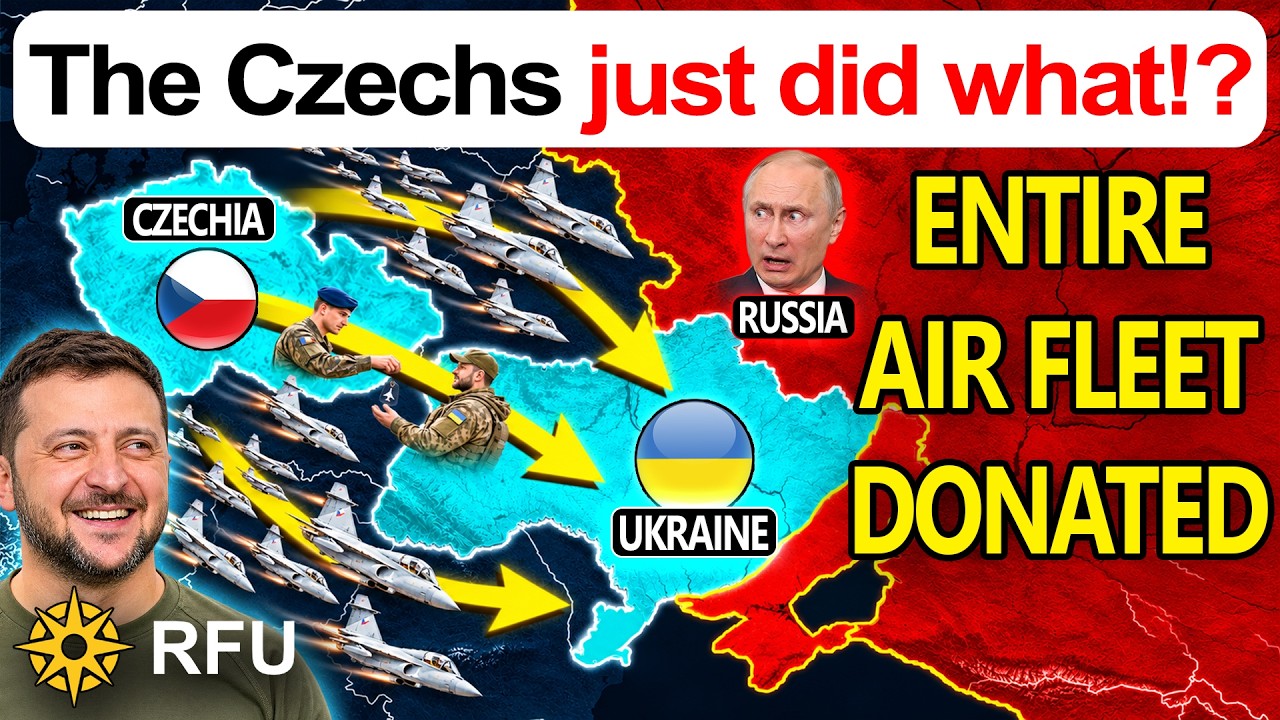
Czechia is preparing to deliver up to sixteen L Thirty Nine Skyfox aircraft to Ukraine, giving Kyiv a new fleet of jets that can be dedicated to countering Russia’s expanding drone attacks. Czech Deputy Prime Minister Karel Havlicek confirmed that four aircraft have already been agreed upon, while another twelve have received preliminary approval. The Skyfox is a light combat and training aircraft, allowing Ukraine to shift routine drone interception sorties away from F Sixteens, Mirages, and MiG Twenty Nines and keep those more capable fighters available for missions closer to the front. This gives Ukraine a separate pool of aircraft for air defense at exactly the moment Russia is introducing faster jet powered drones that are becoming harder for ground based systems to stop.
Ukraine is already relying heavily on combat aircraft to intercept these drones, with F Sixteens becoming one of its most effective weapons against the faster jet powered variants. Fighters are directed toward incoming drone formations, use their speed to catch targets crossing large areas of Ukrainian airspace, and destroy them before they reach major cities and infrastructure. This keeps some of Ukraine’s most capable fighters flying night after night against drones, while also consuming large quantities of aircraft cannon ammunition that must be continuously replaced. As more Skyfoxes enter service, Ukraine can separate routine drone hunting from frontline fighter operations, building a dedicated fleet around a threat that Russia is rapidly expanding.
The real advantage comes from how Czechia is repurposing the Skyfox itself, as its manufacturer Aero Vodochody has already demonstrated the aircraft in a dedicated Drone Hunter configuration rather than using it only for pilot training. The jet can carry a camera and targeting system to find drones, alongside two rocket pods holding fourteen seventy millimeter guided rockets. It can also carry a twelve point seven millimeter machine gun pod for closer engagements. That allows one aircraft to track, and destroy drones along entire approach routes that ground based teams can only cover in individual sectors. Turning trainer jets into dedicated interceptors expands the number of aircraft Ukraine can use for air defense without waiting for additional high end fighters to become available.
The need for these aircraft becomes clear from how quickly Russia is expanding its jet powered drone attacks. Jet powered Shaheds now account for around forty percent of the drones used in Russian attacks across Ukraine and up to sixty percent in some sectors. The newest variants can reach between four hundred fifty and six hundred kilometers per hour, making them much harder for fire groups and interceptor drones to catch. The Skyfox, by comparison, can reach roughly nine hundred kilometers per hour, giving its pilots enough speed to catch these drones from behind and destroy them before they can reach their targets. In October, Ukrainian defenses destroyed eighty nine percent of conventional Shaheds, while the interception rate against jet powered variants reached only sixty six percent, meaning roughly one in every three still penetrated Ukraine’s defense. Adding dedicated Skyfox interceptors therefore directly targets one of the largest remaining gaps in Ukraine’s protection against Russian drone strikes.
Overall, Czechia is giving Ukraine a way to expand its air defense fleet by turning a relatively simple training aircraft into a dedicated interceptor for the fastest growing category of Russian drones. As more Skyfoxes enter service, Ukraine’s frontline fighters can fly fewer sorties chasing drones and more time intercepting cruise missiles, countering Russian aircraft, and supporting troops along the front. The same concept also gives other European states a model for converting existing trainer fleets into additional air defense capacity without waiting years for new frontline fighters. Russia is increasing the speed and scale of its drone campaign, while Czechia is giving Ukraine more jets specifically built around hunting those drones before they reach their targets.

🔴 YOU ARE MISSING HALF OF OUR VIDEOS! Subscribe to unlock all our reports and support our work: https://www.youtube.com/channe....l/UCcNB1tZYpeDetqCad
Today, the biggest news is coming from Saint Petersburg city.
Here, newly found accuracy in Ukrainian strikes is going to force Putin to abandon his country’s second capital in the north, as its air defenses are coming under the same intensity of strikes as Russian systems on the frontline itself.
Notably during Ukraine’s last strike on Saint Petersburg and Ust Luga oil export facilities on the coast, a significant number of other targets had been struck as well. In addition to the oil terminals and storage tanks, a Russian missile ship was damaged by a direct strike, as well as two Russian helicopters and a Mig-thirty-one jet fighter being downed by friendly fire. Perhaps most crucial however, Ukrainians destroyed three of the largest radar complexes around the city.
Very quickly, military analysts noted how the damage on these radar stations was so precise, it could have only been achieved by a drone controlled in real time. Long-range Ukrainian drone strikes are almost always done through pre-programmed flight paths, with the path being able to be broadly modified from controllers in Ukraine. Real-time adjustment however, means that the Ukrainian operators controlling the drone are watching a live video feed and directly steering the drone onto a target, allowing them to be much more precise. Ukraine does not have access to this kind of uninterrupted communication at distances over a thousand kilometers from Ukraine. A big explanation for how this strike was still conducted is that Starlink’s coverage is not blocked to the exact administrative Russian border; often extending up to thirty or more kilometers inland. As Finland, Estonia, and even the Baltic Sea itself experience full Starlink connectivity, it his highly likely that Ukrainians were able to coast off of this connection to maintain complete control of their drones, and guide them to their targets with unmatched precision. This means that Ukraine has just found a loophole to make even their deep-rear strikes as accurate as their frontline and mid-range strikes.
The implications of this are immense. Due to the accuracy of Ukrainian strikes in the frontline area, Russia has lost over one-thousand-seven-hundred air defense systems throughout the war. September saw an especially notable number of eighty-six confirmed destructions in a single month. This is why Russia often maintains an extremely dispersed stance and moved many of its strongest systems further back, to prevent losses from becoming too unbearable.
Now that Ukrainians are effectively able to expand this level of precision all along the Russian border and coastline, Russians are faced with an extreme problem. Now Ukrainians do not need to saturate and overwhelm Russian air defenses in these areas through massive numbers, but they can simply engage these defenses outright and force open a gap for follow-up strikes to make it through. In this case, Russian export hubs in Saint Petersburg and the Leningrad coastline were only the beginning; a test to see if it would work. In the future, we could see Ukrainians capitalizing on this method to strike major air and military bases in Voronezh, Belgorod, Kursk, Rostov, or even Krasnodar Krai; destroying the air defenses meant to protect the approaches to these critical military assets. In turn, as these pricey systems become more of a target, Russians will be forced once again to move their air defenses away. This time not just away from Ukraine itself, but from the entire Russian border area, lest they become irreplaceable losses very soon. Essentially this will result in Russians being forced to fight Ukrainian drones and protect their most valuable military and economic assets from a distance, greatly reducing their efficiency and enhancing the impact of Ukrainian deep-strikes.

Kalshi - Visit https://kalshi.com/shapiro to see live prediction markets and sign up today to trade on the outcomes that matter most to you. Trade $25, Get $55. Code is SHAPIRO
We give you everything you need to know about today’s elections in Israel.
Daily Wire's new film "Confession" will play in 100 theaters across the United States on Wednesday Nov. 11th at 7pm local time.
For DailyWire members only. Find a theater near you: https://www.dailywire.com/findtheater
-- -- --
To see the full show, subscribe to DailyWire and watch all of our content ad-free: https://get.dailywire.com/ben-shapiro/subscribe
Watch the full episode here: Ep. 2535 - https://www.dailywire.com/epis....ode/ben-shapiro-show
To hear my take on other stories of the day, LIKE & SUBSCRIBE for new videos daily: https://youtube.com/@BenShapiro
Be sure to hit the notification bell so you never miss a video.
-- -- --
DailyWire:
Become a Daily Wire Member and watch all of our content ad-free: https://dailywire.com/subscribe
🇺🇸 Get 3-Months of DailyWire for just $17.76 📜
📲 Download the free Daily Wire app today on iPhone, Android, Roku, Apple TV, Samsung, and more.
📰 Follow me on the Daily Wire app or DailyWire.com to read my daily articles and receive my Friday newsletter.
📕 Today is the day! Andrew Klavan's new novel "Find Me Nowhere" is finally available. Don't wait. Order your copy now! https://dwplus.shop/FindMeNowhere
📘 My book "Lions and Scavengers: The True Story of America (and Her Critics)" is available here:
https://dwplus.shop/LionsandScavengers
👕 Get your Ben Shapiro merch here:
https://dwplus.shop/BenShapiroMerch
#BenShapiro #TheBenShapiroShow #DailyWire #News #Politics

One viral video unmasks a hard truth about our politics…and explains why our national debt will never shrink, inflation will continue, and government will keep on growing; Lindsey Graham is laid to rest; and Rosie O’Donnell has a song for President Trump…about his dingaling.
Ep. 2474
-- -- --
Today's Sponsors:
Golden Crest Metals - Listeners can receive up to $25,000 in free silver on qualifying purchases, along with a free investor kit and portfolio review, with no obligation.
Visit https://GoldenCrestMetals.com/Ben, call (888) 429-3999, or text BEN to METALS—that's 638257
Balance of Nature - Visit https://BalanceofNature.com today and subscribe to the Whole Health System to get an additional 10% off your subscription with promo code SHAPIRO
-- -- --
To see the full show, subscribe to DailyWire+ and watch all of our content ad-free:
https://dwplus.watch/BenShapiroMemberExclusive
Watch the full episode here: Ep. 2474 - https://www.dailywire.com/epis....ode/ben-shapiro-show
To hear my take on other stories of the day, LIKE & SUBSCRIBE for new videos daily: https://youtube.com/@BenShapiro
Be sure to hit the notification bell so you never miss a video.
-- -- --
DailyWire+
🎆 🇺🇸 Our America 250 SALE is still available! Get 3-Months of DailyWire+ for just $17.76 📜
Become a Daily Wire Member and watch all of our content ad-free: https://www.dailywire.com/subscribe
📲 Download the free Daily Wire app today on iPhone, Android, Roku, Apple TV, Samsung, and more.
📰 Follow me on the Daily Wire app or DailyWire.com to read my daily articles and receive my Friday newsletter.
📘 My book "Lions and Scavengers: The True Story of America (and Her Critics)" is available here:
https://dwplus.shop/LionsandScavengers
👕 Get your Ben Shapiro merch here:
https://dwplus.shop/BenShapiroMerch
Connect with me on social media:
Facebook — https://www.facebook.com/officialbenshapiro
Instagram — https://www.instagram.com/officialbenshapiro
Snapchat — https://www.snapchat.com/officialbenshapiro
TikTok — https://www.tiktok.com/@real.benshapiro
X — https://twitter.com/benshapiro
This video includes information, descriptions, video, and images meant to give important context to viewers. By including this context, the overlaid commentary, criticism, and analysis is able to serve the public's interest in the discussed subject matter. Pairing the appropriate context with the included commentary allows the video to: (i) educate viewers; and (ii) document newsworthy events or other matters of public interest. To the greatest extent possible, the included commentary is intended to: (a) accurately identify the involved parties; (b) describe the subject matter in detail; (c) clearly articulate condemnation and criticism of the subject behavior while including an opposing view; and (d) to discourage viewers from engaging in the subject behavior.
#2474 #BenShapiro #TheBenShapiroShow #News #Politics #DailyWire

Home Title Lock - Go to https://hometitlelock.com and use promo code BEN30 to get a FREE title history report and a FREE TRIAL of their Triple Lock Protection
People in France voted for the leopards to eat their faces, and now the leopards are eating their faces; America decides whether to import those who would destroy it.
-- -- --
To see the full show, subscribe to DailyWire and watch all of our content ad-free: https://get.dailywire.com/ben-shapiro/subscribe
Watch the full episode here: Ep. 2530 - https://www.dailywire.com/epis....ode/ben-shapiro-show
To hear my take on other stories of the day, LIKE & SUBSCRIBE for new videos daily: https://youtube.com/@BenShapiro
Be sure to hit the notification bell so you never miss a video.
-- -- --
DailyWire:
Become a Daily Wire Member and watch all of our content ad-free: https://dailywire.com/subscribe
🇺🇸 Get 3-Months of DailyWire for just $17.76 📜
📲 Download the free Daily Wire app today on iPhone, Android, Roku, Apple TV, Samsung, and more.
🍿 Watch Run Hide Fight: Infidels https://www.dailywire.com/vide....os/run-hide-fight-in
📰 Follow me on the Daily Wire app or DailyWire.com to read my daily articles and receive my Friday newsletter.
📘 My book "Lions and Scavengers: The True Story of America (and Her Critics)" is available here:
https://dwplus.shop/LionsandScavengers
👕 Get your Ben Shapiro merch here:
https://dwplus.shop/BenShapiroMerch
#BenShapiro #TheBenShapiroShow #DailyWire #News #Politics

Home Title Lock - Go to https://hometitlelock.com and use promo code BEN30 to get a FREE title history report and a FREE TRIAL of their Triple Lock Protection
-- -- --
To see the full show, subscribe to DailyWire and watch all of our content ad-free: https://get.dailywire.com/ben-shapiro/subscribe
Watch the full episode here: Ep. 2534 - https://www.dailywire.com/epis....ode/ben-shapiro-show
To hear my take on other stories of the day, LIKE & SUBSCRIBE for new videos daily: https://youtube.com/@BenShapiro
Be sure to hit the notification bell so you never miss a video.
-- -- --
DailyWire:
Become a Daily Wire Member and watch all of our content ad-free: https://dailywire.com/subscribe
🇺🇸 Get 3-Months of DailyWire for just $17.76 📜
📲 Download the free Daily Wire app today on iPhone, Android, Roku, Apple TV, Samsung, and more.
📰 Follow me on the Daily Wire app or DailyWire.com to read my daily articles and receive my Friday newsletter.
📘 My book "Lions and Scavengers: The True Story of America (and Her Critics)" is available here:
https://dwplus.shop/LionsandScavengers
👕 Get your Ben Shapiro merch here:
https://dwplus.shop/BenShapiroMerch
#BenShapiro #TheBenShapiroShow #DailyWire #News #Politics

👇 SUBSCRIBE TO THIS CHANNEL 👇
https://www.youtube.com/channe....l/UCHwlQLwOhkSJZaGWT
Follow me for updates: https://twitter.com/TheMindOfHY
https://www.instagram.com/helloyassine/