نحوه و سبک
💎 Help us expand the coverage! Subscription starts from just $4.99! Get 50% OFF full access to the map + exclusive strategic updates: https://www.rfunews.com/pricing
Today, the biggest news is coming from the northern Kharkiv direction.
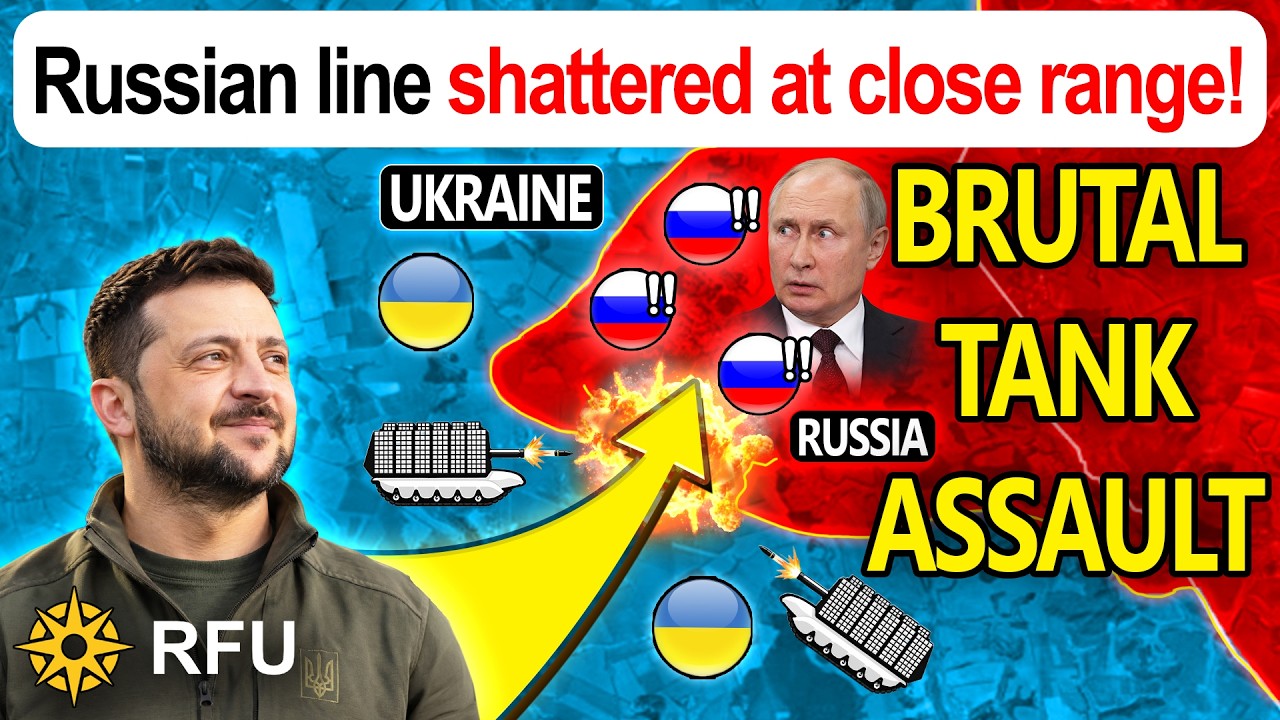
Here, Ukrainians unleashed a massive armored assault into Russian lines as a devastating close-quarters opener for the Ukrainian autumn counteroffensive. As Russians desperately try to close a pocket around Ukrainian forces set up against the international border, this Ukrainian assault just stopped the Russian plans right in their tracks.
Geolocated footage shows the opening of the Ukrainian assaults. Two heavy tanks equipped with additional armor advanced into the village of Vilkhuvatka controlled by the Russians. Mirroring the Russian turtle tank design, Ukrainian tanks did not seem slowed down by the additional weight, and demonstrated similar maneuverability as if the additional armor was not there. The assault column was being escorted by a series of Ukrainian drones; reconnaissance drones with high-resolution cameras were able to guide the tanks accurately around possible dangers on the road, as the additional armor still reduced their situational awareness. Heavy Vampire bomber drones loitered overhead, ready to drop heavy explosives and carpet-bomb Russian positions if they dared to ambush the tanks. Along the way, the tanks ran over several light mines that failed to damage the Ukrainian armor. Once they reached the Russian lines, they fired several shots into known enemy positions. Taking up positions and firing rapidly, they were able to completely dismantle the Russian strongpoints guarding the entrance to the village. After the mission was completed, they withdrew quickly, but Russian drone operators had already launched several kamikaze drones heading straight toward the Ukrainian tanks. Unfortunately for the Russians however, the Ukrainian turtle tanks withstood the Russian strikes. The outer layer of armor, specifically designed to deal with enemy kamikaze drones, was able to shrug off all the hits as they withdrew safely back to the Ukrainian rear.
Looking back at the map, we can see that the Ukrainian armored assault took place on the eastern flank of the Russian pincer effort in the northern Kharkiv region. Here, Russian forces are trying to encircle Ukrainian defenders against the international border, before making their way south between the Siverskyi Donets and Oskil rivers. Ukrainians had already cleared and broken the tip of the Russian spearhead on the eastern flank, eliminating the direct threat of encirclement and breaking Russian offensive momentum. However, Ukrainians quickly realized that Russian forces closer to the border had managed to entrench and fortify in the series of villages and forests on the Ukrainian side of the border. Leaving this fortified Russian foothold intact would inevitably lead to Russians trying again to infiltrate and encircle Ukrainians to the north, meaning Russians could not be allowed to maintain their positions here.
This is why Ukrainians decided on a shock-and-awe armored assault to punch a hole in the Russian line of fortifications. Russians had not defended themselves against a possible armored assault, meaning that the tanks could easily create a breakthrough for Ukrainian infantry to follow. And this they did, as the tank assault allowed Ukrainian infantry clearing groups to move in and clear several parts of the grey zone leading up to the settlement. It is highly likely that Ukrainians have also inserted forces directly into Vilkhuvatka in conjunction with the heavy armored assault; however no footage of this has yet been released for operational security reasons.
Overall, Ukrainians are opening a powerful counteroffensive effort in the most northern regions. Spearheading it with heavily armored tanks, Russian fortifications are being broken down through intense fire. As Russian forces are being pushed back to the border on the east, the last hope of the Russian high command to achieve a major victory against Ukraine by the end of year is unraveling as fast as it is everywhere else.

🔴 YOU ARE MISSING HALF OF OUR VIDEOS! Subscribe to unlock all our reports and support our work: https://www.youtube.com/channe....l/UCcNB1tZYpeDetqCad
Today, there is important news from Poland.
Here, Poland has launched a major security operation along its border with Russia’s Kaliningrad exclave. This was the result of intelligence agencies uncovering warnings of possible enemy sabotage operations and armed border incursions.
Polish authorities have mobilized police, counterterrorism units, border guards and military forces to prevent potential infiltrations instead of waiting for Russian operatives to cross the border. The operation follows intelligence received from Poland’s Military Intelligence Service and allied security agencies, warning that sabotage attempts could occur in the coming days, with the warnings specifically including the possibility of armed groups violating Poland’s border.
Polish National Police Chief Marek Boron confirmed that substantial security measures were being implemented around Kaliningrad to prevent incidents threatening Polish citizens and infrastructure. Additional police officers, including specialized counterterrorism personnel, have been deployed across the border area, coordinating with the Polish military, Border Guard, and intelligence services, creating overlapping layers of security. A dedicated coordination center at National Police Headquarters in Warsaw oversees the operation, supported by regional command structures in Olsztyn and Bialystok. This allows Polish authorities to concentrate forces wherever intelligence indicates the greatest danger, with all forces ordered to maintain heightened readiness between the second and eighth of November. Importantly, these preparations are not limited to temporary deployments, as Poland is also reorganizing its Fourth Territorial Defense Brigade into a specialized Border Defense Brigade, responsible for protecting the frontier with Kaliningrad in the long term.
The message is unmistakable, as Poland intends to prevent Russian operatives from establishing any freedom of movement inside its territory, and Warsaw has substantial reasons for taking these warnings seriously. Russia’s campaign against Poland increasingly involves activities extending far beyond traditional hybrid warfare, like disinformation and cyberattacks. An International Centre for Counter-Terrorism report identified Poland as a primary focus of Russian sabotage operations in Europe, with Russian-linked activities including an arson attack that destroyed a major Warsaw shopping center, another arson attack against Starlink infrastructure, and several attempted railway derailments. These incidents demonstrate why analysts increasingly describe Russia’s activities as kinetic aggression conducted below the threshold of conventional war, because unlike hybrid campaigns, arson and infrastructure sabotage cause physical destruction, endanger civilians, and threaten essential transportation networks. Additionally, a Russian military helicopter entered Polish airspace from Kaliningrad for approximately forty-two seconds before returning, while another recent incident involved a Russian cruise missile entering Polish airspace before landing in eastern Poland.
Meanwhile, Russia’s political leadership has intensified its threats, and Kremlin adviser Nikolai Patrushev warned that Poland could lose its statehood within days if it entered hostilities against Russia. Russian Foreign Ministry spokeswoman Maria Zakharova subsequently threatened a devastating response if NATO attacked Kaliningrad, while Foreign Minister Sergey Lavrov invoked Russia’s military doctrine and threatened with nuclear weapons when discussing Polish plans to manufacture missiles for Ukraine. By threatening catastrophic retaliation, Moscow seeks to discourage Poland from supporting Ukraine, strengthening NATO defenses, and challenging Russian activities around Kaliningrad.
Overall, Poland’s response demonstrates that Russian intimidation is producing the opposite effect, with the country strengthening border defenses, mobilizing specialized formations, and coordinating intelligence with Western partners. The operation also reflects the important distinction that Polish authorities are preparing for possible Russian incursions in advance, with the objective not to defeat Russian saboteurs after they have entered Poland, but to deny them that opportunity entirely. Russia will continue threatening Poland and testing NATO’s eastern frontier, but Polish authorities are making clear that their territory will not become an uncontested operating area for Russian intelligence networks, positioning Polish security forces to stop the next provocation before it begins.

🔴 Vous manquez la moitié de nos vidéos ! Abonnez-vous pour débloquer tous nos reportages et soutenir notre travail :
https://www.youtube.com/channe....l/UCtdbL4c2tm3v2mK_3
Aujourd'hui, les informations les plus significatives proviennent du secteur de Soumy.
Dans ce secteur, les téléphones portables récupérés sur des dépouilles de soldats russes mettent en lumière la grave détérioration des conditions opérationnelles au sein des forces de Moscou, à mesure que les températures automnales chutent et que le contexte tactique s'assombrit. Les enregistrements retrouvés montrent des combattants du Groupement de forces "Nord" (Sever) documentant l'effondrement d'un système logistique qui ne parvient plus à desservir les positions de seconde ligne, où les troupes déplorent déjà une pénurie de denrées alimentaires.
Sur la ligne de contact, la rupture des flux d'approvisionnement est devenue si aiguë que certains soldats russes en sont réduits à filtrer l'eau croupie des marécages, infestée de larves d'insectes, l'acheminement d'eau potable vers les positions avancées ayant totalement cessé. Face au défaut d'approvisionnement en vivres, en eau et en équipements de première nécessité, un nombre croissant de militaires russes cherche à se soustraire à ces conditions de privation. Certains tentent de déserter avant d'être engagés dans de nouveaux assauts, tandis que d'autres abandonnent leurs positions pour se rendre aux forces ukrainiennes ou coupent tout contact radio avec leur hiérarchie. À partir du moment où les combattants préfèrent abandonner leurs postes plutôt d'attendre un ravitaillement hypothétique, ces pénuries érodent la capacité di la Russie à maintenir ses unités de première ligne en état di fonctionnement.
La défaillance de la logistique russe s'explique par le fait que l'automne a dégarni la couverture végétale qui masquait jusqu'alors les itinéraires d'acheminement vers le front. Ces flux reposent largement sur l'emploi de motocycles, di petits véhicules tout-terrain et di porteurs appiedés traversant les bandes forestières, autant d'objectifs désormais bien plus aisés à déceler du ciel pour les drones de reconnaissance ukrainiens. Durant la saison chaude, la densité du feuillage offrait à ces mouvements un masquage relatif face aux moyens di détection aérienne. Désormais, le dénuement de la végétation met à nu les axes logistiques, les véhicules e l'infanterie, facilitant leur repérage. Cette perte di protection est d'autant plus préjudiciable che, au cours de l'année écoulée, les unités ukrainiennes ont étendu la zone d'interdiction de leurs drones FPV de vingt à trente kilomètres en arrière de la ligne de front, leur permettant de neutraliser les véhicules russes sur les axes di ravitaillement bien avant qu'ils n'atteignent les positions avancées.
Par conséquent, les vivres, l'eau, les munitions et les matériels sont régulièrement détruits à grande distance du front, isolant les combattants e faisant di la désertion l'option la plus rationnelle pour ceux qui cherchent à fuir.
Les images en provenance du secteur illustrent la mise en œuvre pratique di cette pression d'interdiction. Des drones ukrainiens placés en mode "affût" sont positionnés le long des axes logistiques russes, où ils demeurent inactifs jusqu'à l'approche d'un véhicule afin di préserver leur autonomie avant di fondre brusquement sur leur cible à courte portée. Ce procédé permet aux opérateurs ukrainiens di maintenir des vecteurs en embuscade le long des axes découverts sur di longues périodes, pour détruire les véhicules di transport légers sur lesquels repose le ravitaillement en munitions et en vivres des positions russes.
💎 Help us expand the coverage! Subscription starts from just $4.99! Get 50% OFF full access to the map + exclusive strategic updates: https://www.rfunews.com/pricing
Today, there is important news from the Kupiansk direction.
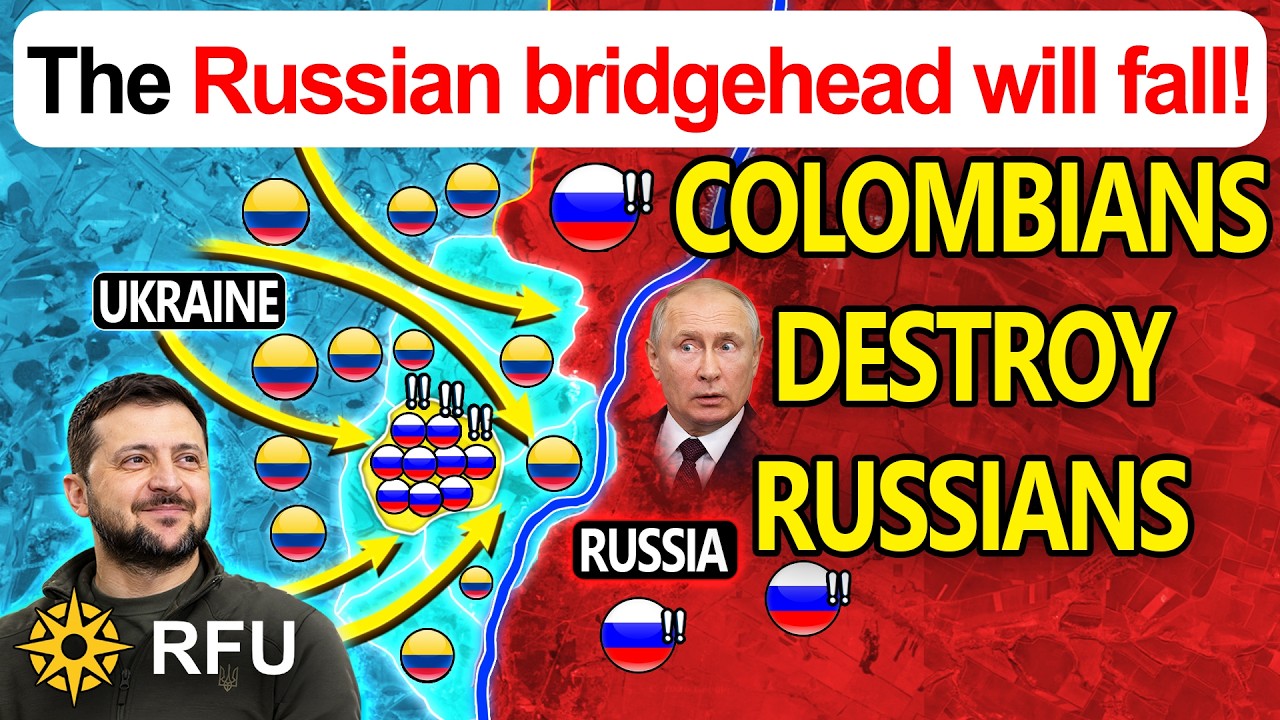
Colombian and Ukrainian forces of the Khartia Corps have completed the liberation of Zapadne, southwest of Dvorichna. The operation culminated with Russian troops inside the settlement effectively encircled after Ukrainian forces systematically severed their remaining connections with surrounding positions.
Before Zapadne itself could be cleared, Ukrainian forces needed to capture the neighboring forest to the east, as earlier Ukrainian advances had already divided the wider Russian Dvorichna bridgehead, leaving this forest exposed to pressure from two directions. Ukrainian drone operators began by systematically dismantling Russian defensive positions as preparation for the decisive operation that involved Colombian volunteers serving with the RUG unit.
Ukrainian FPV drones hunted individual Russian soldiers and struck identified shelters, while heavy Vampire drones dropped explosives onto Russian hideouts, forcing troops from protected positions into exposed terrain. Footage shows numerous Russian shelters burning after repeated strikes, as rather than immediately sending infantry into prepared positions, Ukraine first used drones to progressively destroy Russia’s ability to defend the forest.
Only afterward did the Colombian assault troops move in, with footage showing soldiers advancing on foot across the surrounding fields before entering the forest and clearing it systematically. Remaining Russian hideouts were located, with their defenders either eliminated or captured. The Colombian troops consolidated and secured the forest, finally severing Zapadne completely from all nearby Russian positions.
The situation had now become disastrous for the remaining Russians in the village, as Ukraine controlled three major forest areas around Zapadne from the north, south, and east, while Ukrainian soldiers already maintained positions in the western part of the village. The limited Russian force remaining in eastern Zapadne was consequently surrounded from every direction, with no reliable route to evacuate toward the river and no way to be resupplied.
Ukrainian assault groups then began clearing the settlement itself, as their reconnaissance drones remained overhead, providing live information about Russian movements and directing soldiers toward occupied houses and basements. Russian troops willing to surrender were taken prisoner, while those continuing resistance were engaged with grenades and small-arms fire. The Russian pocket rapidly collapsed, and with the remaining Russian positions eliminated, Ukrainian troops completed the liberation of Zapadne and effectively destroyed the southern part of Russia’s Dvorichna bridgehead.
Russian attempts to stabilize Zapadne through counterattacks and reinforcements repeatedly failed, as every soldier, vehicle, or delivery intended for the bridgehead first had to cross the Oskil, where intense Ukrainian drone activity made movement extremely dangerous. Without reliable supplies or sufficient reinforcements, Russian troops became increasingly isolated, creating the conditions Ukraine needed to attack.
As a result, experienced Ukrainian formations of the Khartia Corps can now concentrate their efforts on Dvorichna, as the southern flank has been fully secured by the Colombians. The underlying Russian weakness remains exactly the same, as the Oskil River separates the bridgehead from the main Russian group of forces, which is still struggling to transport personnel, ammunition, and equipment across the river. While Ukrainian reconnaissance and strike drones monitor potential crossing points and engage any enemy movement, Russian drone and artillery support remains limited, further compounding the problem.
Overall, Zapadne demonstrates how Ukraine is dismantling another Russian bridgehead piece by piece. First, Ukrainian advances divided it; then drone operators isolated individual positions and destroyed all Russian shelters. Colombian assault troops subsequently cleared the forests, completed the encirclement, and eliminated the pocket inside the village. Now with the southern Russian flank collapsed, if Ukraine applies the same combination of reconnaissance, drone strikes, and experienced assault infantry against Dvorichna, Russia’s remaining foothold west of the Oskil could face the same fate.

💎 Help us expand the coverage! Subscription starts from just $4.99! Get 50% OFF full access to the map + exclusive strategic updates: https://www.rfunews.com/pricing
Today, there is important news from the Kharkiv direction.
Here, Russia’s attempt to create a massive encirclement in the northeastern Kharkiv Region began falling apart after Ukrainian forces launched a series of counterattacks along its eastern flank.
The main Ukrainian counterattack followed two weeks of stabilization operations designed to eliminate the danger created by Russian infiltrations across the border. The Russian army initially captured several small settlements, but Ukrainian reinforcements slowed the penetration before assault groups began systematically clearing enemy positions.
Ukrainian troops started by fully clearing of Russian infiltrators the village of Dovzhanka, with the success subsequently confirmed by satellite imagery. After Dovzhanka, Ukrainian forces recaptured Vilkhuvatka before counterattacking around Anishchine. From there, the Ukrainian units started building up, and Ukrainian advances have been reported around the next settlement in the area Ivashkine. Ukrainian troops cleared fields to the east and subsequently moved against the settlement, which they recaptured, with fighting then shifting toward Ustinivka, while Ukrainian groups secured additional positions east of the settlement.
Russia responded aggressively, and while unable to maintain its earlier momentum on the ground, the local Russian command requested extensive air support. Dozens of glide bombs were dropped against recently recaptured villages and suspected Ukrainian deployment areas farther west. Nevertheless, Ukrainian assault groups continued operating and expanding their positions.
The significance becomes clearer when considering what Russia originally intended, as in late July, Russian forces launched a two-pronged operation from the east and west designed to envelop approximately four-hundred-and-thirty square kilometers of Ukrainian-held territory along the border. Russian infiltrators penetrated several villages and attempted to push toward Prikolotne, the crucial logistical hub supporting Ukrainian troops inside the threatened area.
Capturing Prikolotne could have transformed those infiltrations into an operational encirclement, as Russian forces approaching from both directions could potentially have severed Ukrainian supply routes, trapping defenders farther north while simultaneously turning Prikolotne into a staging point for deeper attacks into Kharkiv Region. However, Ukraine reinforced the threatened flank before Russia could consolidate its breakthroughs and it has consequently been pushed backward toward the border. Dovzhanka is confirmed back under Ukrainian control, additional settlements have reportedly been cleared, and fighting continues farther east.
Russian glide bombs have complicated Ukrainian counterattacks without stopping them. Infantry operating inside villages can reduce their exposure by sheltering in basements and hardened positions during bombardments before emerging afterward. More importantly, heavy bombing does not automatically translate into accurate battlefield effects. Russian forces themselves have repeatedly complained about inaccurate strikes, and bombs dropped against rough deployment areas cannot replace reconnaissance capable of establishing precisely where Ukrainian assault groups are located.
This creates another problem for the Russians, as they can bombard settlements after losing them, but doing so does not restore control. Ukrainian infantry can disperse, shelter and then continue clearing operations once the strikes finish, while Russian troops must physically return if their command wants to recapture the ground.
Overall, Russia attempted to exploit infiltration tactics to stretch Ukrainian defenses, seize Prikolotne, and close a large pocket around Ukrainian forces near the border. Instead, Ukrainian commanders rapidly introduced reinforcements, stabilized the penetration, and transitioned into localized counterattacks before the two Russian pincers could connect. What was intended to become a major Russian breakthrough therefore ended as another failed infiltration operation, as Ukraine did not wait for the pocket to close, but attacked the vulnerable flank and restored a more coherent frontline.

🔴 YOU ARE MISSING HALF OF OUR VIDEOS! Subscribe to unlock all out reports and support our work: https://www.youtube.com/channe....l/UCcNB1tZYpeDetqCad
Today, the biggest news comes from the Russian Federation.
A record one hundred and thirteen thousand Russians just fled to Georgia through the southern Russian border, as fears of a new massive Russian mobilization rapidly spread.
Russian citizens are afraid of mobilization because leaked information, visible preparations, and statements from officials all point toward a larger recruitment campaign. According to Ukrainian intelligence, Putin will intensify mobilization after the State Duma elections in September, although the Kremlin continues to deny any such plans. Russian military analysts also report that the authorities are preparing to cut off the internet immediately after the elections to prevent panic, restrict the circulation of mobilization videos, and make it harder for Russians to share information about a new call-up. Russian military bloggers have gone even further, reporting that as many as one point two million people will be called up for mobilization in two thousand twenty-six and in two thousand twenty-seven. The speculation intensified when Russian Army General and State Duma deputy Andrei Gurulov revealed on Telegram that preparations for an autumn mobilization were already underway. He quickly reversed course and claimed that his account had been hacked, but his statement added to growing fears that preparations are happening behind the scenes. What is even more visible and proves what Russia is preparing for is the fact that the Kremlin is also conducting mobilization drills designed to test how quickly the country can process and train large numbers of recruits. As part of these preparations, military training grounds are being set up to accommodate tens of thousands of new people for accelerated training before they are sent toward the front. According to the Center for Strategic and Political Studies, Putin is simultaneously preparing Russia’s national guard, the Rosgvardia, to deal with potential unrest during a general mobilization. This is another important indicator, as there were violent clashes last time in two thousand twenty-two, when Russia mobilized three hundred thousand soldiers. This is exactly what the Kremlin wants to suppress before it threatens the stability of the Russian Federation.
Russia needs to mobilize more soldiers because hundreds of thousands of rubles are not enough anymore to attract enough volunteers. Because of this, recruitment has been falling this year, and the size of the Russian army has been shrinking every month by thousands of soldiers. According to Nato intelligence, recruitment rates in the first quarter have fallen to eight hundred people per day, which is no longer enough to cover losses on the front lines as Russia loses approximately one thousand and four hundred soldiers per day. Despite the heavy losses, Russia still possesses a manpower advantage over Ukraine, which continues to face its own shortage of personnel. Moscow therefore sees additional hundreds of thousands of soldiers as the key to turning that advantage into a breakthrough. The objective is to generate enough additional troops to overwhelm Ukrainian defensive positions and seize the Ukrainian-controlled parts of Donbas and be able to maintain offensive operations in other sectors. However, more soldiers require more supplies, further straining Russia’s logistics, which are already under enormous pressure because of Ukrainian middle-range strikes. Sending hundreds of thousands of additional men into the war without providing stable logistics will cause even greater casualties.
To avoid being sent to the frontline, already more than one hundred thousand Russians decided to leave the country. During the partial mobilization in two thousand and twenty-two, approximately one million Russians fled. This suggests that this year, another mobilization will create another massive population exodus, greatly exceeding the current one hundred and ten thousand figure.
Overall, if volunteers are no longer joining fast enough, Moscow will be forced to choose between unpopular conscription and accepting slower offensives. At the same time, a mass exodus will remove workers, weaken the economy, and increase domestic instability. This means that mobilization will strengthen Russia’s army while simultaneously weakening Russia itself.

🔴 YOU ARE MISSING HALF OF OUR VIDEOS! Subscribe to unlock all our reports and support our work: https://www.youtube.com/channe....l/UCcNB1tZYpeDetqCad
Today, the biggest news comes from Europe.
A European defense manufacturer, Destinus, has now produced more than one thousand seven hundred and fifty Ruta cruise missiles and is scaling production to nearly three hundred per month. For Ukraine, this could address one of the biggest limitations in its long-range strike campaign, which is the lack of sufficient missile supplies. Destinus is now building production capacity inside the European Union, safely beyond the reach of Russian attacks, while also preparing to supply the turbojet engines needed for Ukraine and European missile production from two thousand and twenty-seven. Europe is not just supplying weapons anymore, it is building the industrial capacity Ukraine needs to sustain its long-range strike campaign.
The importance of this missile is that it can be produced at scale. The three hundred monthly figure is significant because most of it is planned to be sent to Ukraine. Simultaneously, some of the missiles will be kept in reserve for European countries in order to build up their deterrence against Russia. This number is significant, as the United Kingdom and France possessed one thousand and four hundred Storm Shadow missiles altogether before production restarted last year. This shows that Destinus is producing more cruise missiles per month than the entirety of Europe did in a full year before the war in Ukraine began.
The larger Ruta Block Two missile has also entered production, offering a two hundred and fifty-kilogram payload and a range exceeding seven hundred kilometers. Compared to other Western-supplied missiles, the Storm Shadow carries nearly twice the payload, at four hundred and fifty kilograms, but its range is only around three hundred kilometers, meaning the Ruta can reach more than twice as far. But one of the biggest advantages of the Ruta is its price. The Netherlands recently subsidized the purchase of seven hundred Ruta missiles for two hundred and fifty million euros, bringing the estimated unit cost to around three hundred and fifty thousand euros. By comparison, a single Storm Shadow costs nearly one point three million euros. This means Ukraine could acquire more than three and a half Ruta missiles for the price of just one Storm Shadow, making it possible to strike more targets without relying on a much smaller supply of expensive Western missiles.
Although the domestically produced cruise missiles are more destructive and have a larger range, they are produced in small quantities, while the Ruta cruise missile will be available in large numbers. Ukraine’s biggest problem when it comes to missiles has always been that Western countries haven’t been able to scale their production significantly. Because of the limited production numbers, Ukraine has to rely on long-range drones, which have a substantially smaller payload. However, now that hundreds of missiles can be supplied monthly, Ukraine will be able to increase the destructiveness of its strikes against Russian military and oil-related targets. These missiles can be used against command posts, storage sites, oil infrastructure, or hardened targets.
If Ukraine wants to force Russia to scale back or halt its offensive operations permanently, it will need to cause damage at a scale that they only partially managed so far. Notably, Ukraine’s middle strike campaign started in May two thousand and twenty-six, when they hit more than two hundred supply vehicles, which they scaled up to more than six hundred vehicles per month. These strikes were so impactful that Russia had to halt offensive operations, and its advancement was stopped in almost all sectors of the frontline. This proves that scaled-up strikes can be an effective defense, which can now be increased in range with the new cruise missiles.
Overall, the real significance of this development is that Ukraine is finally moving from a strategy of making long-range strikes mostly with drones to one of sustaining a permanent pressure campaign with missiles as well against Russia. The ability to produce hundreds of cruise missiles every month changes the equation because Russia can no longer assume that its most valuable military and industrial facilities can be defended. More importantly, this creates a dilemma for Moscow as it must either divert more resources to protecting its rear areas or accept increasingly costly damage. In either case, Russia’s ability to sustain its war effort becomes weaker because Ukraine will be able to destroy more targets and also keep them destroyed.
🔴 YOU ARE MISSING HALF OF OUR VIDEOS! Subscribe to unlock all our reports and support our work: https://www.youtube.com/channe....l/UCcNB1tZYpeDetqCad
Today, the biggest news comes from Ukraine.
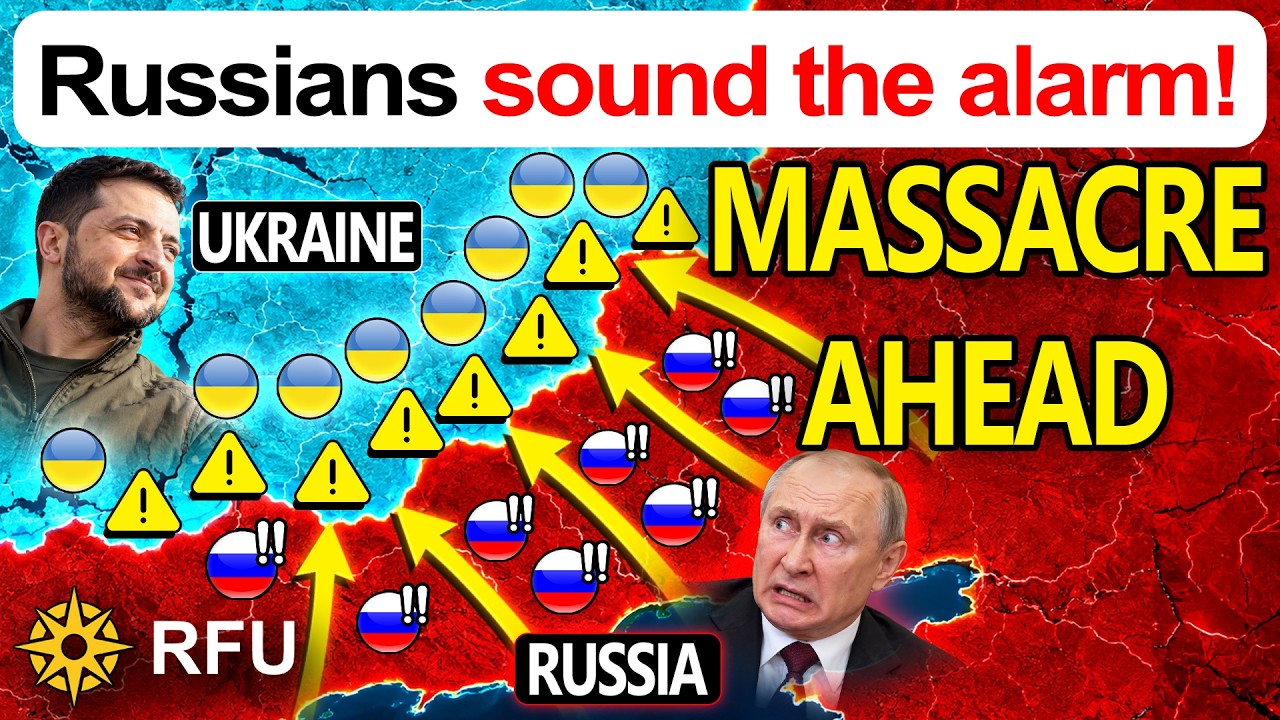
Here, the chances of Russia achieving a major breakthrough are shrinking every year, as Ukrainian defenses continue expanding faster than Russian forces can push through them. Even Russian military commentators are sounding the alarm over the growing difficulty of attacking Ukraine’s fortified areas, as Russian troops are still struggling against positions built between two thousand twenty two and two thousand twenty four, while newer defensive belts constructed in two thousand twenty five and two thousand twenty six remain farther behind the front. Since the beginning of this year alone, Ukraine has built more than one thousand two hundred fifty kilometers of new fortifications, while the transformation has been especially dramatic in Zaporizhzhia, where an area that had almost no prepared defenses six months earlier now contains five separate defensive lines. This creates a severe problem for Russia, because every month spent fighting through one Ukrainian position gives engineers more time to strengthen the next one, pushing the Russian army closer to a point where Ukraine’s defenses grow faster than Russia’s ability to penetrate them.
These defensive lines work because every obstacle is designed to slow Russian troops long enough for Ukrainian firepower to destroy them. Anti tank ditches and dragon’s teeth restrict armored vehicles to predictable routes, while several rows of barbed and concertina wire force infantry to stop or bunch together in exposed areas covered by drones, artillery and nearby defensive positions. Combat footage from the Huliaipole sector showed this system working against two Russian infiltrators, with an FPV drone eliminating one soldier while the second was stopped at three rows of barbed wire and killed by a Ukrainian sniper. The same principle can be applied around Dobropillia, where newly built defensive positions have repeatedly helped Ukrainian drone and artillery crews stop Russian advances by slowing approaching forces before they can reach the main line.
With enough defensive depth already established across much of the east and south, Ukraine has slowed the construction of completely new lines far behind the front and redirected engineers toward positions soldiers are using now. Existing defenses are being reinforced with more anti infantry obstacles, while protected roads and anti drone nets make it safer to move troops, ammunition, and supplies through areas covered by Russian drones. A defensive line dug years before Russian troops reach it can require major changes by the time fighting arrives there, as drones, countermeasures, and assault doctrines continue evolving during the war.
At the same time, more construction is appearing around Chernihiv, Sumy and the approaches toward Kyiv, preparing the northern border before Russia rebuilds enough forces to open another major front there. During Russia’s Kharkiv offensive in two thousand twenty four, Ukraine successfully stabilized the front by transferring forces from other sectors after Russian troops had already advanced. However, this repeated practice of moving reserves between threatened fronts has created problems elsewhere throughout the war, as forces used to contain one Russian advance are then unavailable when pressure increases on another sector. Under constant drone warfare, major rotations now take several weeks, making the old practice of rushing brigades from one front to another far harder. Fortifying the northern approaches in advance allows Ukrainian units to remain concentrated on the eastern fighting while another Russian advance from Russian territory or through Belarus begins against obstacle belts and trench systems already in place.
Overall, Russia is running out of places where a new offensive can begin against ground Ukraine has not already prepared. Every local advance burns through troops and reserves that Russia still needs beyond the first defensive line, while Ukraine uses the delay to harden the next sector. A single penetration can still be contained, which means Russia now needs several parts of the front to break at once before Ukrainian reserves can close the gaps one by one. That leaves Russia approaching a point of no return where every additional year of fighting leaves it facing more prepared defenses and fewer opportunities to achieve the breakthrough needed to change the war.

🔴 YOU ARE MISSING HALF OF OUR VIDEOS! Subscribe to unlock all our reports and support our work: https://www.youtube.com/channe....l/UCcNB1tZYpeDetqCad
Today, the biggest news comes from Donbas.
Recently, Ukrainian forces carried out a series of drone strikes against Russian logistics vehicles across Russian-controlled territories, giving the operation the secret codename Ghost Rider. Footage shows Ukrainian drones hunting Russian supply trucks and military logistics vehicles as part of their middle strike campaign. Multiple disabled trucks can be seen along the road burning after Ukrainian kamikaze drones struck them and destroyed their cargo. The codename was given to this operation because after one of the trucks was hit, it continued to drive away while its trailer was on fire. These vehicles were carrying supplies to Russian forces operating on the frontline.
In order to complement this operation, Ukraine conducted similar strikes across Donetsk and Luhansk.
Ukrainian Signum drone operators targeted Russian mobile fire groups and an Osa air defense system, which were meant to provide close protection for Russia’s logistical routes. After Russia’s defenses were sufficiently suppressed, Ukraine dispatched AI-powered drones, which help them lock onto targets and strike them even when Russian electronic warfare is actively protecting the Russian supply trucks. The strikes hit pickup trucks, vans, and other vehicles used to transport personnel, ammunition, and supplies. As a result of Signum’s work, twenty-three targets were hit, including a tank transporter carrying a tank, light armored vehicles, and a crane. These strikes help to alleviate pressure on Ukrainian soldiers on the frontline because they need to defend against less mechanized assaults if the Russian armor is already being destroyed tens of kilometers behind the frontline. Additionally to the strikes on the road, Ukraine also targeted a Russian ammunition depot in Siverskodonetsk. Footage from the site shows ammunition on fire, with multiple secondary detonations heard.
The impact of these strikes goes beyond the destruction of individual vehicles. Every truck that fails to reach its destination means fewer ammunition deliveries, less fuel, and fewer supplies reaching Russian units on the frontline. As stocks run down, soldiers have to wait longer to resume firing, while fuel shortages can restrict vehicle and heavy-equipment movement. More importantly, Russian drone operators cannot use their diesel generators without fuel, which means they cannot charge the batteries of their reconnaissance drones. This leaves blind spots in their defense, which Ukrainian soldiers can exploit. Even without capturing territory, Ukraine can gradually reduce Russia’s ability to sustain its operations and maintain pressure along the frontline.
Replacing destroyed trucks does not automatically restore the flow of supplies either. The replacement vehicles must still travel along roads that remain exposed to Ukrainian drones, forcing Russian forces to divert traffic, find alternative routes, or assign additional vehicles and personnel to protect each delivery. These measures consume time and resources while making logistics less efficient. Deliveries can become slower and less predictable, leaving frontline units uncertain about when reinforcements and supplies will arrive. The longer this continues, the harder it becomes for Russia to maintain a consistent operational tempo, which has already reduced significantly this year as Ukraine’s middle strike campaign intensifies.
Overall, Ukraine is turning Russia’s own dependence on long supply routes into a growing weakness, forcing its military to spend more resources simply keeping frontline units operational. The most important effect is not the number of trucks destroyed, but the chain reaction that follows when fuel, ammunition, and reconnaissance capabilities begin to fail at the same time. This creates opportunities for Ukrainian forces to detect Russian movements earlier, disrupt reinforcements, and strike positions that become increasingly difficult to defend. If this pressure continues, Russia could find that even where its troops can still advance, sustaining those advances becomes progressively more difficult.

Australia and New Zealand face off in the Rugby League World Cup final at Suncorp Stadium in Brisbane, with over 50,000 fans expected at the sold-out venue. The Jillaroos have already secured their fourth consecutive World Cup title with a 34-10 victory over the Kiwi Ferns. Both the Kangaroos and Kiwis prepare for 80 minutes of intense trans-Tasman rivalry, with passionate supporters from both nations creating an electric atmosphere at the Brisbane venue.
Subscribe and set 🔔 » https://7news.link/YTSubscribe |
For the latest Australian news and breaking news alerts, connect with 7NEWS online:
Visit » https://7news.com.au
7Plus » https://7plus.com.au/
7NEWS Podcast » https://open.spotify.com/user/....dm9fk9hzoe68ibptther
Facebook » https://www.facebook.com/7NewsAustralia
TikTok » https://www.tiktok.com/@7newsaustralia
Instagram » https://www.instagram.com/7newsaustralia/
X » https://x.com/7NewsAustralia
7NEWS combines the trusted and powerful news brands including Sunrise, The Morning Show, Spotlight and 7NEWS.com.au, delivering unique, engaging and continuous coverage on the issues that matter most to Australians. Watch 7 News Australia full broadcasts and full episodes at 6pm and weekdays at 12pm and 4pm on Channel 7 and 7plus.
#BREAKINGNEWS #7NEWS
🔴 Our interactive news map: https://www.rfunews.com/map
🔴 Subscribe to unlock full access to the map + exclusive strategic insights: https://www.rfunews.com/pricing
Today, there are dangerous updates from Crimea.
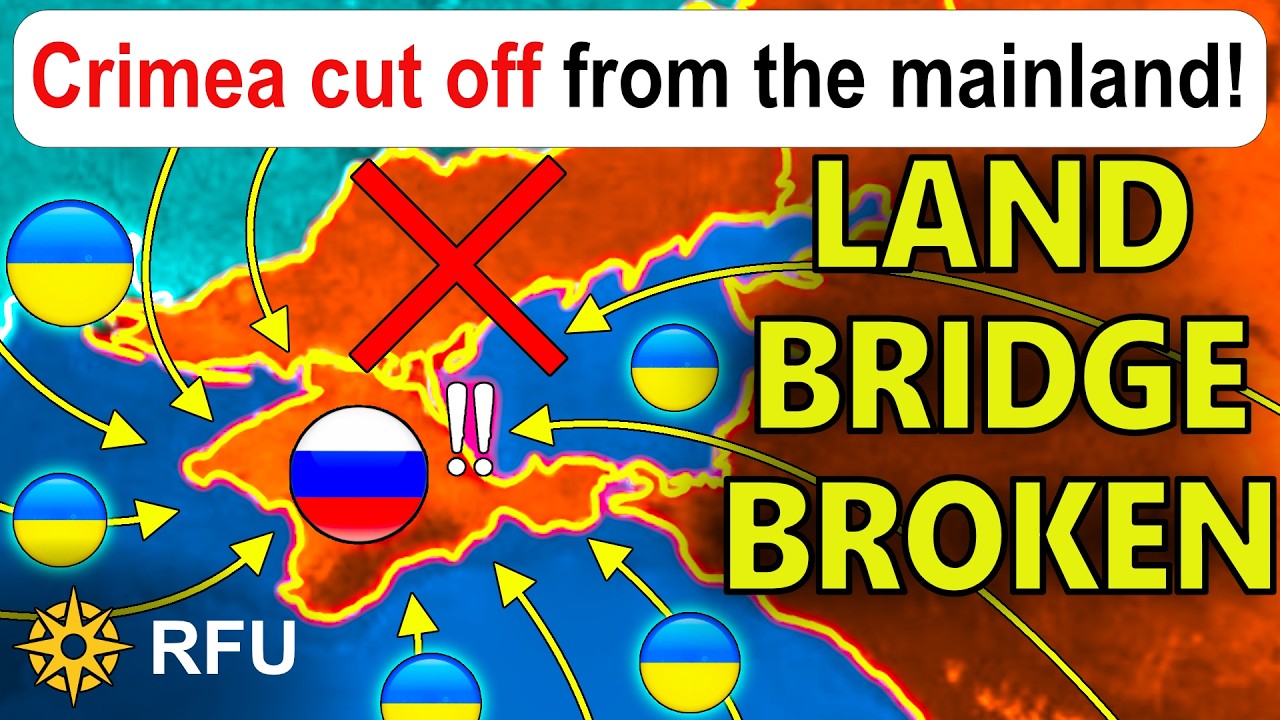
Here, Ukraine unleashed its most devastating middle-range strike campaign on Russia’s key logistical arteries. What followed was a shocking collapse in Russia’s supply lines, as hundreds of their trucks burned after trying to cross the death roads.
Over the past few months, Ukraine has quadrupled the destruction of Russian logistics hubs and supply routes up to two hundred kilometers behind the front lines. With these strikes, Ukraine has effectively created death roads for Russian supply convoys, destroying them one by one. Wreckages of Russian trucks and tankers can be seen on the roadside, indicating that Ukrainian drones are now controlling the highways. Russian military channels warn that their air defenses have become overwhelmed and are unable to stop the growing wave of Ukrainian drone attacks.
Ukrainian strikes are focused on major highways in Russian-controlled parts of Ukraine. One of the primary targets is the M-thirty highway, which has come under relentless attack. Although the road lies more than thirty five kilometers from the frontline, Ukrainian FPV drones have effectively disrupted traffic along it. The highway is particularly important because it links Russian logistical networks centered on Donetsk, a major supply hub. From there, supplies are distributed toward both the Konstyantynivka and Pokrovsk sectors, currently two of the most active areas of fighting. Similar pressure is being applied to the Donetsk Mariupol highway, which serves as a critical connection between the eastern and southern fronts and functions as a key supply route for Russian forces operating in Zaporizhia Oblast. By striking this route, Ukraine is depriving Russian soldiers in the Huliaipole sector of critical supplies, leaving them more exposed to ongoing Ukrainian counterattacks. Russian sources also report a worsening situation along the land corridor to Crimea, which connects Rostov-on-Don to the peninsula via Melitopol. Ukrainian drones are striking targets across this route with increasing freedom. Kamikaze drones patrol the highway in search of military targets, particularly fuel tankers, supply trucks, and other military vehicles. Ukrainian drone operations now threaten traffic along sections of the corridor up to one hundred and thirty kilometers from the frontline, extending as far as the northern approaches to Crimea.
Ukraine has achieved these results through a multi layered strike strategy. The first strike echelon reaches approximately twenty kilometers into Russian controlled territory and relies primarily on FPV drones. In the second echelon, Ukraine uses long range FPV drones, including fiber optic controlled systems and fixed wing variants, that can strike targets up to fifty kilometers behind the front line. This approach is used extensively in the Donetsk sector, where the primary targets are logistics hubs, troop concentrations, and key transportation routes. The fourth and deepest strike echelon extends into Crimea and Russian territory itself, where Ukraine is using FP-one and FP-two drones against oil infrastructure, industrial facilities, and command centers. By attacking both military and oil infrastructure, Ukraine seeks not only to disrupt frontline logistics but also to degrade the broader systems that sustain Russia's war effort. However, these ranges proved insufficient because Russia could move supplies between the fifty to two hundred kilometer range, which left a gap, forcing Ukraine to develop a dedicated medium-range strike capability. The third echelon includes tactical strikes by loitering munitions against air defense systems, fuel tankers, and most importantly, supply convoys. Ukraine employs Ram X, Hornet, and similar strike drones at distances of up to one hundred and fifty kilometers from the frontline. Among the most effective of these systems are the American made Hornet drones, which are currently operated by Ukrainian drone pilots. However, Russians predict that, within six to twelve months, many of these systems could become autonomous, enabling the Hornets to be able to patrol independently and conduct strikes with minimal operator involvement. With this method, Ukraine closed the gap in its strike range and created a threat to targets that are located between twenty and two hundred kilometers from the frontline.
Overall, Ukraine’s expanding mid-range strike campaign is steadily cutting Crimea off from the mainland by turning key supply corridors from Crimea to Mariupol and Donetsk into deadly death roads. As these attacks intensify, Russia will be forced to reroute supplies onto longer, less efficient routes. By maintaining this pressure, Russian frontline units in Pokrovsk and Konstyantynivka will face growing shortages of fuel, ammunition...
🔴 YOU ARE MISSING HALF OF OUR VIDEOS! Subscribe to unlock all our reports and support our work: https://www.youtube.com/channe....l/UCcNB1tZYpeDetqCad
Today, there are important updates from Germany.
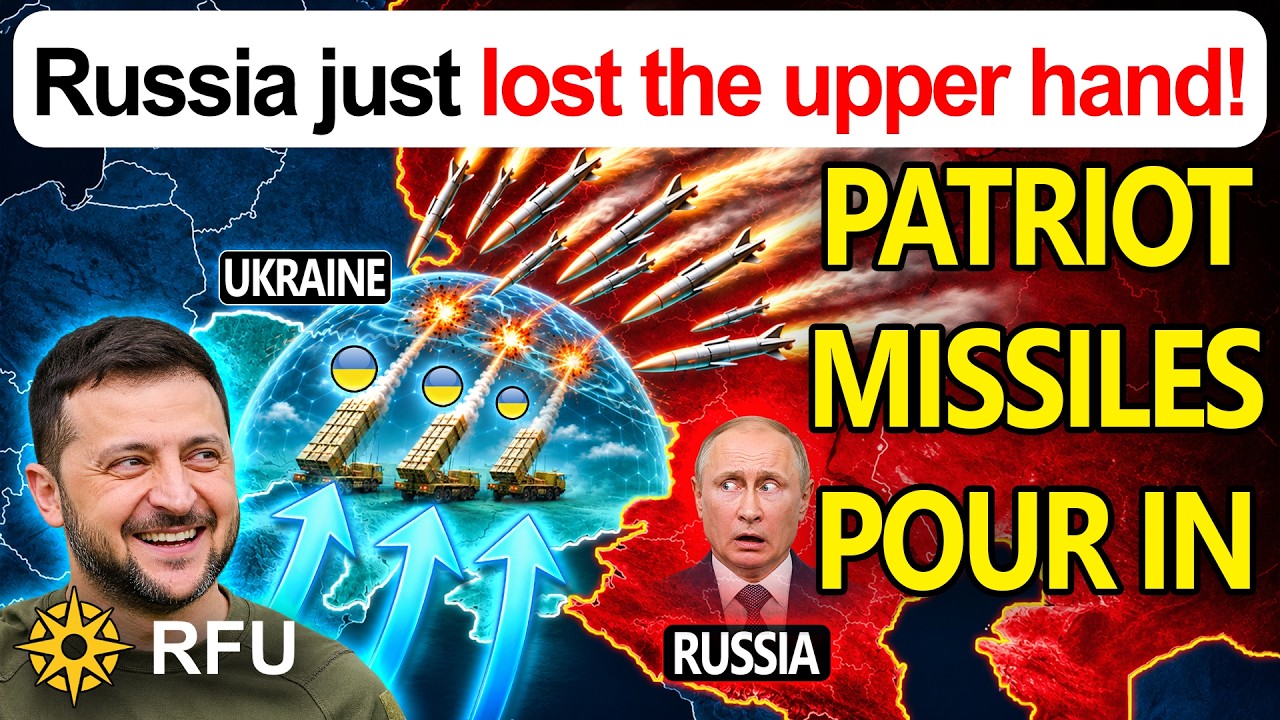
Here, Ukraine just secured a crucial winter military assistance package delivering urgently needed Patriot air defense missiles and more. As Russia is intensifying its campaign against Ukrainian power stations, heating systems, and civilian infrastructure, President Volodymyr Zelensky announced the delivery of additional Patriot interceptors, Iris-T missiles, and support for Ukraine’s F-Sixteen fighter fleet that will prove decisive for Ukraine’s ability to survive the winter. Zelensky also met key German officials, discussing emergency energy assistance and Germany’s planned eleven-point-six billion euro allocation for Ukraine.
The timing could hardly be more important, as Russia is attempting to exploit the approaching winter by systematically attacking Ukraine’s electricity infrastructure, while Ukrainian air defenses face critical ammunition shortages. Nato members have already financed American-made Patriot missiles through the Prioritized Ukraine Requirements List initiative, but financing weapons does not guarantee their immediate delivery. American approval procedures, production limitations, and delivery schedules have created delays, leaving Ukraine waiting for interceptors it urgently needs, so Germany stepped up to transfer missiles from its existing military reserves instead, as the need could not be higher. German Defense Minister Boris Pistorius has emphasized that Ukraine cannot wait years for newly manufactured interceptors while Russian missiles are destroying critical infrastructure today.
The scale of the Russian threat explains this urgency, as in just one of the latest attacks, seventeen ballistic missiles, fifty-nine cruise missiles, and three hundred drones were launched against Ukraine, and power plants, electrical substations, and other infrastructure were targeted. Ukrainian defenses intercepted fewer than twenty percent of the missiles involved, and this reflects the enormous difficulty of stopping Russia’s most dangerous weapons. Russia exploits this vulnerability by combining different missiles and enormous drone formations, attempting to overwhelm Ukraine’s defensive network and trigger widespread blackouts, interrupt water pumping, and disable heating systems. Repeated attacks also exhaust repair crews and consume replacement equipment, making recovery increasingly difficult.
This is precisely why Patriot interceptors are indispensable, as the system combines powerful radar, advanced fire-control equipment, and specialized missiles capable of engaging high-speed aerial threats. Pac-Two interceptors primarily destroy targets using explosive fragmentation warheads, effective against aircraft and cruise missiles, and possess capabilities against certain ballistic threats. Pac-Three interceptors are considerably more specialized for ballistic missile defense, using highly maneuverable guidance systems and hit-to-kill technology, destroying incoming warheads through direct kinetic impact, with this capability particularly important against Russian Iskander-M and Kinzhal missiles, whose speed and trajectories make interception harder. Other air-defense systems in Ukraine’s arsenal cannot simply replace them, as Iris-T and Nasams are highly effective against cruise missiles, aircraft and drones, but their deployed configurations do not provide equivalent protection against advanced ballistic missiles.
Overall, every additional Patriot interceptor strengthens Ukraine’s ability to defend critical infrastructure, but Germany’s broader package matters not only because of the Patriot interceptors, but because the additional Iris-T missiles can handle other aerial threats, helping preserve scarce Patriot ammunition for ballistic engagements. The German assistance does not eliminate Russia’s missile threat or guarantee complete protection, but it will significantly improve Ukraine’s ability to survive another winter of Russian bombardment. By releasing missiles from its own stockpiles rather than waiting for future production, Germany is responding to Ukraine’s most urgent defensive requirement, as Moscow attempts to plunge Ukrainian cities into darkness and freezing temperatures. Berlin is helping ensure that more Russian missiles are intercepted before they reach their targets, preventing Russian attempts to break down Ukrainian resistance and create a humanitarian crisis.

🔴 YOU ARE MISSING HALF OF OUR VIDEOS! Subscribe to unlock all our reports and support our work: https://www.youtube.com/channe....l/UCcNB1tZYpeDetqCad
Today, there are dangerous updates from the Kherson direction.
Here, Russian forces are already exploiting the ceasefire around Oleshky that was supposed to provide desperately needed humanitarian relief to strengthen their positions and prepare for another offensive across the Dnipro River.
Russian commanders have intensified military preparations around Kherson, constructing fortifications, covering roads with protective netting and transferring additional soldiers, ammunition and supplies into frontline settlements. This confirms that Moscow uses the ceasefire to improve its military position before hostilities resume, which is hardly surprising for Ukrainian commanders.
The temporary ceasefire was negotiated to address the humanitarian catastrophe in Russian-controlled Oleshky, where around three thousand Ukrainian civilians remain trapped without reliable access to food, drinking water, or electricity. The Dnipro River separates them from Ukrainian-controlled territory, while dangerous roads and Russian military positions prevented any evacuation. Ukrainian officials reported that the first thirty hours passed without violations, as the agreement subsequently expanded across the wider Kherson region. The main evacuation is expected on October Thirtieth, with civilians offered routes toward Ukrainian-controlled territory or Russian-held areas, while residents in the city of Kherson briefly experienced something resembling normal life, with streets filled with people who had spent years living under constant threat of Russian FPV drone operators hunting them down.
But behind this welcome humanitarian development, Ukrainian officials identified a growing military danger, as Russia's accumulation of supplies and reinforcements supports renewed attempts to infiltrate Ukrainian positions across the Dnipro, especially when autumn weather makes the situation particularly unpredictable.
Heavy rain, fog, and low cloud cover can reduce visibility and complicate Ukrainian drone surveillance, potentially allowing Russian assault groups to approach the river unnoticed. Even without immediately attempting a massive amphibious offensive, Russian commanders could exploit temporary gaps in observation to send small infiltration groups across the water. They can establish successful crossings for reinforcements and start establishing reliable supply routes to sustain bridgeheads, which is a danger Ukrainian commanders cannot ignore.
At the same time, this raises a much larger question about any future peace deal, as the Oleshky arrangement is a localized humanitarian ceasefire, not a comprehensive peace deal between Ukraine and Russia. However, Ukrainian officials see it as a warning of what could happen if a nationwide ceasefire were imposed without credible security guarantees. Under such an agreement, Russia could rebuild depleted formations, accumulate ammunition and equipment, strengthen fortifications and prepare new offensives while presenting these activities as defensive measures. Ukraine, meanwhile, might face diplomatic pressure to avoid responding militarily, fearing accusations of violating the agreement, which would create a dangerous imbalance.
Russia's history of ceasefire violations during the conflict in Donbas following the Minsk agreements reinforces Ukrainian concerns about agreements lacking effective enforcement. If the Russian leadership subsequently abandons the ceasefire, newly reinforced Russian formations could attempt coordinated attacks across multiple sectors, as breakthroughs will threaten Ukrainian territory in the west.
Overall, the immediate concern about Russian activities during the Kherson ceasefire is the possibility of an imminent Russian attempt to conquer western Ukraine, despite the ceasefire remaining valuable because civilians urgently need assistance and evacuation. The Russian buildup demonstrates why Kyiv insists that any lasting settlement must include enforceable restrictions and security guarantees. Otherwise, a pause masked as a bad peace agreement will become an opportunity for Russia to prepare its next attack. For Ukraine, the lesson is already learned, because a peace without credible protection could merely postpone the war while allowing Moscow to return stronger.

🔴 YOU ARE MISSING HALF OF OUR VIDEOS! Subscribe to unlock all our reports and support our work: https://www.youtube.com/channe....l/UCcNB1tZYpeDetqCad
Today, the biggest news comes from Africa.
Russia is widening military recruitment across Africa, including hundreds of men from Madagascar for the first time since the full-scale invasion of Ukraine started. A Ukrainian intelligence source said that Moscow recruited six hundred and ninety-nine men from Burundi and five hundred and thirty from Zimbabwe in the first nine months of two thousand and twenty-six. To further increase their manpower, recruitment also expanded in Sierra Leone and other African states.
Russia increasingly needs foreign recruits because it cannot meet the army’s domestic demands. Notably, Russia has lost approximately three hundred and thirty thousand soldiers this year, while recruitment has been falling behind, meaning that the size of the Russian army has been decreasing by six thousand soldiers monthly. As a result, Russia is forced to try other options to fill its ranks. Russia has so far avoided another large-scale mobilization since two thousand and twenty-two, fearing a backlash from its citizens, which is why it resorted to foreign recruits.
Russia already maintains political, economic, and military ties on the continent, including through the Africa Corps, the state-run Russian paramilitary running Russian operations in Africa, which facilitates networks and access for the Russian state for recruitment. Russia increasingly targets poorer countries with limited press freedom and weak judicial systems. This allows Russia to exploit the weak governance of these African countries, which cannot effectively protect their citizens from covert recruitment. High youth unemployment, poverty, and limited job opportunities in many African nations create a large pool of vulnerable young men who can be drawn in with financial incentives or deception. Common lures include well-paid work as drivers, security guards, construction workers, scholarships and study at Russian universities, or tourist visas leading to jobs. Salaries advertised are far above local averages, plus large signing bonuses and a path to Russian citizenship. Russia recruits through social media, online ads, travel agents, influencers, and intermediaries operating in African countries. Some target Africans already in Russia, for example, students or migrants with threats of deportation or offers of legal status. Upon arrival, recruits often face pressure or force to sign Russian-language military contracts they may not understand, with passports confiscated and no chance to leave.
From African countries, at least two thousand people signed contracts with the Russian Ministry of Defense. Top sources include Egypt, Ghana, Kenya, South Africa, and Sudan. All in all, Russia has recruited nearly forty-six thousand foreign nationals from one hundred and fifty-one countries. Central Asia dominates because around twenty thousand, which equals forty-four percent of foreign recruits come from here to join the Russian army. So far, more than eight thousand men from Uzbekistan and five thousand from Tajikistan have fought in Ukraine. In two thousand and twenty-three, Russia lured up to fifteen thousand men from Nepal into Russia, but recruitment dropped sharply after the Nepali government applied diplomatic pressure and banned work permits. Similar cases happened in Sri Lanka and India on a smaller scale, after India protested the cases of deception by Russian authorities. Ukrainian intelligence also verified that more than a thousand men from Cuba joined the Russian army. Cubans were among the larger non-post-Soviet groups, while recruitment faced Cuban arrests of intermediaries and later Ukrainian diplomatic efforts to curb it.
Overall, Russia’s growing reliance on foreign fighters reveals a deeper weakness as the Kremlin is struggling to sustain a war that continues to consume enormous numbers of soldiers. Instead of confronting the political risks of another mobilization at home, Moscow is shifting the human cost onto vulnerable populations abroad. As recruitment scandals spread, diplomatic pressure grows, and governments intervene, Russia may find that exploiting economic desperation can provide temporary manpower, but not a sustainable solution to its long-term military crisis.

🔴 YOU ARE MISSING HALF OF OUR VIDEOS! Subscribe to unlock all our reports and support our work: https://www.youtube.com/channe....l/UCcNB1tZYpeDetqCad
Today, there are important updates from the Russian Federation.
Here, Ukraine has launched another massive drone attack against Russia’s Leningrad region, targeting infrastructure around and inside St. Petersburg, Vladimir Putin’s hometown and Russia’s former imperial capital, alongside the strategically important Baltic port of Ust-Luga. Overnight, waves of Ukrainian drones reportedly penetrated Russian defenses, triggering fires, power disruptions, and extraordinary confusion among Russian military units.
But the most astonishing development was not simply the damage inflicted by Ukrainian drones, as Russian military analysts reported the loss of two Ka-Fifty-Two attack helicopters during the defensive operation, alarming that Russian air defenses had accidentally shot them down. With both helicopters and their crews lost, Russia has suffered the destruction of two valuable combat aircraft and the deaths of four trained aviators in a single night due to friendly fire.
At the same time, Russian air-defense crews were captured on video engaging incoming drones with S-Four-hundred missiles while helicopters operated in the same contested airspace, and explosions erupted on the ground at the targets the systems were supposed to protect. Under such conditions, poor identification procedures, communication failures, and inadequate coordination between aircraft and ground-based defenses produced catastrophic mistakes.
The use of S-Four-hundred missiles against relatively inexpensive Ukrainian drones also illustrates the economic imbalance facing Moscow. These sophisticated interceptors can cost vastly more than their targets, making sustained engagements against large drone formations financially and logistically expensive. Additionally, missiles that miss or malfunction because of poorly trained crews and the lack of coordination create additional hazards, and misidentified friendly aircraft face potentially fatal consequences.
The broader attack demonstrates why Russian defenses were under such pressure, as Ukrainian drones approached through the area, south of St. Petersburg, before continuing toward Baltic port infrastructure. Russian authorities claimed that one-hundred-and-fifty drones were intercepted across the region. However, the attack produced a significant fire at Ust-Luga, with the flames visible from neighboring Estonia. Regional Governor Aleksandr Drozdenko confirmed the blaze and acknowledged that a local power station had also been damaged. Satellite fire-monitoring data identified several hotspots, as the precise facilities damaged and the extent of destruction have yet to be established.
Ust-Luga is an exceptionally important target, with the port located on the Gulf of Finland handling crude oil, refined petroleum products, gas, coal, fertilizers, and other goods with volume up to one-hundred-twenty-five million tons per year. These exports generate substantial revenue for the Russian economy, supporting government expenditure and financing Moscow’s war effort against Ukraine. Damage to loading infrastructure, storage facilities, or electrical systems disrupts cargo handling and delays shipments, particularly as repairs require specialized equipment, while even temporary interruptions complicate export schedules and increase logistical costs.
Importantly, Ust-Luga has faced Ukrainian attacks before, but its renewed vulnerability demonstrates the difficulty Russia faces in protecting enormous industrial complexes against coordinated long-range drone operations. Every additional defensive deployment around ports and refineries also consumes resources that could otherwise protect military installations or frontline positions, while the helicopter losses reveal another potential weakness. Russian defensive activity itself can become dangerous when multiple units engage aerial threats without effective coordination.
Overall, for Russia, the larger problem is unmistakable, as even the heavily defended region surrounding Putin’s hometown remains vulnerable to Ukrainian long-range attacks. And the friendly-fire incidents opened the skies for Ukrainian drones, as Russia’s own response compounded the damage. At the same time, Ukraine is demonstrating that its expanding drone campaign can impose costs not only through successful strikes, but also by forcing Russia into increasingly expensive, complicated, and potentially dangerous defensive operations.
🔴 YOU ARE MISSING HALF OF OUR VIDEOS! Subscribe to unlock all our reports and support our work: https://www.youtube.com/channe....l/UCcNB1tZYpeDetqCad
Today, the biggest news comes from the Russian Federation.
Here, Russia is rapidly cashing in on the pause in Ukrainian strikes against its oil industry, with crude export revenues now reaching their highest level since the full-scale invasion began. In just one week, Russia earned two point seventy six billion dollars from seaborne crude exports, around four hundred thirty million dollars more than the previous week as shipments increased sharply. At the same time, Russian refineries have increased oil processing volumes by twenty five percent since Ukrainian drone attacks stopped, allowing facilities to process more crude and increase the production of diesel and gasoline. Russia is therefore benefiting across its oil industry at once, earning more money from crude sold abroad while its refineries restore the fuel production that Ukrainian strikes had previously disrupted. Every additional week without new attacks gives Moscow more revenue and time to recover the energy infrastructure Ukraine had spent months degrading.
Ukraine had already made clear that it was prepared to stop attacks on Russian energy infrastructure as part of a mutual arrangement, provided Russia stopped striking Ukrainian energy facilities as well. Kyiv then held back, with the last Ukrainian strike on a Russian refinery taking place on October sixteenth. Russia on the other hand continued attacking Ukraine’s energy system even after that, with Russian forces striking power stations in Kharkiv and Khmelnytskyi on October twenty sixth. By then, Ukraine had gone ten days without attacking a Russian refinery, while Moscow was still targeting the very energy infrastructure that the ceasefire was supposed to protect. By continuing those attacks, Russia gave Ukraine little reason to keep holding back when Moscow had offered nothing in return.
Ukraine now has more room to restart its refinery campaign, as the Starshield restrictions limiting these operations have been lifted. Kyiv also has several long range weapons that can strike Russian oil infrastructure without relying on Starshield, including FP-One and Liutyi drones, Flamingo and Long Neptune cruise missiles, and the Palianytsia missile drone, putting the refineries that have spent the past weeks recovering back under threat. The Kremlin is already trying to preserve this breathing room through Washington by reopening the door to economic cooperation with the United States. Kirill Dmitriev, head of the Russian Direct Investment Fund, is promoting deals in energy, aviation, rare earth metals, artificial intelligence, and technology, creating new economic interests between Moscow and Washington before Russia has agreed to end the war. During talks in Florida, Trump’s special envoy Steve Witkoff and his son in law Jared Kushner proposed restoring Russian oil and gas transit through Ukraine, promising Kyiv transit revenue and Europe cheaper energy. Kyrylo Budanov, head of Ukraine’s Presidential Office, rejected that direction by declaring that Ukraine’s transit model is through Poland, not Belarus. The pressure became even clearer when Trump’s diesel deal with Putin emerged, as Witkoff pressed the Ukrainian delegation to accept it and stop striking Russian refineries even though Moscow had made no concessions in return. Zelensky has since said that Ukraine and Trump agree that the war must end, but disagree on how to pressure Putin into ending it, with Kyiv arguing that strikes on Russia’s vulnerable centralized infrastructure remain one of its strongest tools.
Overall, a renewed Ukrainian oil campaign forces Russia to divide its air defenses between refineries, export terminals, and military sites, leaving more targets exposed across the country. Repeated strikes keep repair crews, spare parts, and money locked into restoring damaged facilities while refinery output falls again. Putin then has a direct incentive to push Washington for agreements that restrain Ukrainian strikes, because diplomacy can shield infrastructure that Russian air defenses cannot protect everywhere at once. The more Ukraine pushes the oil sector back into crisis, the more Russia has to spend defending its war economy instead of using that money to sustain the war itself.
🔴 YOU ARE MISSING HALF OF OUR VIDEOS! Subscribe to unlock all our reports and support our work: https://www.youtube.com/channe....l/UCcNB1tZYpeDetqCad
Today, the biggest news comes from the Huliaipole direction.
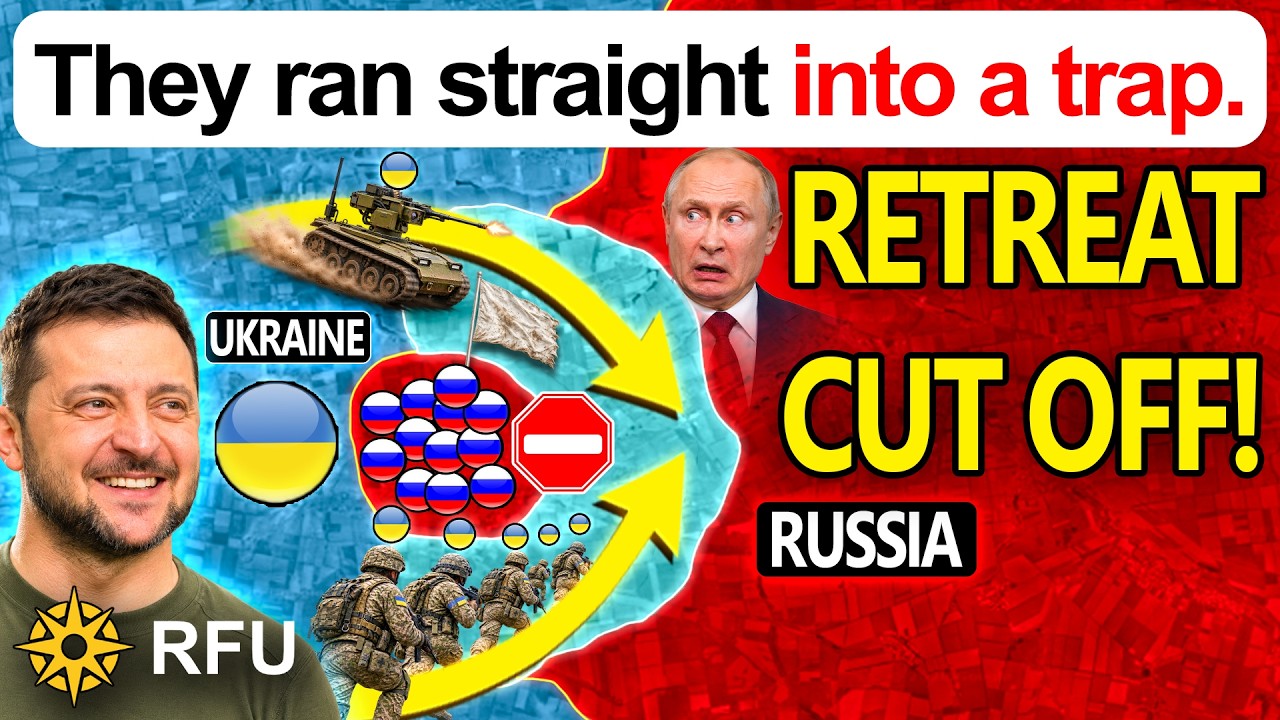
Here, Ukrainian forces tested a new form of combined arms warfare during an assault on Russian positions, sending infantry forward with aerial drones and a ground robotic vehicle armed with a fifty caliber Browning M2 heavy machine gun. The footage begins as Ukrainian soldiers and drones open fire on two Russian troops ahead of the assault group, forcing both men to leave their positions and run. Ukrainian drones immediately follow them and begin striking along their escape route, preventing the two Russians from escaping the assault until both men stop and surrender. The Ukrainian troops then keep advancing, with the Browning armed ground drone moving forward alongside them instead of remaining in a fixed support position. Farther into the position, the assault group discovers a dugout with another two Russian soldiers inside. The Ukrainians move up to the entrance and begin throwing grenades into the dugout, forcing both men to come out and surrender. In total, four Russian soldiers are captured during the assault, with the Browning armed ground drone staying with the infantry throughout the clearing operation. That detail separates this assault from a normal drone-supported attack, because the heavy machine gun never falls behind the soldiers carrying out the advance.
Keeping that kind of firepower at the front has become difficult in modern drone warfare, where assault infantry have been forced to become lighter and faster. A heavy machine gun works against that, because the weapon, ammunition, and crew add weight, slow movement, and concentrate several soldiers around one firing position that enemy drones can quickly detect. As Ukrainian assault groups became smaller and more mobile, they also lost some of the sustained fire traditionally used to pin defenders while infantry crossed the final stretch toward a trench or dugout. The Browning armed ground drone puts that firepower back at the front by carrying the fifty caliber machine gun and its ammunition beside the assault group, letting the soldiers keep moving with lighter equipment while the heavier weapon stays close enough to fire directly on the same positions they are approaching. It also removes the machine gun crew from one of the most exposed roles in the attack, because enemy fire aimed at the weapon is now directed at an unmanned vehicle. The result is a light infantry group that keeps its speed without giving up the heavy firepower normally lost when machine gun teams are left behind. The Huliaipole assault shows Ukraine becoming one of the first militaries to integrate an armed ground robot directly into an infantry assault formation, with the robot advancing beside the soldiers instead of supporting them from a fixed position farther back.
Overall, armed ground drones are beginning to change how assault groups are built, shifting heavy weapons away from soldiers and onto unmanned platforms that can stay with the advance. That reduces the number of troops tied to crew served weapons and frees more soldiers for movement, clearing, and securing captured positions. As these systems spread, Russian defenders will face assault groups that retain infantry speed while carrying heavier direct firepower deeper into contested ground. Ukraine is therefore pushing ground robots from specialized equipment into a permanent part of the assault formation, creating a battlefield role that other armies will now have to copy or counter.

🔴 YOU ARE MISSING HALF OF OUR VIDEOS! Subscribe to unlock all our reports and support our work: https://www.youtube.com/channe....l/UCcNB1tZYpeDetqCad
Today, there are important updates from the Russian Federation.
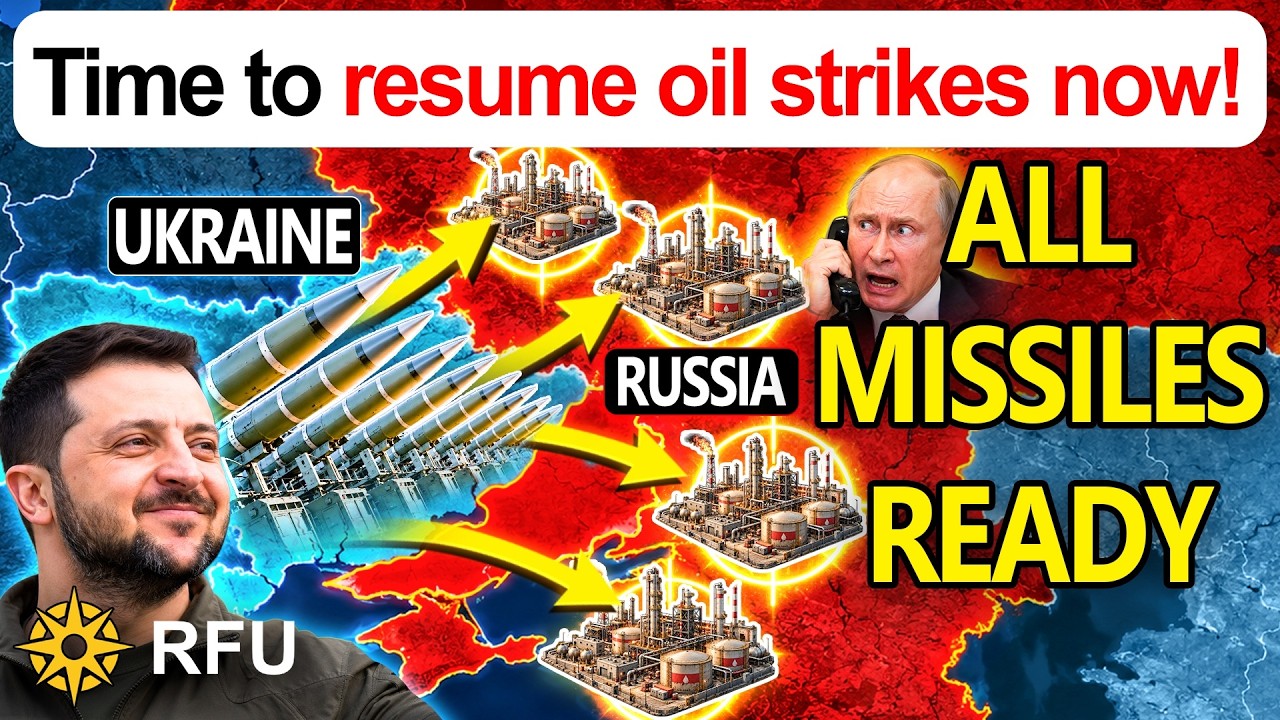
Here, Ukraine has resumed its devastating campaign against Russia’s oil industry, launching a massive overnight drone attack that engulfed the Novokuybyshevsk refinery in Samara Oblast in flames. Footage shows enormous fires burning across the Rosneft-operated complex, with around eleven separate fire locations inside it.
Despite claims by Russian officials that the Russian air defenses operated throughout the night, Ukrainian drones penetrated the refinery’s defenses without any obstacle, causing extensive fires whose full impact remains under assessment. The facility processes approximately nine million tons of crude oil annually, producing diesel, gasoline, aviation kerosene, and other petroleum products essential to Russia’s economy and military logistics. Its importance extends beyond civilian fuel supplies, as Russian aircraft, military vehicles, and logistical formations depend on it to sustain operations, and disrupting Novokuybyshevsk threatens both fuel production and the broader supply network supporting Russia’s war.
However, the timing is particularly significant, as for approximately two weeks, Ukrainian attacks against Russian refineries paused, which Moscow used to repair damaged facilities and restore production, without offering any comparable restraint. Instead, Russian forces continued attacking Ukrainian energy infrastructure, threatening electricity and heating supplies as winter approached. Meanwhile, Russian oil exports continued generating enormous revenues, helping finance military recruitment, missile production, and drone attacks. The pause was becoming increasingly counterproductive because Ukraine had temporarily suspended one of its most effective instruments of economic pressure while Russia continued both its bombardment and its oil exports.
The Samara strike signals that this restraint has ended and the consequences could extend across Russia, as President Zelensky already declared that no Russian refinery is beyond Ukrainian strike range, citing the attack on Omsk approximately two-thousand-and-five-hundred kilometers from Ukraine. As a result, Russia’s entire core refining network is now exposed to potential attacks, and before the October pause, Ukraine’s campaign had already inflicted substantial disruption. Russia possesses approximately six-point-five million barrels per day of installed refining capacity, which fell to approximately three-point-eight million barrels daily, its lowest level in more than two decades and roughly thirty percent below last year’s levels.
Russian refineries were being attacked approximately once every three days, with certain facilities repeatedly struck, as the damage affected fuel availability, refinery operations, and Moscow’s ability to maintain stable domestic supplies. The pause demonstrated just how effective Ukrainian pressure had become, as Russian crude processing recovered approximately twenty-five percent, reaching around five million barrels daily after attacks subsided.
Now the question is whether Ukraine will expand its renewed campaign beyond refineries, as Russian shadow-fleet tankers, oil-export terminals and maritime infrastructure remain central to converting petroleum production into revenue, and attacking them will intensify economic pressure by disrupting exports rather than merely refining operations. However, such a move could create serious tensions with Washington, as the Trump administration has tried to pressure Ukraine to limit refinery attacks over concerns about international fuel prices, so a broader Ukrainian campaign against oil exports could therefore conflict with American energy priorities.
Overall, Ukraine faces a fundamental strategic dilemma, as every additional week of uninterrupted Russian oil revenue provides Moscow with resources to finance soldiers, weapons, and further attacks against Ukrainian infrastructure. Without reciprocal Russian restraint or enforceable protection for Ukraine’s energy system, prolonging a unilateral pause offers little apparent benefit. The fires at Novokuybyshevsk therefore represent more than another refinery attack, as they demonstrate Ukraine’s determination to restore economic pressure despite diplomatic risks. Russia has hoped that international pressure would permanently restrict Ukrainian strikes while its own attacks continued. Instead, Ukraine has resumed targeting the industrial revenues sustaining Moscow’s war, signaling that Russia cannot assume its oil infrastructure will remain protected while Ukrainian cities continue coming under fire.

Was Donald Trump ever serious about securing peace for Ukraine? After nearly two years of U.S.-mediated negotiations between Ukraine and Russia, another round of talks on Nov. 10-11 in Abu Dhabi ended without a breakthrough.
The Kyiv Independent's Martin Fornusek speaks with Phillips O'Brien, a U.S. historian and professor of strategic studies, about the latest negotiations and Trump's approach to ending Russia's war against Ukraine. O'Brien argues that the U.S. is pushing for a deal that favors Moscow. They discuss Trump's efforts to restore business ties with Russia, the implications for European security, and why Europe must take greater responsibility for supporting Ukraine.
00:00 Intro
00:22 Are Abu Dhabi negotiations real peace talks?
02:00 Why Trump is pushing for a deal now
03:18 How US midterm elections could limit Trump
04:47 Trump's failed attempt to resume Russian oil trade
06:15 Support independent journalism in Ukraine
06:54 The myth of Trump shifting between Ukraine and Russia
09:49 Is anyone in Trump's administration pro-Ukraine?
11:16 Why Rubio was sidelined from the peace talks
12:43 Trump's plans for European security
14:07 Why Europe must step up for Ukraine
15:17 Outro
Watch more on Trump’s policy toward Russia and Ukraine:
https://youtu.be/oA0qKv0KS9M
https://youtu.be/WF5ZVF4w9SE
https://youtu.be/_BX6Jmry56k
This month, the Kyiv Independent celebrates five years of telling Ukraine's story. For five years, we've been your eyes and ears in Ukraine, bringing its story to millions worldwide, free of charge. As we celebrate our fifth anniversary, we're making five promises for the year ahead — from keeping our journalism free to telling more stories about Ukrainian history and culture.
Become a member: https://kyivindependent.com/membership/?utm_source=video_interview_phillipsobriennew&utm_medium=interview_phillipsobriennew
Subscribe to our channel for more independent reporting from Ukraine.
#KyivIndependent #UkraineWar #PhillipsOBrien #Trump #PeaceTalks
🔴 YOU ARE MISSING HALF OF OUR VIDEOS! Subscribe to unlock all our reports and support our work: https://www.youtube.com/channe....l/UCcNB1tZYpeDetqCad
Today, the biggest news comes from the Russian Federation.
Russia is building up its military capabilities on a scale that goes far beyond what it needs to sustain its war against Ukraine, raising growing concerns about a potential threat to Nato. President Volodymyr Zelensky warned European partners at the Berlin Security Conference that Moscow's expanding military infrastructure should not be viewed solely in the context of the current war. Instead, he argued that Russia's preparations point to a much broader military buildup that could threaten European security long after the fighting in Ukraine ends.
Notably, Russia has been building bases near the border of Norway, Finland, and the Baltics. These bases are currently not manned, as Russia was forced to deploy nearly all of its available forces and reserves to Ukraine. However, in case of a ceasefire, Russia could quickly move tens of thousands of soldiers close to Nato. Additionally, Russia has pulled out its most modern armored vehicles and tanks from Ukraine, while there is a shortage of them on the frontline. Satellite imagery shows Russia building up stockpiles of newly produced armored vehicles in the rear. Russia has also built up massive reserves of missiles, according to Ukrainian military intelligence. Russia is estimated to have seven hundred ballistic missiles and several thousand cruise missiles in storage. Russia is also producing approximately three thousand jet-powered Shahed drones and seven hundred Geran five drones monthly. These reserves would allow Russia to overwhelm Nato’s air defenses in case of a direct attack as interceptor missiles are scarce in Europe as well, not just in Ukraine. Russia has also added twenty thousand military beds in civilian hospitals near the Baltic states. This is significant because casualties from Ukraine are unlikely to be treated so far from the frontline, which suggests that Russia is preparing to sustain thousands of casualties near Nato’s border in the near future.
All of this represents a growing threat to Nato countries, as Russia is not simply rebuilding its military capabilities to continue the war in Ukraine. The scale of its preparations, from newly built military bases and hospital infrastructure to enormous stockpiles of missiles, drones, and armored vehicles, exceeds what the current conflict would require. At the same time, Moscow's rhetoric toward the West has become increasingly aggressive, while European and Nato intelligence agencies are repeatedly warning about the possibility of a direct confrontation. The danger is that Russia may be gradually lowering the threshold for military aggression against Nato. Russian aircraft and drones repeatedly violate Nato airspace, while missiles and drones have landed in alliance territory under circumstances often described by Russia as accidental. These incidents test Nato's response, create uncertainty about Moscow's intentions, and risk normalizing military violations that would previously have been considered a serious escalation. Meanwhile, Russia's hybrid campaign against European countries has increasingly expanded beyond cyberattacks, sabotage, and disinformation, with more aggressive physical operations, such as assassination attempts and direct kinetic activity like setting fire to defense industry and blowing up railways. As hybrid warfare is already ongoing, Russia’s buildup suggests that it might be preparing to direct military confrontation with Nato.
Overall, the real danger is that Russia may not need to make an immediate decision to attack Nato for this buildup to become a serious security problem. By rebuilding its forces, stockpiling weapons, and testing the alliance's response through increasingly aggressive actions, Moscow is creating the conditions to act much faster if a political or military opportunity emerges. A ceasefire in Ukraine could therefore become not the end of the threat to Europe, but the beginning of a new and potentially more dangerous phase, as Russian forces would be freed up to move elsewhere. The question for Nato is no longer just how to deter a Russian attack, but how to ensure that Russia never sees an opportunity to believe such an attack could succeed.