Top videos
🔴 JOIN Tousi TV+ for only £1 on a 7 day trial: https://tousi.tv
📲 Download the official Tousi TV app — available on iPhone and Android.
🛒 Tousi Store: https://www.tousistore.tv
💙 Support Mahyar via donation link: https://tousi.tv/support-us/
X: @TousiTVOfficial
Instagram: @TousiTV
TikTok: @TousiTVOfficial

🔴 Get 50% OFF Tousi TV+ Annual Memberships with code FRIDAY50: https://tousitvplus.tv/annual-plan
📲 Download the official Tousi TV app — available on iPhone and Android.
🛒 Tousi Store: https://www.tousistore.tv
💙 Support Mahyar via donation link: https://tousi.tv/support-us/
X: @TousiTVOfficial
Instagram: @TousiTV
TikTok: @TousiTVOfficial

Join us at our New Media Conference 2025 but use the TOUSI50 code to get 50% off: https://tousievents.tv/
📲 Download the Tousi TV App:
Apple: https://apps.apple.com/app/id6744432402
Android: https://play.google.com/store/....apps/details?id=com.
🔴 Get ONE month FREE today by joining Tousi TV+ as an annual member: https://tousi.tv
🛒 Tousi Store: https://www.tousistore.tv
💙 Support Mahyar via donation link: https://tousi.tv/support-us/
X: @MahyarTousi
Instagram: @TousiTV
TikTok: @TousiTV_

Watch the J-TV+ documentary on What Really Happened In 1948? - https://j-tv.plus/what-really-....happened-in-1948-the
Donate to J-TV - https://j-tv.plus/donate/
Source: https://www.youtube.com/watch?v=H_Wi6FzVWLI
🔴 Use promo code YT20 to get 20% Tousi TV+ Annual Memberships at https://offers.tousi.tv
🛒 Get your Iran merch from our Tousi Store: https://www.tousistore.tv
📲 Download Tousi TV app — available on iPhone and Android.
X: @TousiTVOfficial
Instagram: @TousiTV
TikTok: @TousiTVOfficial

💎 Help us expand the coverage! Subscription starts from just $4.99! Get 50% OFF full access to the map + exclusive strategic updates: https://www.rfunews.com/pricing
Today, there is important news from the Russian Federation.
Here, Ukraine’s campaign against Russia’s oil industry intensified, with explosions and fires reported at Lukoil’s massive Volgograd refinery. Processing roughly fifteen million tons annually, the facility produces gasoline, diesel and aviation kerosene essential to Russia’s economy and military. During the same attack wave, Ukraine also struck the Samara oil-distribution station, an important node involved in producing Russia’s oil export blend. These attacks followed an extraordinary week in which Ukraine reported strikes against six Russian refineries, demonstrating that individual raids can easily be turned into a systematic campaign with dangerous results for Russia.
As a result, the scale is becoming economically significant, as Ukraine’s Defense Ministry stated that more than fifty-one percent of Russia’s refining capacity has now been put out of operation, describing the objective as bleeding Russia’s military-economic system. Despite Putin acknowledging that attacks on energy infrastructure are affecting economic performance, his tactic is to translate this into a percentage change in gross domestic product only to hide the real economic effect and mislead the Russian public. Putin openly admitted a decrease of only about one percent of a roughly two-point-seven-trillion US dollar economy, which is approximately twenty-seven billion dollars. The broader cumulative consequences of the Ukrainian strikes, however, extend far beyond direct refinery damage through disrupted production, transportation, exports, repairs, and military fuel supplies, making опенUkrainian strikes deal even more harm due to their repetitive nature.
At Ilsky, Ukrainian drones damaged all three primary processing units, destroying almost the whole refining capacity. With the tank farm also damaged, production reportedly stopped at the key refinery supplying southern Russia and military logistics.
Novoshakhtinsk, capable of processing approximately five-point-six million tons annually, was also attacked by Ukrainian drones. Its connections to major rail and oil terminals make disruption there particularly damaging to fuel transportation across southern Russia.
Then Ukraine reached Perm, approximately one-thousand-and-five-hundred kilometers away. Fires were reported around several sections of the thirteen-million-ton Lukoil refinery, including the Avt-Five unit, responsible for roughly one-third of primary processing.
The next Ukrainian strike in Ufa also demonstrated that even distance no longer guarantees protection. Ukrainian drones attacked Bashneft’s enormous refining cluster more than one-thousand-three-hundred kilometers from Ukraine on consecutive days, damaging facilities producing diesel, gasoline, and aviation fuel.
At Kuibyshev in Samara, large fires were reported around the primary distillation infrastructure after incoming drone strikes. The refinery can process approximately seven million tons annually and produces substantial quantities of diesel, gasoline, and fuel oil, with the process now halted.
The Saratov refinery was hit again as well after previous strikes earlier this year. The Rosneft refinery processes up to seven million tons annually and produces fuels used by both civilian consumers and Russia’s military-industrial system.
The Ryazan refinery represents an even larger target, as it can process approximately seventeen million tons annually, and Ukrainian strikes ignited its primary-processing units, threatening an important source of motor fuel around Moscow.
Repeated strikes matter because repaired units can be damaged again, forcing Russia into an expensive cycle of restoration while simultaneously protecting an enormous network of refineries, pipelines and pumping stations. The consequences therefore extend far beyond destroyed equipment, as Russia requires petroleum products to move tanks, trucks and aircraft, while energy exports and taxation remain crucial sources of state revenue. Refinery disruption creates repair expenses, logistical bottlenecks, and pressure on domestic fuel availability while forcing additional resources into air defense.
Overall, Ukraine’s strategy is methodical, repeatedly attacking the infrastructure that converts Russian crude oil into economically and militarily valuable products. If Ukrainian estimates of more than half of refining capacity being disabled even temporarily are sustained, the pressure will increasingly reach Russia’s war machine itself. Putin must simultaneously finance the war, replace military losses, repair energy infrastructure, and protect facilities scattered across an enormous territory, while Ukrainian drones are demonstrating that increasingly little of that territory remains safely beyond their reach.

🔴 YOU ARE MISSING HALF OF OUR VIDEOS! Subscribe to unlock all out reports and support our work: https://www.youtube.com/channe....l/UCcNB1tZYpeDetqCad
Today, a video released by a Russian truck driver shows how Ukraine's campaign to isolate Crimea entered a significantly more aggressive phase. Russian military columns can no longer move to or from the peninsula without facing constant danger, and the images from the R-Two-hundred-eighty highway show multiple Russian military vehicles burning within only a hundred meters of each other. Thick columns of smoke rise from destroyed trucks scattered along the road, illustrating not an isolated strike but a sustained effort against the peninsula's main supply artery. Stretching from Rostov-on-Don through Russian-controlled southern Ukraine, the highway was supposed to carry fuel, ammunition, equipment, and personnel into Crimea. Without physically controlling the route, Ukrainian forces are imposing persistent fire control over key sections using drones, as every destroyed fuel tanker removes critical supplies, blocks traffic, and delays following convoys.
Another video released by Ukraine's Fifty-Ninth Unmanned Systems Brigade further illustrates this approach, showing drones hunting military logistics targets at distances of up to two hundred kilometers while deliberately bypassing civilian traffic. After Russia began disguising military cargo as ordinary freight vehicles, Ukrainian commanders responded by declaring every truck traveling these supply routes a legitimate military target, significantly expanding the pressure on Russian logistics.
The growing scale of these operations indicates that Ukraine has entered the second stage of its broader effort to isolate Crimea completely, as Ukrainian drones maintain constant surveillance, detecting convoys before directing precision strikes against them. As a result, the main Russian routes through Chonhar, Henichesk, Armyansk, and the Kerch bridge have become increasingly hazardous for Russian military movement. Temporary engineering solutions such as pontoon crossings have likewise become frequent targets, while maritime supply routes remain under simultaneous pressure. This means Russia is finding it progressively harder to rotate troops, transport ammunition, move fuel, or reinforce Crimea on predictable schedules. As a result, Ukraine is making reliable logistics so dangerous that the practical effect is a total blockade.
Events from previous days reinforce the steadily tightening logistical isolation of Crimea, with newly released footage from Ukraine's drone regiments demonstrating how carefully these operations are planned. Before striking transport vehicles, operators first identify and eliminate Russian electronic warfare systems positioned on other vehicles to shield convoys from drone attacks. Once they are destroyed, strike drones like Hornet methodically move through the remaining columns, hitting trucks one after another until burning wreckages block the highways entirely. Russian mobile fire groups escorting the convoys are targeted as well, ensuring surviving trucks remain exposed to subsequent attacks.
Russian footage also confirms the effectiveness of these tactics, as a Russian truck driver recorded several cargo vehicles already engulfed in flames along the Mariupol-Berdiansk highway, their burning hulks preventing traffic from moving in either direction. Another Russian video captures an even more dramatic sequence as a driver passes multiple destroyed trucks before spotting a Ukrainian FPV drone rapidly approaching his own vehicle. Seconds later, the drone strikes, forcing him to abandon the crippled truck while complaining that his mission to deliver supplies to Russian bases can no longer continue. These Russian eyewitness recordings demonstrate how Ukrainian operators are not merely destroying individual vehicles but systematically transforming entire logistics routes into continuous kill zones.
Overall, the cumulative effect extends far beyond the immediate destruction visible in each video, as every successful strike removes transport capacity and forces Russian commanders to devote additional vehicles and personnel simply to protect future convoys. Roads blocked for hours by burning trucks generate long traffic jams, creating even larger concentrations of targets for follow-up drone attacks. By steadily severing reliable road, rail, fuel, and reinforcement flow from mainland Russia, Ukrainian forces are gradually transforming the peninsula into an isolated military pocket, choking Russian bases through relentless logistical attrition, and making every journey to or from them more dangerous, more expensive, and ultimately increasingly unsustainable.
💎 Special Offer: starting from just $4.99! Get 50% OFF full access to the map + exclusive strategic updates: https://www.rfunews.com/pricing
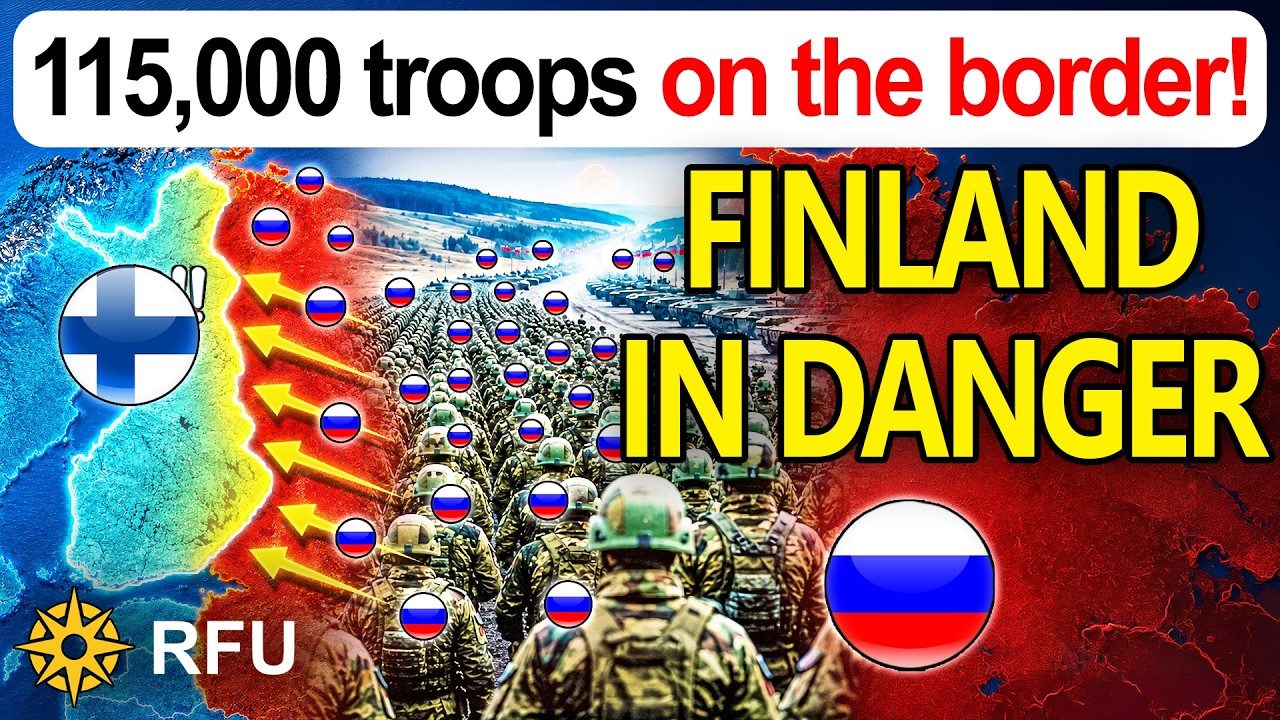
Finland is in danger as Russia rebuilds old garrisons and expands nineteen military locations across its northwestern region, creating facilities capable of receiving tens of thousands of soldiers once the war in Ukraine ends. The most significant developments near Finland include Pechenga on the Kola Peninsula, Kandalaksha in the Murmansk region, and Petrozavodsk in Karelia, giving Russia more space to house and support forces close to Finland. Finnish Army Commander Pasi Valimaki estimates that facilities in the immediate area facing Finland could eventually accommodate around eighty thousand troops, up from approximately twenty thousand previously. Across Russia’s wider northwestern military region facing Nato’s Nordic and Baltic frontier, that potential force could rise to as many as one hundred fifteen thousand soldiers. Pechenga is expected to gain capacity for as many as seventeen thousand troops, while the reactivated Petrozavodsk garrison is being developed to support units of the Forty Fourth Army Corps operating near Finland. The country therefore faces the emergence of a large and permanent Russian military force along its eastern frontier.
Alongside this expanding military belt, Moscow is increasingly portraying Finland as an active participant in Ukrainian attacks on Russian territory. In April, Russian Security Council Secretary Sergei Shoigu claimed that Ukrainian drones were approaching Russia through Finland and the Baltic states, warning that Moscow could invoke self defense if those countries deliberately allowed their airspace to be used. Russian military commentators have also alleged that drones attacking the Leningrad region used less protected coastal routes through the Baltic area, although these flight paths have not been independently established and regional governments reject claims of deliberate assistance. These accusations intensified after Finland temporarily restricted aviation and maritime traffic over the eastern Gulf of Finland to protect its territory from stray drones, although Finnish authorities reported that no drones entered its airspace. Moscow nevertheless portrays these precautions as evidence of a Ukrainian air corridor, framing its military expansion as a response to supposed Finnish aggression.
These accusations could give Moscow a justification for redirecting its forces from Ukraine toward Finland once the current war ends. Russian units returning from Ukraine would already have years of recent battlefield experience, allowing Moscow to shift a combat tested force toward Finland without having to build and train a new army from scratch. By transferring these formations northwest, the Kremlin could preserve their combat readiness and accumulated battlefield experience for another confrontation.
The danger grows if Moscow believes this experienced force could exploit a weakness exposed during the Iran war, where sustained drone and missile attacks placed severe pressure on Western air defenses. Cheap drones forced defenders to expend scarce and expensive interceptors, exposing how quickly Europe could struggle to replace its missile stocks during a prolonged conflict. A Baltic Defense Initiative assessment examines a hypothetical Nato conflict in which Russian drone saturation and long range strikes rapidly weaken regional air defenses before larger allied forces arrive. This is a stress test rather than evidence of an approved Russian invasion plan, yet it shows why Moscow may view Nato’s northern defenses as vulnerable to an intense opening attack. Moscow may also believe Nato’s ground forces could be exploited during the same period, because the alliance is still assembling some of the permanent forces intended to defend its eastern members. One supporting example is Germany’s permanent Forty Fifth Armoured Brigade in Lithuania, which is intended to strengthen the country’s defense against a potential Russian attack but will not reach full operational capability until the end of twenty twenty seven. Combined with limited interceptor stocks, that delay could encourage Russian commanders to gamble on overwhelming local defenses before Nato can reinforce the region and respond effectively.
Overall, Russia’s preparations could turn the Finnish border into a permanently militarized frontier even without an immediate invasion. Finland shares Nato’s longest direct border with Russia, so defending it would require permanently deploying air defenses, surveillance systems, ground forces, and logistics across the northern frontier. Over time, this could lock Nato into an expensive buildup and allow Moscow to drain alliance resources simply by keeping the threat alive. Meanwhile, Russia is preparing the forces needed to raise the pressure while developing the argument it could later use to justify escalation.

🔴 Our interactive news map: https://www.rfunews.com/map
🔴 Subscribe to unlock full access to the map + exclusive strategic insights: https://www.rfunews.com/pricing
Today, the biggest news comes from the Russian Federation.
Here, separatists have emerged again to stage a coup and try to secede from Russia. However, what followed was a brutal crackdown and forced exile, showing that only oppression can hold the country together now.
Recently, Alexander Ivanov, a former parliamentarian from Yakutia, initially built his platform around claims that the Sakha people lacked political and cultural freedom, framing issues of language and identity as evidence of systemic inequality. He escalated this position by publicly entertaining the idea of Yakutia’s secession and amplifying his message through symbolic gestures, including recorded statements at the Independence Monument, which recast a regional discourse into a more overtly political challenge to the Russian state. His activities moved beyond domestic advocacy as he began cultivating international visibility, using foreign media outlets, particularly in Turkey, to project his narrative outward and aligning himself with circles linked to Pan Turkist ideology. This shift effectively transformed his position from a regional political stance into one with geopolitical implications, raising concerns about external influence and coordination. Moscow’s response followed this escalation as Ivanov was designated a foreign agent and stripped of his parliamentary mandate. By persistently promoting narratives of oppression and advocating separation, he directly undermined national unity.
The central authorities must suppress these separatist ideas before they spread to other regions and political spaces. Because of the developments in Yakutia, Russia must act now to prevent further disruptions in other problematic parts of the country. Notably, the risk is far greater than Ivanov's remarks because now these ideas can quickly proliferate, and other regional politicians and activists can join him and declare their desire for more autonomy or full independence. If other separatists see that Moscow cannot assert dominance, they will be inclined to act while the government is weak and occupied with waging a war in Ukraine.
These separatist tendencies are not limited to Yakutia but can be observed across several regions of Russia, taking different forms depending on local history and demographics, which makes it harder for Moscow to control. In the North Caucasus, separatism has historically taken the form of armed insurgency, as seen when the Chechen Republic of Ichkeria declared independence, leading to prolonged and violent conflict before federal control was reimposed. By contrast, in Dagestan, the issue is less about a single unified movement and more about fragmented proposals reflecting the republic’s ethnic complexity, which diffuses separatist sentiment. Proposals range from creating independent ethnic entities to forming a unified Dagestani state. Further north, in the Volga Federal District, movements are generally less militant and focus more on cultural autonomy and political rights among Turkic and Finno Ugric populations, indicating a more subtle approach compared to complete cessation or military action.
The drivers behind separatist sentiment across Russia’s regions include economic disparities, control over natural resources, and unequal burdens in military mobilization. Each region carries its own historical grievances and sources of tension with the central government. In many ethnic republics, where non Russian populations form majorities or significant minorities, separatist narratives are often rooted in nationalism, cultural preservation, and long-standing historical memory. Concerns about the disappearance of local languages and traditions intersect with perceptions that resource rich regions are economically exploited, with wealth extracted but insufficient reinvestment into local development or poverty reduction. Military mobilization has further intensified these grievances because it has been disproportionately affecting poorer, rural, and minority communities. As a result, certain ethnic groups, such as the Buryats and other indigenous peoples of Siberia, have appeared in casualty figures at rates exceeding their share of the overall population.

💎 Help us expand the coverage! Subscription starts from just $4.99! Get 50% OFF full access to the map + exclusive strategic updates: https://www.rfunews.com/pricing
Today, the biggest news comes from the Kostiantynivka direction.
Here, on the western flank of the city, Russian forces just launched a massive offensive trying to break through Ukrainian lines and envelop the defenders from the west. Doing so would place Ukrainian ground lines of communication into the city under complete Russian fire control, and starting the battle for the city of Druzhkivka to the north. Unfortunately for the Russians however, the Ukrainian ninety-third mechanized brigade defending this crucial sector just released brand new footage that shattered any Russian hope of their offensive succeeding.
Geolocated footage shows how their drones are detecting Russian infiltrators moving toward their lines in massive numbers. Immediately struck by FPV kamikaze drones, these Russian soldiers stand very little chance in the wide open fields. Russians next tried armored assaults in the sector, moving large numbers of infantry rapidly inside of massive cages mounted onto the tanks. Ukrainians showed how they made quick work of these assaults, burning the vehicles and stopping Russians in their tracks. Russian infantry that managed to dismount found themselves in the middle of a massive kill zone, and heavy bomber drones carpet-bombed the tree lines with mortar rounds to ensure that no one remained to attack Ukrainian positions. Additionally, these heavy bomber drones were also equipped with singular but much more heavy explosive devices, able to penetrate through the roofs of buildings where Russians were sheltering in and turning them into ruins. Russians quickly shifted to a lower-visibility approach, filling pickup trucks with infantry and bags of supplies to allow Russian infiltrators to stay on position for as long as possible. Striking them in the open fields, Russian infantry once again had nowhere to run to as they were left stranded without any cover. Russian motorbike assaults soon followed, but intense Russian shelling of the fields here meant that the motorbikes had to stay on the asphalt to maintain any speed during their attack. This made them even more easy to strike, as FPV drones and artillery worked together to shell the unprotected assaults with shrapnel and blast waves. Even at night Russians tried to break through, but made a critical mistake by leaving their headlights on to evade obstacles on the road.
However, no defense remained impregnable, and a few Russian soldiers inevitably managed to evade detection and slip past the Ukrainian kill zone. Fortunately for Ukrainians, the ninety-third brigade houses skilled assault troops that conducted regular clearing operations of the settlements in the grey zone where Russian infiltrators could accumulate. Through this, Ukrainians were even able to push deeper into no-man's land, and repeatedly clear Russian underground positions and dugouts, preventing Russians from advancing through gradual consolidation. This critical component in modern warfare also resulted in a steady supply of surrendering Russian soldiers and important intel that Ukrainians were able to act on. This intelligence exposed unknown Russian infiltration routes, and allowed gaps in the line to be closed as soon as Russians found one. Russian electronic warfare also became increasingly countered, as the brigade is fielding a large number of fiber-optic-controlled FPV drones that do not need a wireless signal to the pilot, as can be seen from the coils of fiber optic wire exploding away from impacts. . This allowed Ukrainians to even strike in areas where signal strength had been exceptionally low due to terrain factors or damaged antennas. In the end, Russians have been completely unable for months to advance in the brigade’s sector of responsibility, and the western flank of Kostiantynivka continues to hold because of them.
Overall, the Ukrainian ninety-third brigade has shown itself exceptionally capable in the defense of Kostiantynivka. Preventing the encirclement of the city’s defenders, they have countered each and every one of the different tactics and assaults that Russians have thrown at them. Through their active defense and clearing operations, they have worked with their Azov brigade neighbors to fully clear over one hundred kilometers of Russian infiltrators. As the Russians cannot seem to break through their lines, their plans to reach and capture Druzhkivka by the end of the year is falling apart at the seams.
💎 Help us expand the coverage! Subscription starts from just $4.99! Get 50% OFF full access to the map + exclusive strategic updates: https://www.rfunews.com/pricing
Today, there are important updates from the Liman direction.
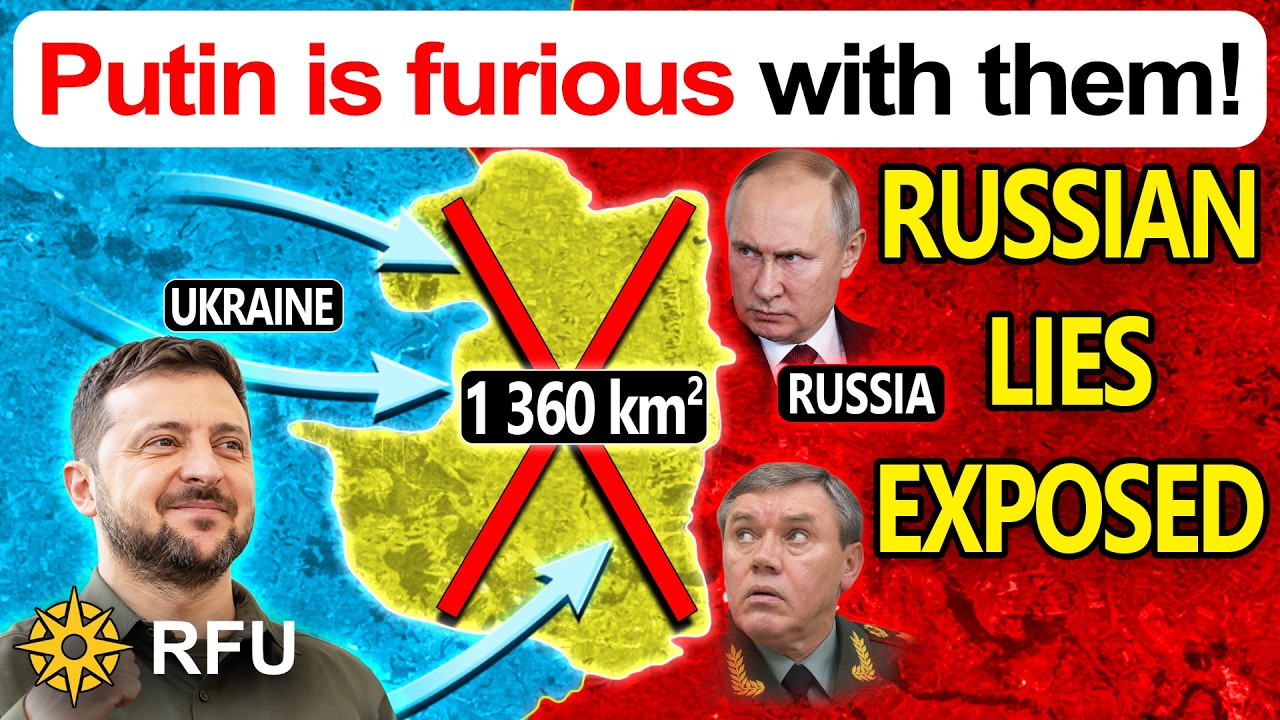
Here, the gap between Russian official maps and battlefield reality around Liman has become extraordinary, as Russian command maps place their furthest claimed positions roughly forty kilometers west of the actual frontline and attribute another one-thousand-three-hundred-and-sixty square kilometers to Russian control. Such claims are based on an apparently AI-generated video purporting to show a Russian soldier in Chervonyi Oskil, after which Russian sources claimed the settlement had been captured, causing reaction from Russian military analysts, who are increasingly criticizing this trend of exaggerated reporting.
That fictional picture has become increasingly difficult to preserve as Ukraine’s Operation Vivaldi advances. To counter this in the information space, Russia’s Western Grouping of Forces released footage supposedly demonstrating continued Russian presence in Nove, Ridkodub, and other recently liberated settlements by the Ukrainians. But analysts quickly identified indications that the footage was archival, with the videos filmed when Russian forces originally captured these locations in two-thousand-twenty-five, before Ukraine’s counterattack, showing vegetation inconsistent with current conditions. Another clip from Ridkodub showed a Russian soldier moving through the settlement while Ukrainian FPV drones pursued him, but visual comparisons placed the recording around August last year.
Russian military commentators have consequently begun attacking their own command’s response with the argument that the Ukrainian counterattack itself is less damaging than pretending it does not exist. Instead of acknowledging setbacks, determining why defenses failed and correcting them, Russian commanders publish old footage and maintain an increasingly fictional frontline, which creates consequences extending far beyond symbolic claims.
Russian soldiers witnessing Ukrainian advances while official channels insist nothing significant has happened have less reason to trust their commanders. Russian analysts have repeatedly warned that distorted reporting also damages battlefield decision-making: commanders can allocate reserves, artillery and drone coverage according to positions that exist on maps but not on the ground. The resulting disconnect can leave troops isolated and encourage demoralized soldiers to seek information elsewhere.
The real battlefield situation around Liman demonstrates why this matters, as Ukraine officially announced that its Third Army Corps has liberated settlement after settlement, releasing footage weeks after the events for operational security. The earlier penetration around Nove was particularly revealing, as the Ukrainian forces converted an old BTR into an unmanned explosive vehicle and managed to drive the relatively slow machine toward Russian defenses. Its ability to approach the target suggested Russian drone observation and fire control were not present there, because according to Russian maps, there was no threat to Ridkodub.
Now Ukrainian pressure is extending toward the Zherebets River. Russian sources themselves have acknowledged Ukrainian activity around crossings and positions near Terny, while Ukrainian strikes against crossing points and rear logistics are complicating Russian resupply. Every restricted crossing creates another bottleneck where vehicles, ammunition and reinforcements become vulnerable to drones.
Yet Russian information management continues trying to preserve a battlefield picture increasingly contradicted even by Russian analysts. After losing substantial territory and suffering significant casualties, commanders are still releasing archival or AI-generated footage and defending claims built upon earlier exaggerated advances.
Overall, Russia may claim that the Lyman front has stabilized, but fighting remains active around the Zherebets approaches, with Ukrainian infiltrators crossing the river for quick raids. Ukraine is simultaneously applying ground pressure, attacking the crossings methodically and disrupting Russian rear logistics. The widening distance between Russia’s declared frontline and the battlefield itself is therefore becoming more than an information problem: it risks actively undermining Russia’s ability to organize the defense it now urgently needs to stop Ukraine’s counteroffensive and to prevent the Russian defense line behind the river from collapsing completely.

💎 Special Offer: starting from just $4.99! Get 50% OFF full access to the map + exclusive strategic updates: https://www.rfunews.com/pricing
The Russians have now started to panic over the rapidly increasing threat to their enclave of Kaliningrad. This panic was caused by severely ramped up reconnaissance missions against Kaliningrad. Over the past year, Nato has intensified surveillance over Kaliningrad so much that it has trumped Nato satellite and aerial reconnaissance over Crimea, which is actively used to guide Ukrainian strikes. Nato Awacs aircraft fly along Kaliningrad practically every day, while satellite reconnaissance is conducted continuously. An entire US military satellite constellation now monitors Russian military facilities here on a daily basis, including the base in Baltisk, airfields, air defense positions, and other Russian Armed Forces facilities. Given how unprecedented the change of focus from Crimea to Kaliningrad is, these are preparations for the worst-case scenario to map out Russian military positions for targeting in the event of war.
This intensified reconnaissance has led Russian military analysts to believe Nato and Ukraine are preparing for a strike against Kaliningrad already in the near future. They quoted a German Air Force Commander Holger Neumann, who claimed that in the event of a Russian attack, Germany is ready to fight as early as tonight, and that Nato’s first targets would be strikes on Kaliningrad, the Kola Peninsula, Saint Petersburg, and the Black Sea. Kaliningrad is especially difficult for the Russians to defend as the semi-exclave is surrounded by Nato states that are actively reinforcing their borders with both troops and forward bases. This would make it convenient for Nato to blockade the region from the Baltic Sea, which is also completely surrounded by Nato countries, as since the addition of Sweden and Finland to the alliance it has effectively been nicknamed the Nato Sea.
What makes it even worse for Russia, Europe has already imposed an aerial blockade above Kaliningrad, and Russia can only resupply it by flying from Saint Petersburg through international waters. Because of how geographically exposed Kaliningrad is, in the event of a conflict, every land, sea and air corridor would be completely shut by Nato forces. This would force Russia to try to seize the Suwalki Corridor, which is the only land route connecting the region with Russian-allied Belarus. However, this corridor is located between two Nato countries, Poland and Lithuania, which is why such an operation would result in the outbreak of full-scale war.
Knowing the vulnerabilities of Kaliningrad, Putin resorted to threats and announced that attempts to cut off access to Kaliningrad from Russia’s mainland will lead to an unprecedented escalation, stating that any threat to the semi-exclave would be neutralized. To prove his point, he stressed the importance of the deployment of Oreshnik medium-range ballistic missiles in Belarus. The missile carries multiple warheads, including nuclear ones, and the flight to Lithuania and Poland would be covered in only two to four minutes, giving Nato a very short time window to intercept them. With this, Russia intends to dissuade Nato from blockading Kaliningrad.
However, Russia’s reaction to ramped-up Nato reconnaissance is ungrounded, suffering from logical fallacies and skewering of the truth. Russia has been building up its forces in Kaliningrad for years. Approximately ten thousand Russian troops are stationed there, along with nuclear-capable short-range Iskander ballistic missiles, able to hit multiple European capitals at a range of five hundred kilometers, including Berlin and Warsaw. Moreover, Russia has been using Kaliningrad for years to jam aerial and maritime GPS signals and force civilian aircraft to rely on on-board navigation systems, endangering them during their flight, as has even happened to the President of the European Commission, Ursula von der Leyen’s aircraft. Given these Russian hybrid escalations, Nato has only begun more active surveillance of the Russian threats that cause this, while repeatedly and openly refraining itself from more direct action. Despite the by all measures constrained reaction of Nato, Russians are choosing to play the victim, despite triggering mass surveillance through their own actions, panicking and complaining that they will soon be attacked by Nato, even before Nato can begin lifting an actual finger.

💎 Help us expand the coverage! Subscription starts from just $4.99! Get 50% OFF full access to the map + exclusive strategic updates: https://www.rfunews.com/pricing
Today, the biggest news comes from the Kupiansk direction.
Recently, the Ukrainian Khartiia assault regiment shared footage of them destroying one Russian vehicle after the other. Ukrainians used both conventional FPV drones as well as newly received strike drones to strike Russian trucks bringing large numbers of reinforcements and supplies into the sector. The footage also shows Ukrainians striking Russian tanks, being used in the rear as artillery pieces to fire indirectly against advancing Ukrainian formations in the Dvorichna bridgehead. The unit reports that they have successfully struck and destroyed eighty-one Russian motorized vehicles, and eleven armored vehicles.
This is taking place as Ukrainian and Colombian fighters are pushing hard into the Russian Dvorichna bridgehead, which are now beginning assaults into Dvorichna itself after splitting the bridgehead in half earlier last week. As you might remember, Ukrainians had successfully targeted and suppressed Russian drone operators in the sector, allowing Ukrainian and Colombian formations to assault and cut off Russian positions without having to worry about intense Russian drone strikes. This means that Russian forces have lost their primary way of countering Ukrainian assaults, and therefore have to fall back on striking Ukrainian units with indirect artillery fire, as well as flooding the frontline with infantry to halt the Ukrainian advance.
The shared footage showcasing the massive destruction of Russian armored and motorized vehicles deployed to these efforts is evidence of the Ukrainian response. As Russians continued to move up more forces to counter Ukrainian advances, Ukrainians successfully denied Russians this opportunity by instituting a drone fire control lockdown of Russian logistics. Russians themselves have even shared footage of the approaches to Kupiansk and the Dvorichna bridgehead. The video shows Russian soldiers on motorbikes maneuvering around the wrecks and remains of earlier reinforcements destroyed en route to the front.
Separate footage shows how Russians continue to attempt to bring up more armor into the forest on the eastern bank to provide fire support and alleviate the pressure on their strained lines. The video shows the tank moving clumsily through the densely forested area, with the crew trying to find a position to fortify and fire from. Naturally, the hulking behemoth was quickly spotted and immediately came under Ukrainian FPV kamikaze drone strikes. With the improvised armor of the tank allowing it to sustain several more hits, Ukrainians finally disabled and destroyed the vehicle with carefully placed shots by the drone operators.
Due to the Ukrainian lockdown of Russian approaches to the bridgehead, very few Russian reinforcements are actually making it through and surviving long enough to cross the Oskil River. Nevertheless, the Ukrainian-Colombian attacks continue, and the pressure is forcing Russian soldiers to emerge from their hideouts, with orders from their commanders to counterattack despite the lack of artillery support or drone cover. As the lack of fire support means that Ukrainian drone operators are not suppressed in turn, a true hunt on Russian infantry has opened in the bridgehead. Ukrainians are sharing large amounts of footage that shows them striking Russian infantry with FPV drones. Heavy and light bomber drones are flying almost around the clock, dropping grenades and bombs on Russian soldiers that move out in the open or try to find cover with inadequate overhead protection. Many Russian soldiers are now simply dying in the shrubbery, as the carnage is quickly piling up.
Overall, the Ukrainian advance continues, as Russian efforts to counterattack are being undermined before they can even begin. With Ukrainian strike and FPV drones taking out Russian reinforcements and fire support in the rear, there is very little to stop Ukrainians from continuing their advance. Simultaneously, intense FPV and bomber drone support for the Ukrainian counterattacks themselves are dealing devastating losses to the Russian soldiers still under attack in the bridgehead, softening up the Russian defenses here. While Russians could use their superiority in aviation glide bomb strikes to halt Ukrainian advances, Russians do not have unlimited availability of these assets, and with the majority of Russian resources being focused on the fighting in Donetsk, Russian forces at Kupiansk may have to make do with what little is made available to them.

Rep. Ilhan Omar's home was raided by DHS in fraud probe. HSI Agents are outside Rep. Omar's home at this time.
Subscribe to LiveNOW from FOX! https://www.youtube.com/liveno....wfox?sub_confirmatio
Where to watch LiveNOW from FOX: https://www.livenowfox.com
Follow us @LiveNOWFOX on TikTok: https://www.tiktok.com/@livenowfox
Raw and unfiltered. Watch a non-stop stream of breaking news, live events and stories across the nation. Limited commentary. No opinion. Experience LiveNOW from FOX. Live news streaming channel when and where you need it.


The home of Rep. Ilhan Omar (D-MN) was raided early Monday morning by Homeland Security Investigations (HSI), a source familiar with the matter told Fox News Digital. The raid stems from a criminal fraud investigation into the Somali-born congresswoman's immigration paperwork, which was filled out by her late father when she was a child.
Subscribe to LiveNOW from FOX! https://www.youtube.com/liveno....wfox?sub_confirmatio
Where to watch LiveNOW from FOX: https://www.livenowfox.com
Follow us @LiveNOWFOX on TikTok: https://www.tiktok.com/@livenowfox
Raw and unfiltered. Watch a non-stop stream of breaking news, live events and stories across the nation. Limited commentary. No opinion. Experience LiveNOW from FOX. Live news streaming channel when and where you need it.
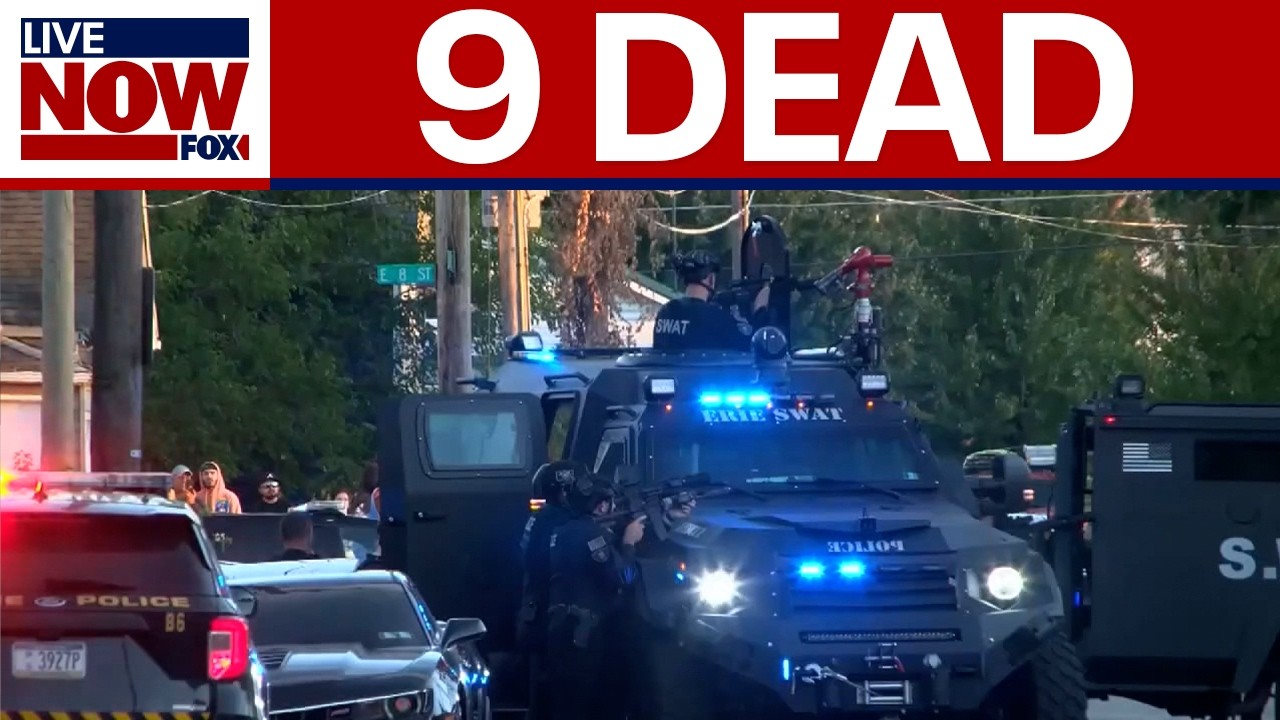
A mass shooting at a home in Erie left nine people dead, including two children and the gunman, in an incident local law enforcement described as the most devastating in the city's history. Police responded to a residence in the 700 block of Perry Street around 4:50 p.m. Friday after a automated gunshot detection alert. Witnesses reported seeing a man firing a handgun on the sidewalk, where two women were killed, before he ran inside the home. Tactical teams secured the area and later discovered six more victims and the suspect dead inside. Investigators determined that all the victims had died before officers arrived and that the unidentified shooter died of an apparent self-inflicted gunshot wound. Erie Police Chief Rick Lorah said there is no ongoing threat to the public, while Pennsylvania Gov. Josh Shapiro pledged the state's full support to Erie Mayor Daria Devlin as the investigation continues.
Subscribe to LiveNOW from FOX! https://www.youtube.com/liveno....wfox?sub_confirmatio
Where to watch LiveNOW from FOX: https://www.livenowfox.com
Follow us @LiveNOWFOX on TikTok: https://www.tiktok.com/@livenowfox
Raw and unfiltered. Watch a non-stop stream of breaking news, live events and stories across the nation. Limited commentary. No opinion. Experience LiveNOW from FOX. Live news streaming channel when and where you need it.

LiveNOW’s Andy Mac is speaking with Mike Boylan from Mike’s Weather Page as we listen to new reporting that indicates that Hurricane Polo is rapidly intensifying into a Category 5 storm. This has come less than 24 hours after it became a hurricane. The National Hurricane Center (NHC) is now monitoring four areas of tropical activity across the Pacific, including Polo, which has exploded into one of the strongest hurricanes the Pacific has ever seen.
Subscribe to LiveNOW from FOX! https://www.youtube.com/liveno....wfox?sub_confirmatio
Where to watch LiveNOW from FOX: https://www.livenowfox.com
Follow us @LiveNOWFOX on TikTok: https://www.tiktok.com/@livenowfox
Raw and unfiltered. Watch a non-stop stream of breaking news, live events and stories across the nation. Limited commentary. No opinion. Experience LiveNOW from FOX. Live news streaming channel when and where you need it.

In this episode of The PDB Afternoon Bulletin:
• The U.S. military buildup around Iran is entering a new phase, with CENTCOM reportedly ordered to complete preparations for another major round of fighting.
• Federal authorities say they disrupted an ISIS-inspired plot targeting the Mall of America, arresting an 18-year-old after an undercover gun sale.
To listen to the show ad-free, become a premium member of The President’s Daily Brief by visiting https://PDBPremium.com.
Please remember to subscribe if you enjoyed this episode of The President’s Daily Brief.
Ethos: Protect your family with life insurance from Ethos. Get up to $3 million in coverage in as little as 10 minutes at: https://ethos.com/PDB
Fabletics: Shop now at https://fabletics.com/PDB to get 70–80% off everything when you sign up as a new VIP
Fi Tracking: Get peace of mind. Fi is offering up to 30% off and free shipping when you visit https://Fitracking.com and enter promo code PDB
For advertising inquiries, please email Advertising@redseatventures.com
Thank You for Standing With Ukraine
https://ukrainesupportbridge.com/
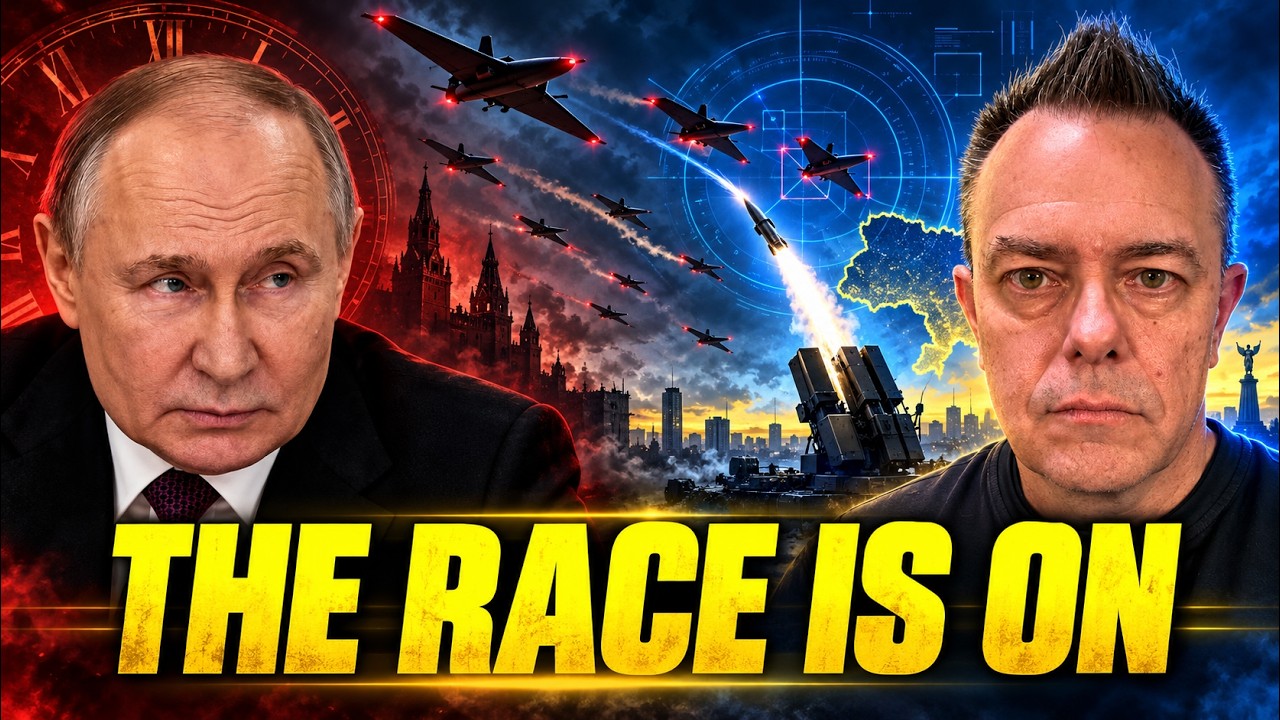
Three major trends are shaping the Russia-Ukraine war right now: the fight over global diesel supplies, Russia’s determination to finance and man a long war, and an accelerating technology race that could determine what happens through the winter.
Greg Terry and Professor Gerdes challenge the claim that Ukrainian strikes on Russian refineries are the main cause of the global diesel problem and examine the broader energy picture. They then turn to Russia’s expanding defense spending, continued manpower needs, pressure on occupied Ukrainians, and the signals suggesting the Kremlin is preparing for a prolonged conflict rather than winding one down.
The final—and potentially most important—trend is the technological race. Ukraine continues developing drones, robotics, interceptors, and new air-defense capabilities while Russia adapts its own Shahed attacks against energy and electrical infrastructure. With a difficult winter period approaching, the central question becomes whether Ukraine can scale its defenses fast enough while Western partners continue supplying systems such as NASAMS and Patriot.
BECOME A CHANNEL MEMBER
Join “The Hope Train” for access to channel perks:
https://www.youtube.com/channe....l/UCtGgE-neHNaKghJs9
Join our Discord
https://discord.gg/rWghS7mPcD
FOLLOW GREG
X:
https://x.com/gregoryjterry
Bluesky:
https://bsky.app/profile/gregterry.bsky.social
Bluesky Fan Page:
https://bsky.app/profile/gregt....erryfanpage.bsky.soc
CHAPTERS
Reliable chapters could not be generated from this transcript.
#Ukraine #Russia #RussiaUkraineWar #UkraineWar #AirDefense #DroneWarfare #RussianEconomy #NASAMS #Patriot #EnergySecurity