Top videos

در این قسمت از برنامه، مجتبا پورمحسن در گزارش روزش، به اعتراضهای خیابانی شماری از هواداران به توافق با ترامپ برخلاف شروط مجتبی خامنهای میپردازد و روحالله رحیمپور، روزنامهنگار و تحلیلگر سیاسی، از دلیل آشفتگی این هواداران میگوید.

در این قسمت از برنامه، مجتبا پورمحسن در گزارش روزش، به تدارک ناوهای آمریکا برای حمله به ایران با مهمات سنگین و حضور گسترده جنگندههای امریکا و اسراییل در آسمان عراق میپردازد و از برنامه ترامپ برای آغاز عملیات تازه موسوم به خمش حماسی دوم میگوید.

در این قسمت از برنامه، مجتبا پورمحسن در گزارش روزش، به جنگ شبانه جمهوری اسلامی و آمریکا در خلیج فارس و نابودی ۱۲ درصد ناوگان نفتکشهای ایرانی در این حملات میپردازد و هوشنگ حسنیاری کارشناس خاورمیانه، از احتمال افزایش سطح تنش بین تهران و واشینگتن میگوید.

در این قسمت از برنامه، مجتبا پورمحسن در گزارش روز، به پشت پرده انتصاب احسان خاندوزی، به عنوان رئیس کارگروه اقتصادی معاونت بررسی دفتر مجتبی خامنهای میپردازد و از نقش او برای حفظ سهم ۶۰ درصدی کارتلهای اقتصادی وابسته به بیت از اقتصاد ایران میگوید.

در این قسمت از برنامه، مجتبا پورمحسن در گزارش روزش، به دو نامه محرمانه از وزارت نفت درباره واگذاری فروش نفت ایران به چهار دلال نفتی بدهکار میپردازد و از نقشآفرینی یک مقام ارشد اطلاعات سپاه پاسداران و شبکه فساد او در فروش نفت تحریمی ایران میگوید.

در این قسمت از برنامه، مجتبا پورمحسن در گزارش روزش، به اقدامات عربستان سعودی برای مقابله با ماجراجویی سپاه پاسداران از طریق حوثیها علیه ریاض میپردازد و شایان سمیعی، کارشناس امنیت ملی، از احتمال جنگ مستقیم جمهوری اسلامی و عربستان سعودی میگوید.

در این قسمت از برنامه، مجتبا پورمحسن در گزارش روزش، به جزئیات تازه از نفوذ موساد به بیت خامنهای و نقشش در کشته شدن او از زبان عراقچی میپردازد و از افشای اطلاع مسوول پدافند بیت از ورود جنگندههای اسرائیلی نیم ساعت قبل از حمله میگوید.

در این قسمت از برنامه، مجتبا پورمحسن در گزارش روزش، به درخواست دوباره مجتبی خامنهای برای ترور ترامپ و تهدید ترامپ به شلیک هزار موشک به ایران در صورت ترورش میپردازد و شهرام خلدی، پژوهشگر تاریخ خاورمیانه، از تاثیر این تهدیدها بر مذاکرات تهران و واشینگتن میگوید.

در این قسمت از برنامه، مجتبا پورمحسن در گزارش روزش به اختلافها در تهران بین مجتبی خامنهای و پزشکیان بر سر سانسور آثار فروپاشی اقتصادی در نتیجه فشار آمریکا میپردازد و ایمان آقایاری، تحلیلگر سیاسی، از نشانههای فروپاشی اقتصادی در ایران میگوید.

🔴 YOU ARE MISSING HALF OF OUR VIDEOS! Subscribe to unlock all our reports and support our work: https://www.youtube.com/channe....l/UCcNB1tZYpeDetqCad
Today, there are interesting updates from the Russian Federation.
Here, Ukraine has unleashed another devastating wave of attacks against Russia’s oil industry, striking, among others, all five of the country’s largest refineries recently: Omsk, Kirishi, Ryazan, Nizhny Novgorod, and Yaroslavl. The scale of these attacks is becoming a nightmare for Moscow, exposing serious weaknesses in Russian air defenses as Ukrainian drones repeatedly penetrate supposedly protected key industrial facilities.
The latest strike occurred in Volgograd, where enormous fires erupted at the Lukoil refinery when Ukrainian drones struck two crucial processing units, responsible for approximately seventy percent of the refinery’s primary crude-processing capacity. Storage tanks have also been damaged, but with both processing units suffering extensive damage, the consequences are substantial, as Volgograd processes approximately fifteen million tons annually, representing around five percent of Russia’s refining capacity.
Following the energy ceasefire associated with US President Trump, Russia received an opportunity to repair damaged refineries and restore production, with Russian crude processing rebounding approximately twenty-five percent, with Moscow keen on rebuilding an industry generating enormous revenues for its war effort. Ukraine is now reversing that recovery, as the refineries and the other connected infrastructure around Volgograd, Omsk, Kirishi, Saratov, Afipsky, Ryazan, Nizhny Novgorod, Yaroslavl, Ufa and Samara collectively represent approximately one-hundred-and-fifty million tons of annual processing capacity. If twenty to thirty percent of that capacity generated exportable products valued at seven hundred US dollars per ton, potential gross annual export sales would reach approximately between twenty-one and thirty-one billion US dollars, illustrating the economic stakes for Russia.
At Omsk, Russia’s largest refinery, capable of processing approximately twenty-two million tons annually, residents reported prolonged explosions, fires, and air-defense activity during another Ukrainian drone attack. The Kirishi refinery also suffered similar serious damage, as the facility, capable of processing approximately twenty million tons annually, was also struck by Ukrainian drones. Subsequent analysis identified damage to three primary processing units, fuel-oil equipment, cooling-water infrastructure, and connecting pipelines. Such extensive damage to refineries is particularly consequential because repairing interconnected refinery equipment can require even more time, specialized components, and extensive testing.
At Saratov, another Rosneft facility processing approximately seven million tons annually, suffered mutliple fires triggered by Ukrainian drones. The Afipsky refinery in Krasnodar, capable of processing approximately six million tons, also experienced explosions and fires during a substantial drone attack. Ryazan, with capacity exceeding seventeen million tons annually, suffered several massive fires after another Ukrainian strike. The refinery produces gasoline, diesel and aviation fuel, making disruptions relevant to both civilian consumption and military logistics. Further attacks were reported at Yaroslavl, where fire appeared in the refinery area, and Kstovo, where the enormous Norsi refinery was set ablaze. In Bashkortostan, drones struck Ufa’s Bashneft-Novoil refinery, with a catalytic reforming unit burning for several days, damaging equipment that is important for producing gasoline components. Finally, Ukraine struck Novokuybyshevsk in Samara, a refinery processing approximately nine million tons annually and producing jet fuel alongside other petroleum products.
Together, these Ukrainian attacks damage Russian refining throughput, domestic fuel availability, export earnings, and military supply chains. Repeated strikes also reduce Russia’s ability to divert air-defense systems toward industrial facilities across an enormous territory. The growing number of refinery fires suggests Russian defenses are struggling to prevent successful penetrations, to the point where the Russian air-defense network has nearly collapsed.
Overall, as confirmed damage continues to accumulate, Russia faces prolonged production interruptions and increasingly expensive repairs. This is Ukraine’s response to a pause that allowed Russian refining to recover without ending attacks against Ukrainian infrastructure. Russia hoped to restore its oil revenues while continuing its war, but Ukraine is demonstrating that renewed production remains vulnerable and that every repaired refinery can become a target again, only that this time Ukrainian strikes are much more efficient and destructive.

🔴 YOU ARE MISSING HALF OF OUR VIDEOS! Subscribe to unlock all our reports and support our work: https://www.youtube.com/channe....l/UCcNB1tZYpeDetqCad
Today, there are interesting updates from the Zaporizhia direction.
Here, Russia has suffered its deadliest single day of the war, with Ukraine’s General Staff recording an extraordinary two-thousand-nine-hundred-and-eighty Russian personnel losses within just twenty-four hours. This represents an unprecedented daily record, bringing Russia’s reported personnel losses during two-thousand-twenty-six to four-hundred-thousand-four-hundred-and-ten. These figures reflect Ukraine’s increasingly effective strategy of systematically exhausting Russian manpower rather than merely defending territory, with Ukraine’s expanding reconnaissance and strike capabilities making Russian offensives not only more expensive, but almost impossible.
The implications are particularly visible around Orikhiv, where Russia’s offensive relied on repeatedly committing reserves to sustain infiltration attempts against Ukrainian defenses for months. As long as fresh assault groups continued arriving, Russian commanders could maintain pressure, exploit defensive gaps, and reinforce soldiers who had penetrated Ukrainian positions, gradually taking territory in the process. However, sustained Ukrainian strikes depleted those reserves, and the Russian infiltrators that managed to slip through became isolated and their supply routes were disrupted. As a result, at the approaches to Orikhiv, Ukrainian forces stabilized the threatened sectors, were able to permanently clear contested positions, and began pushing back along Russian infiltration corridors.
This illustrates the fundamental weakness of Russia’s manpower-intensive assault tactics, as Russian commanders frequently send small infantry groups one after another across exposed terrain, accepting enormous casualties in exchange for limited penetrations. Well-prepared Ukrainian defenses eliminate ninety percent of an advancing Russian force, but even then, the surviving ten percent of Russians might slip through and establish concealed positions that remain dangerous. They can ambush Ukrainian movements, identify defensive vulnerabilities, disrupt logistics, and prepare positions for arriving reinforcements. However, their long-term survival depends on subsequent assault waves successfully reaching them to build up their forces, while every additional Russian wave must cross the same dangerous terrain under Ukrainian surveillance and fire. Without reinforcements, isolated infiltrators cannot accumulate sufficient strength to consolidate territorial gains, and eventually, Ukrainian reconnaissance identifies their positions, allowing clearing teams and precision strikes to eliminate them, which explains why Russia’s growing manpower problem threatens the entire infiltration strategy.
Crucially, Ukrainian defenses are also becoming more effective, as reconnaissance drones, thermal cameras, and electronic intelligence increasingly operate within integrated targeting networks connected to artillery, mortars, and strike drone operators. Instead of attacking only advancing infantry, Ukrainian forces systematically target Russian drone operators, command posts, ammunition deliveries, transport vehicles and reinforcement routes. This disrupts the entire assault process, preventing infiltrators from receiving the support necessary to survive. Ukrainian special forces teams subsequently clear isolated Russian positions using reconnaissance information gathered from above.
Additionally, seasonal changes are reinforcing these advantages, as autumn foliage disappears and Russian soldiers lose much of the vegetation previously concealing their movements. Persistent Ukrainian aerial surveillance becomes more effective, particularly when combined with thermal imaging, while winter introduces additional problems for the Russians. Freezing temperatures increase exposure risks, complicate shelter construction, and snow can reveal movement tracks, while Russian infiltrators, lacking reliable food, ammunition, and medical evacuation, become increasingly vulnerable.
The decisive factor remains Ukraine’s ability to detect and eliminate assault formations faster than Russia can replace them. Ukrainian strikes eliminate not only regular Russian soldiers, but Russian commanders also lose the reconnaissance personnel needed to identify exploitable defensive gaps, which creates a destructive cycle: higher casualties reduce Russian offensive effectiveness, while weaker assault formations suffer further losses.
Overall, Ukrainian commanders established an ambitious objective of inflicting fifty thousand Russian casualties monthly earlier this year, but October surpassed that threshold with fifty-four-thousand-and-four-hundred Russian personnel losses.

🔴 YOU ARE MISSING HALF OF OUR VIDEOS! Subscribe to unlock all our reports and support our work: https://www.youtube.com/channe....l/UCcNB1tZYpeDetqCad
Today, the biggest news is coming from the Kremlin itself
Here, Putin’s political rivals from both sides of the spectrum are turning against him, and turning against his war in Ukraine. Costing the oligarchs their fortune, and costing the left their social security, Putin’s empire is being brought down on top of him from all sides.
Recently, the leader of Russia’s communist party openly came out against the war in Ukraine, stating that Russia will ultimately face defeat if its current political course remains unchanged, and the full-scale invasion of Ukraine continues. Speaking at a press conference, he said that if the course does not change and this exhausting war continues, everyone will lose. His reasoning is clear: since the war began, the number of Russian billionaires has increased by fifty percent, accumulating a collective seven hundred billion dollars while domestic food prices have suffered. Even the official Kremlin statistics show that prices for basic vegetables have risen up to forty percent. He even publicly criticized corruption in the recent Duma elections, stating that voting saw widespread irregularities, along with the straight-up removal of monitoring officials in several regions. Returning to the war, he spoke out against the fact that half of the Russian state budget is lost in the invasion, and that Putin’s aggression is burning every second ruble while the Russian people themselves suffer the cost and neglect. While Putin’s war is costing Russia an average of six-hundred-eighty million dollars per day, the state is cutting back heavily on healthcare, education, and welfare. While these three pillars of social security have been deteriorating for years before the war began, the diverting of funds away from them has accelerated their collapse. To name an example, Russia has lost half of its schools since the year two-thousand. The communist leader concluded his statements by saying that as the war continues, the rich get richer and the poor get poorer.
However on the other side of the spectrum, Russian oligarchs and business owners do not seem in favor of continuing the war either, as they are increasingly seeing the repercussions of the failing war in Ukraine. While Russian oligarchs are being forced to take care of their own air defense to protect against Ukrainian strikes, the Kremlin is seizing a massive amount of their assets to fund Putin’s war effort. Since the start of the war, Russian authorities have seized up to ninety billion dollars worth of oligarchs’ assets on grounds of corruption and national security. These are then directly sold or repurposed to feed the war machine that is quickly running out of gas. Many of these oligarchs now openly admit that they’re funneling their money away into accounts and development funds outside of Russia’s borders, to keep the money out of the Kremlin’s reach. In addition to the sanctions and Ukrainian strikes, the lack of new investments into the Russian economy itself is causing the Russian economy to stagnate, growing only at a fraction of the pace compared to the rest of the world. Official state statistics say that the Russian economy is growing at a rate of only one percent, compared to the three to four percent worldwide average. It is important to note how the majority of this growth is due to the state’s investments into the war effort, through weapon manufacturing and high signing bonuses; however this growth remains within the economic sectors of the military industry or small businesses on a local level alone.
Overall, Putin’s political rivals on both side of the spectrum are turning against him and turning against his war. He has made an enemy out of both, cutting social security and state programs, while seizing economic assets from his richest elite. Putin is desperately trying to balance between the two, working hard to prevent either from fully rising up against him. Through repression of both he is currently able to stay in power for now, but as the oligarchs and Russian society’s criticism of him and the war increase, he is nearing a tipping point. It’s important to understand that a collapse of Putin’s regime will be sudden, and after a long series of looming warning signs that we are seeing now, with the Kremlin holding it off and pretending everything is fine, until very quickly it isn’t.

همیاری با برنامه ها از لینک زیر :
https://www.paypal.me/melligparty
لینک همه شبکه های اجتماعی :
https://linktr.ee/MehdiMirghaderi

همیاری با برنامه ها از لینک زیر :
https://www.paypal.me/melligparty
لینک همه شبکه های اجتماعی :
https://linktr.ee/MehdiMirghaderi
همیاری با برنامه ها از لینک زیر :
https://www.paypal.me/melligparty
لینک همه شبکه های اجتماعی :
https://linktr.ee/MehdiMirghaderi

همیاری با برنامه ها از لینک زیر :
https://www.paypal.me/melligparty
لینک همه شبکه های اجتماعی :
https://linktr.ee/MehdiMirghaderi
همیاری با برنامه ها از لینک زیر :
https://www.paypal.me/melligparty
لینک همه شبکه های اجتماعی :
https://linktr.ee/MehdiMirghaderi

آخرین اخبار از وضعیت انتخابات از اسراییل و میان دوره ای آمریکا
7 آبان 2585
همیاری با برنامه ها از لینک زیر :
https://www.paypal.me/melligparty
لینک همه شبکه های اجتماعی :
https://linktr.ee/MehdiMirghaderi

همیاری با برنامه ها از لینک زیر :
https://www.paypal.me/melligparty
لینک همه شبکه های اجتماعی :
https://linktr.ee/MehdiMirghaderi
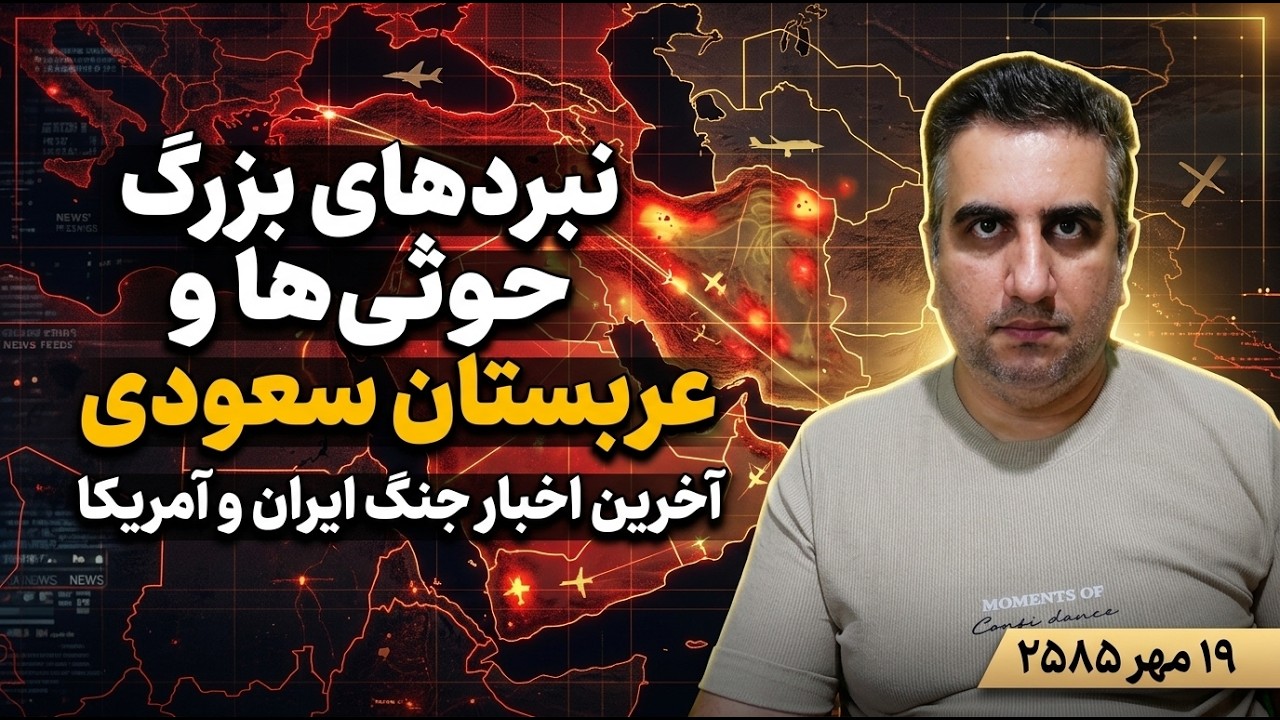
نبردهای بزرگ بین حوثی ها و عربستان سعودی و آخرین اخبار جنگ ایران و آمریکا
تاریخ : 19 مهر 2585
همیاری با برنامه ها از لینک زیر :
https://www.paypal.me/melligparty
لینک همه شبکه های اجتماعی :
https://linktr.ee/MehdiMirghaderi